
2026 Best Industrial TFT LCD Types for Global Buyers
For global equipment builders, choosing a display involves more than comparing screen size and price. The 2026 market offers wider panels, stronger touch systems, improved brightness, and longer product lifecycles. Yet, specifications can look impressive on paper and still disappoint during daily operation.
This guide examines the major Industrial Tft Lcd types available to international buyers. It considers viewing angle, sunlight readability, operating temperature, touch accuracy, interfaces, and mechanical protection. A 10.1-inch screen may suit a compact controller, while a 15.6-inch panel may improve data visibility inside a factory cabinet. Small details matter. Connector placement can affect installation time. Glove performance can affect operator safety and productivity.
Field experience shows that no single panel wins every project. A bright display can still create glare. A rugged housing can still have weak cable protection. Temperature testing is often overlooked, especially in outdoor equipment or enclosed machines. Buyers should request sample testing, lifecycle information, quality records, and clear after-sales support before making a large commitment.
This overview compares common TFT LCD structures, touch options, backlight choices, and application scenarios. It also explains how manufacturers evaluate reliability through inspection, environmental testing, and production consistency. Some supplier claims remain difficult to verify. That gap deserves attention. A careful purchasing decision should balance technical performance, supply stability, service response, and total ownership cost. The best choice is not always the most advanced panel. It is the panel that keeps working when the factory is hot, dusty, bright, and busy.
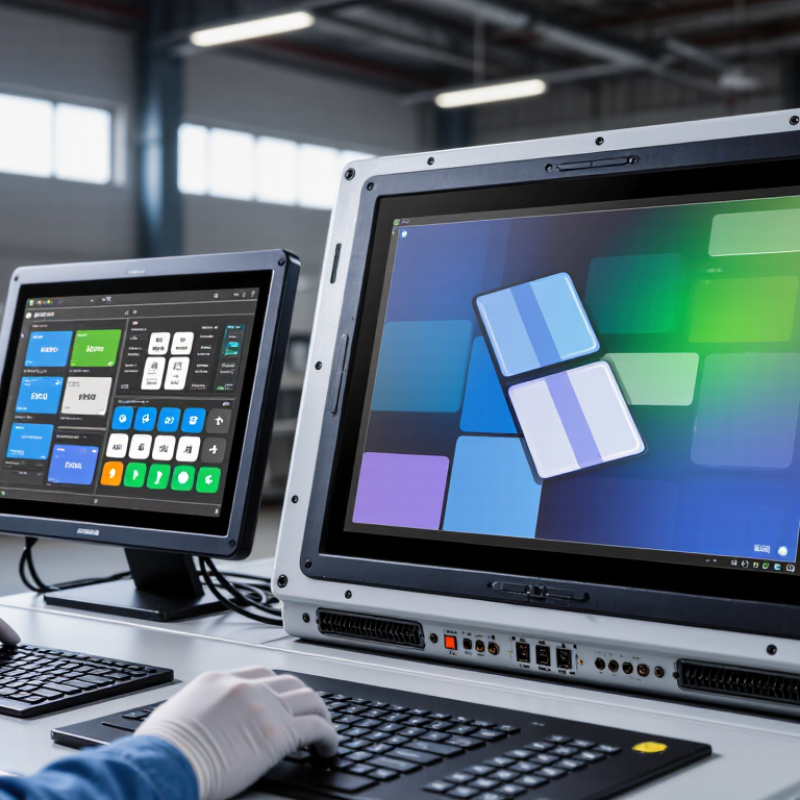
Industrial TFT LCD Basics and Core Display Technologies
Industrial TFT LCDs are active-matrix displays designed for continuous operation in demanding equipment. Each pixel uses a thin-film transistor to control liquid-crystal alignment and light transmission. A backlight supplies the light. Most modern units use LEDs for efficiency, long service life, and stable brightness. The glass cell, polarizers, color filters, and driver electronics work as one optical system. Small design differences matter.
TN panels switch quickly and cost less, but their viewing angles and color stability can be limited. IPS panels usually provide broader viewing angles and more consistent colors across the screen. VA structures can deliver stronger contrast, although motion behavior and temperature response require careful testing. For factory controls, sunlight readability may depend more on luminance, anti-glare treatment, and optical bonding than on panel type alone. I have seen bright screens become difficult to read when reflections were ignored. That was an expensive lesson.
Industrial selection also involves operating temperature, vibration, humidity, touch integration, and available interfaces. LVDS, eDP, and MIPI connections serve different system architectures and cable requirements. A wide temperature rating is useful, but it does not guarantee reliable performance in every enclosure. Engineers should test the complete display assembly, including the backlight driver and protective cover. Long cable runs can introduce noise. Brightness can also drift over time. Those details are easy to underestimate. A practical evaluation should record startup behavior, image uniformity, touch accuracy, and readability under real lighting. Specifications help. They do not replace testing.
Key Industrial TFT LCD Types for 2026 Global Applications
Industrial TFT LCD selection in 2026 depends on the working environment, not only screen size. High-brightness TFT displays suit outdoor control cabinets, vehicle terminals, and factory floors near large windows. Sunlight-readable models often combine stronger LED backlights with optical bonding. This reduces reflections and keeps alarms visible under direct light. In dusty workshops, sealed displays with stable touch performance are more practical.
IPS TFT LCD panels provide wide viewing angles and consistent color for machine vision dashboards, medical equipment, and shared operator stations. TN panels can remain useful where fast response and controlled viewing angles matter. Resistive touch works well with gloves, tools, or wet fingers. Projected capacitive touch offers smoother gestures, but thick gloves may reduce accuracy. Test this carefully.
Wide-temperature TFT LCD types support equipment installed in cold warehouses, outdoor kiosks, and hot electrical rooms. A rated operating range is important, but enclosure heat can change real performance. Engineers should check startup behavior, backlight aging, connector strength, and vibration resistance. In field evaluations, I have seen a bright panel fail because its touch controller was poorly tuned. That detail is easy to miss. Interface choices also matter, including HDMI, LVDS, MIPI, and industrial serial control. Some specifications look impressive on paper. Practical trials still deserve more attention.
| Industrial TFT LCD Type | Core Display Technology | Typical Size Range | Typical Resolution Range | Key Performance Characteristics | Recommended Industrial Applications | Main Selection Considerations |
|---|---|---|---|---|---|---|
| TN TFT LCD | Twisted Nematic liquid crystal mode with TFT active-matrix control | 3.5–15.6 inches | 320 × 240 to 1920 × 1080 | Fast response, low power consumption, mature supply chain, and cost-efficient production | Basic machine interfaces, industrial counters, test instruments, handheld meters, and control panels | Limited viewing angle and lower color consistency than IPS; best for cost-sensitive interfaces with mainly front-facing viewing |
| IPS TFT LCD | In-Plane Switching liquid crystal mode with TFT active-matrix control | 4.3–32 inches | 480 × 272 to 3840 × 2160 | Wide viewing angles, stable color performance, strong image uniformity, and good readability for shared-view displays | Human-machine interfaces, medical equipment, factory automation, logistics terminals, transportation displays, and control rooms | Usually requires more power than TN; verify brightness, thermal design, and touch compatibility for continuous operation |
| VA TFT LCD | Vertical Alignment liquid crystal mode with TFT active-matrix control | 7–32 inches | 800 × 480 to 3840 × 2160 | High native contrast, deep black levels, and strong image quality for dark or high-contrast interfaces | Industrial monitoring, process visualization, security equipment, energy systems, and control-room applications | Viewing-angle color shift and response behavior vary by panel design; evaluate motion performance and operating temperature |
| High-Brightness TFT LCD | TN, IPS, or VA panel combined with a high-output LED backlight | 5–32 inches | 800 × 480 to 3840 × 2160 | Typically 800–2,500 cd/m², improving readability in bright indoor areas and partially exposed environments | Outdoor kiosks, vehicle equipment, agricultural machinery, outdoor control cabinets, and factory floors with strong lighting | Higher brightness increases heat and power demand; confirm thermal management, backlight lifetime, and optical bonding requirements |
| Sunlight-Readable TFT LCD | High-brightness TFT LCD with anti-glare, optical bonding, reflective enhancement, or other sunlight-management features | 4.3–21.5 inches | 480 × 272 to 1920 × 1080 | Designed to preserve legibility under direct or indirect sunlight; often uses brightness levels above standard indoor panels | Outdoor automation, marine instruments, rail and road equipment, utility systems, construction machinery, and field service terminals | Check actual sunlight test conditions, surface reflectance, glove operation, condensation resistance, and enclosure design |
| Transflective TFT LCD | Hybrid transmissive-reflective panel structure using backlight and ambient light | 2.4–10.4 inches | 320 × 240 to 1280 × 800 | Uses ambient light to improve outdoor visibility while retaining backlight operation in low-light environments | Portable instruments, handheld diagnostic devices, outdoor meters, marine electronics, and battery-powered equipment | Color saturation and indoor brightness may differ from fully transmissive panels; validate performance across the full lighting range |
| Wide-Temperature TFT LCD | Industrial-grade TFT panel materials, liquid-crystal formulation, and backlight design optimized for extended temperatures | 3.5–21.5 inches | 480 × 272 to 1920 × 1080 | Common operating-temperature targets include approximately −20°C to +70°C or −30°C to +80°C, depending on the design | Outdoor cabinets, transportation systems, factory automation, energy infrastructure, and unmanned equipment | Confirm the specified operating and storage ranges, startup behavior, response time, condensation risk, and long-term availability |
| Ruggedized TFT LCD | Industrial TFT LCD integrated with reinforced cover glass, optical bonding, sealing, and mechanical protection | 4.3–24 inches | 480 × 272 to 1920 × 1200 | Improved resistance to vibration, shock, dust, moisture, and repeated touch interaction when properly engineered | Heavy equipment, warehouse terminals, utility control systems, transportation equipment, and industrial operator panels | Panel ruggedness depends on the complete module and enclosure; review IP rating, vibration profile, impact test, and connector retention |
| Projected-Capacitive Touch TFT LCD | TFT LCD combined with a projected-capacitive touch sensor and cover lens | 4.3–32 inches | 480 × 272 to 3840 × 2160 | Multi-touch support, smooth user interaction, durable glass surface, and easy integration with modern graphical interfaces | Industrial HMIs, laboratory equipment, medical devices, self-service terminals, building automation, and automation controllers | Standard capacitive touch may be affected by gloves, water, contaminants, and electromagnetic noise; industrial touch tuning may be required |
| Resistive Touch TFT LCD | TFT LCD combined with a pressure-sensitive resistive touch panel | 3.5–19 inches | 320 × 240 to 1920 × 1080 | Works with bare fingers, gloves, styluses, and many pointed tools; suitable for controlled single-point input | Process equipment, industrial terminals, measurement instruments, legacy control systems, and environments requiring glove operation | Lower optical clarity and limited multi-touch capability compared with projected capacitive touch; assess surface durability and calibration stability |
| High-Resolution Industrial TFT LCD | High-pixel-density IPS or VA TFT panel designed for detailed graphics and data visualization | 10.1–32 inches | 1920 × 1080 to 3840 × 2160 | Sharp text, detailed technical drawings, dense dashboards, and improved visibility of small interface elements | Machine vision, engineering workstations, medical imaging interfaces, digital control rooms, and advanced automation systems | Requires compatible graphics hardware, higher data bandwidth, and careful scaling for industrial software interfaces |
Data shown are typical industry ranges for preliminary comparison. Actual specifications vary by panel size, module design, touch configuration, backlight system, and operating environment.
Performance Specifications That Define Industrial Display Quality
Industrial TFT LCD quality is defined by how its specifications perform outside the laboratory. In field evaluations, brightness matters most near windows or under direct machine lighting. A 700-nit panel may suit indoor equipment, while outdoor controls often need 1,000 nits or more. High contrast keeps alarms readable against dark interfaces. Wide viewing angles reduce errors when operators stand beside the display.
Temperature performance deserves equal attention. Industrial panels may operate from -20°C to 70°C, depending on enclosure design and cooling. Response time should prevent blurred numbers during fast sensor updates. A five-millisecond response is useful, but it cannot correct poor software refresh rates. Touch accuracy also depends on gloves, moisture, and surface thickness. These details are often underestimated.
Reliability is not only a long backlight rating. Stable connectors, tested interfaces, and consistent color output affect maintenance over years. Optical bonding can reduce reflections and improve impact resistance, although it may increase cost and complicate repair. There is no perfect specification sheet. A panel with excellent brightness may consume more power, while a low-power model may lose visibility in sunlight. Buyers should compare measured performance, operating conditions, and installation limits rather than trust isolated numbers. Small testing gaps remain common, especially for glare and touch behavior. That deserves closer review.
2026 Best Industrial TFT LCD Types for Global Buyers
Performance Specifications That Define Industrial Display Quality
IPS panels provide the widest viewing angles, VA panels deliver the highest typical contrast, and TN panels generally offer faster response with lower power requirements. Transflective TFT LCDs are well suited to outdoor and sunlight-readable applications. Values shown are representative industry ranges; actual specifications vary by panel design and operating conditions.
How to Select the Right TFT LCD for Industrial Equipment
2026 Best Industrial TFT LCD Types for Global Buyers
Selecting the right TFT LCD begins with the equipment’s real working environment, not its product brochure. For outdoor controllers, high-brightness TFT LCDs improve readability under direct sunlight. IPS panels provide wide viewing angles for shared operator stations. TN panels can reduce cost and response time, but their color and viewing performance are limited. VA displays offer stronger contrast for darker rooms and monitoring cabinets.
Temperature matters. A screen installed beside a furnace needs a wide operating range and stable backlight performance. Dusty workshops may require sealed optical bonding and a durable touch surface. Projected capacitive touch supports modern gestures, while resistive touch can work better with gloves or tools. Check the interface, mounting size, power input, and expected production lifetime before approval. These details often cause more trouble than resolution.
Tips: Test the complete display inside the finished machine. Measure readability with gloves, vibration, sunlight, and low temperatures. Ask for sample units and reliability data, including backlight life and touch-cycle results. A bright panel is not always the best choice; excessive brightness may increase heat and power use. I have seen teams select a perfect laboratory display that failed beside a warm motor. That mistake is easy to repeat. Keep a replacement plan, because even reliable components eventually change.
Global Purchasing Factors for Industrial TFT LCD Buyers
Industrial TFT LCD purchasing begins with the machine, not the catalog. Buyers should define temperature ranges, vibration levels, humidity, and expected operating hours. A display near a furnace needs different protection than one inside a clean control cabinet. Sunlight matters too. High brightness can improve readability, but it may increase heat and power demand.
Touch performance requires practical testing. Check operation with gloves, wet fingers, and repeated presses. Confirm the viewing angle from the operator’s normal position. A wide angle is useful, yet contrast can fall when the panel is viewed from below.
Interface compatibility also deserves attention. Verify connector types, signal timing, mounting dimensions, and available drivers before ordering samples. Small mismatches can delay an entire production line.
Long-term supply is often underestimated. Ask about panel availability, replacement policy, inspection records, and change-notification procedures. Request sample data, not only marketing claims. Test carefully. Test several units at operating temperature, then inspect them after continuous use.
A specification sheet can still mislead. No screen is perfect. Dead pixels, uneven backlight, or touch drift may appear later. Buyers should define acceptable limits in writing and retain inspection evidence.
Compliance documents must match the actual model and destination market. Service support, packaging quality, and traceable batch information can matter as much as resolution. In difficult projects, a lower-resolution panel may prove more stable and easier to source. That tradeoff deserves honest review.
