
2026 Top Vibration Measurement Meter Types Buying Guide
Choosing the right Vibration Measurement Meter is no longer a simple specification exercise. Plants now balance portability, frequency range, data storage, sensor quality, and software compatibility. A technician standing beside a hot motor needs more than a bright display. They need repeatable readings, clear alarm limits, and dependable evidence.
Recent reports from Grand View Research and MarketsandMarkets identify vibration monitoring as a growing part of predictive maintenance. Their findings connect this growth with industrial automation, aging equipment, and the wider adoption of condition-based maintenance. ISO 20816 also reinforces the importance of evaluating machine vibration through consistent measurement practices. Still, market forecasts are not purchase instructions. They often overlook training quality, sensor placement, and difficult field conditions.
Jason Tranter, founder of Mobius Institute, expresses the practical principle clearly: “A measurement is only valuable when it changes a decision.” That idea should guide this 2026 buying guide. A handheld meter may suit quick checks across pumps and fans. A wired analyzer may deliver deeper bearing and gearbox information. Wireless systems can improve route coverage, but battery life and network reliability deserve scrutiny. Small details matter. A loose magnetic mount can distort a reading. A poorly selected frequency range can hide an early fault.
No instrument eliminates professional judgment. That is the uncomfortable part. Buyers must compare real operating conditions, not impressive brochures. This guide examines the leading Vibration Measurement Meter types, their strengths, limitations, and practical applications, helping maintenance teams make a more defensible choice.
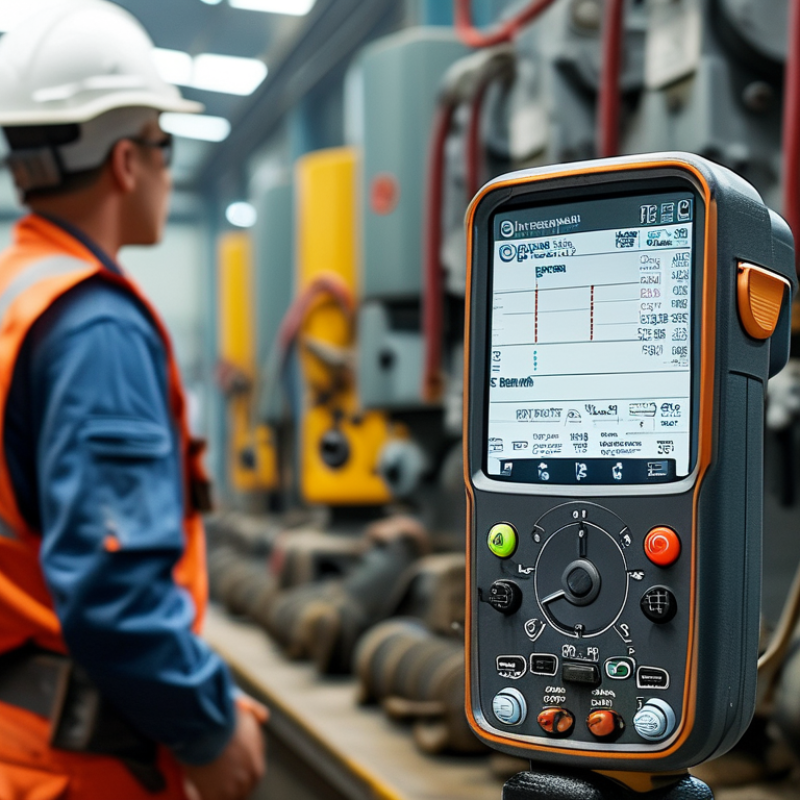
What Is a Vibration Measurement Meter?
2026 Top Vibration Measurement Meter Types Buying Guide
What Is a Vibration Measurement Meter?
A vibration measurement meter is a portable instrument that detects mechanical movement in machines. It uses a sensor to measure acceleration, velocity, or displacement. Most field meters use an accelerometer attached to a motor, pump, fan, or bearing housing. The screen may show RMS velocity, peak acceleration, and vibration frequency. These values help technicians identify imbalance, looseness, misalignment, or bearing wear.
The reading is not magic.
In a workshop, I place the sensor on a clean, rigid surface near the bearing. A loose magnet can produce misleading results. For repeatable measurements, keep the same test point, direction, and machine load.
Handheld meters suit quick maintenance checks. Vibration analyzers provide deeper frequency information. Wireless meters can monitor difficult or hazardous locations remotely. Choose the type according to measurement depth, access, and reporting needs.
Accuracy also depends on calibration, temperature, cable condition, and mounting pressure. A calibration check before regular inspections improves confidence in the data.
I once treated a high reading as a machine fault, but the sensor was poorly positioned. That mistake was useful. It showed why experienced technicians compare readings with operating history and visual evidence. A reliable meter should offer clear units, stable readings, suitable frequency range, and documented calibration support.
How Vibration Meters Work and What They Measure
2026 Top Vibration Measurement Meter Types Buying Guide: How Vibration Meters Work and What They Measure
A vibration meter converts machine movement into measurable electrical signals. Most portable meters use piezoelectric or MEMS accelerometers. These sensors detect acceleration in meters per second squared, usually expressed as RMS values. The instrument can also calculate velocity, displacement, crest factor, and peak levels.
Some advanced meters apply Fast Fourier Transform analysis. This separates a complex vibration signal into frequencies, helping technicians connect peaks with imbalance, misalignment, looseness, or bearing wear. ISO 20816-1 defines general measurement conditions for evaluating machine vibration. However, limits depend on machine type, speed, mounting, and operating load. One number never tells the whole story.
Tips: Measure at the same points, direction, and operating condition each time. Record speed, load, sensor position, and temperature. A shiny metal surface may produce a different reading from a painted housing. Do not treat an alarm as a diagnosis. Compare trends with baseline data and maintenance records. The U.S. Department of Energy’s Operations & Maintenance Best Practices Guide reports that predictive maintenance may reduce maintenance costs by 25–30% and downtime by 35–45%. Those figures are useful, but real savings vary. Poor sensor placement can quietly weaken the result. That is the uncomfortable part.
Main Types of Vibration Measurement Meters
Vibration measurement meters generally fall into four practical types: pen-style meters, handheld analyzers, portable data collectors, and permanently installed monitors. Pen meters are compact and fast. They usually measure vibration velocity in mm/s or in/s, making them useful for pumps, fans, and motors. Handheld analyzers add frequency analysis, acceleration readings, and route-based inspections. Portable data collectors suit larger maintenance programs because technicians can compare measurements across machines and operating periods.
Installed monitors provide continuous readings through sensors mounted near bearings or housings. They can track acceleration, velocity, displacement, temperature, and sometimes bearing-condition indicators. A 2023 MarketsandMarkets report estimated the global vibration monitoring market at about USD 1.6 billion, forecasting growth to approximately USD 2.3 billion by 2028. Grand View Research also identifies predictive maintenance as a major market driver. The numbers vary between reports. That difference deserves attention.
Selecting a meter depends on the machine, measurement point, and decision speed. A simple motor may need a reliable overall-value meter. A gearbox with changing load may require a triaxial accelerometer and spectrum analysis. Wireless systems reduce manual rounds, but battery life, signal quality, and sensor mounting can weaken results. I have seen teams overbuy advanced instruments, then use only basic readings. That is an expensive mismatch. Measurement range, calibration traceability, IP protection, and compliance with ISO 20816 should receive equal weight during purchasing.
How to Compare Meter Specifications and Features
Choosing a vibration measurement meter in 2026 requires more than comparing price tags. Start with the measurement range. Acceleration suits high-frequency faults, while velocity helps assess rotating equipment. Displacement remains useful for slow, large movements. A narrow frequency range can hide important machine behavior.
Check sensitivity, resolution, and dynamic range together. High sensitivity is valuable in low-level monitoring, but it may overload during impacts. Ask how the meter handles sampling and signal processing. FFT functions can reveal bearing or imbalance patterns, while time-waveform views show sudden shocks. Clear units and adjustable filters reduce interpretation errors. They matter.
In field inspections, sensor mounting often affects results more than expected. A loose magnetic base can produce misleading peaks. Stud mounting is more stable, but it takes longer. Consider probe access, cable strength, screen visibility, and operation with gloves. An IP rating supports dusty or damp sites, yet it does not replace careful storage. Battery life, calibration records, internal memory, and simple data export also deserve comparison. I once focused too heavily on frequency range and overlooked poor documentation. That slowed diagnosis. It was an avoidable mistake. Check whether the meter supports recognized measurement practices and whether calibration can be verified by an independent laboratory. Some advanced features look impressive, but unused functions increase training time and may complicate routine checks.
2026 Top Vibration Measurement Meter Types Buying Guide - How to Compare Meter Specifications and Features
| Meter Type | Primary Measurement | Typical Frequency Range | Typical Amplitude Range | Measurement Accuracy | Measurement Parameters | Sensor Configuration | Display and Data Storage | Connectivity | Typical Protection | Typical Battery Life | Best-Fit Applications | Key Buying Checks |
|---|---|---|---|---|---|---|---|---|---|---|---|---|
| Vibration Pen Meter | Overall vibration velocity and sometimes acceleration | Approximately 10–1,000 Hz | Velocity: approximately 0–50 mm/s RMS | Typically ±5% of reading, depending on frequency and sensor mounting | Velocity RMS; some models also provide acceleration or displacement | Built-in piezoelectric accelerometer with fixed probe or magnetic tip | Small LCD; limited or no internal memory | Usually none; some models offer USB data export | Typically IP54–IP65 | Approximately 20–60 hours of active measurement | Fast screening of motors, pumps, fans, compressors and small rotating machines | Check probe repeatability, display resolution, automatic range selection and access to measurement points |
| General-Purpose Handheld Vibration Meter | Overall machine vibration severity | Approximately 10–10,000 Hz | Velocity: approximately 0–100 mm/s RMS; acceleration up to about 100 g peak on selected ranges | Typically ±3% to ±5% of reading | Acceleration, velocity and displacement; RMS, peak and peak-to-peak values | External IEPE or integrated accelerometer; magnetic base, stud or hand probe | Color or monochrome display; often stores 100–10,000 readings | USB, Bluetooth or optional wireless transfer | Typically IP54–IP67 | Approximately 8–24 hours of continuous use | Routine maintenance, acceptance testing and basic condition-based monitoring | Compare sensor compatibility, frequency weighting, alarm limits, memory capacity and calibration certificate options |
| Two-Channel Portable Vibration Analyzer | Detailed vibration analysis and comparative measurements | Approximately 0.5–20,000 Hz, depending on sensor and sampling rate | Acceleration commonly up to 50–100 g peak; range depends on input module | Typically ±1% to ±3% of reading after calibration | Time waveform, FFT spectrum, overall values, crest factor, phase and orbit data | One or two IEPE accelerometer inputs; optional tachometer or phase reference | High-resolution display; typically stores thousands of spectra and time waveforms | USB, Ethernet, Bluetooth or Wi-Fi, depending on configuration | Typically IP51–IP65 | Approximately 4–12 hours of field use | Fault diagnosis involving imbalance, misalignment, looseness, bearing defects and resonance | Review maximum sampling rate, anti-alias filters, FFT lines, window functions, channel synchronization and tachometer support |
| Route-Based Data Collector | Repeatable condition monitoring across predefined asset routes | Approximately 2–10,000 Hz for standard vibration routes | Velocity commonly up to 100 mm/s RMS; acceleration ranges vary by sensor | Typically ±3% of reading, with repeatability strongly affected by mounting method | Overall vibration, FFT, time waveform, temperature, process values and alarm status | External accelerometer, magnetic base, quick-connect probe and optional infrared temperature sensor | Touchscreen or keypad interface; route databases may support tens of thousands of points | USB, Wi-Fi, Bluetooth or cellular synchronization through software | Typically IP65–IP67 | Approximately 8–16 hours per charge | Large plants with scheduled inspection routes and centralized maintenance records | Check route-management software, database compatibility, alarm standards, barcode or RFID support and export formats |
| Wireless Vibration Sensor | Continuous or periodic remote vibration monitoring | Approximately 0.5–10,000 Hz; high-frequency limits vary by sampling mode | Acceleration commonly up to 16–80 g peak | Typically ±5% of reading; wireless systems should also specify transmission reliability | RMS acceleration or velocity, peak acceleration, temperature, waveform and selected FFT features | Integrated MEMS or piezoelectric sensor; fixed stud, adhesive or magnetic mounting | No local display on most units; data viewed in a gateway or software platform | Bluetooth Low Energy, proprietary sub-GHz, Wi-Fi, LoRaWAN or cellular via gateway | Typically IP65–IP68 | Approximately 1–5 years for periodic sampling; shorter for continuous high-rate streaming | Hard-to-access assets, remote equipment, safety-critical locations and high asset-count programs | Compare sampling interval, battery replacement method, network range, cybersecurity, data ownership and gateway capacity |
| Industrial Vibration Transmitter | Real-time vibration monitoring integrated with a control system | Commonly 10–1,000 Hz or 10–10,000 Hz, depending on model | Velocity or acceleration ranges commonly configured for the machine duty | Typically ±2% to ±5% of full scale | 4–20 mA overall vibration, switching alarm output and optional digital diagnostics | Permanent accelerometer or velocity sensor with threaded mounting | No local display on many units; values are shown in PLC, SCADA or DCS systems | 4–20 mA, relay, HART, Modbus or other industrial protocols | Typically IP65–IP68 | Powered continuously by the control system | Critical pumps, fans, motors, compressors and automated shutdown protection | Verify loop power requirements, output scaling, alarm response time, isolation, hazardous-area approvals and EMC performance |
| Vibration Calibrator | Verification of accelerometers, vibration meters and monitoring channels | Usually a fixed calibration frequency, commonly 159.2 Hz or 80 Hz | Common reference levels include 1 g RMS or 10 m/s² RMS, depending on the calibrator | Typically ±3% to ±5% of reference level | Reference acceleration, frequency and sensor output verification | Built-in shaker with adapters for common sensor thread sizes | LCD or status indicators; may store verification results | USB or serial communication on advanced models; often none on basic units | Typically IP40–IP54 | Approximately 4–12 hours of active operation | Pre-use checks, field verification, maintenance laboratories and audit documentation | Check load capacity, adapter compatibility, frequency stability, reference uncertainty and traceable calibration service |
How to Choose the Right Vibration Meter for Your Needs
2026 Top Vibration Measurement Meter Types Buying Guide
Choosing the right vibration meter starts with the machine, not the instrument.
A small handheld meter may suit routine motor checks. A triaxial analyzer offers deeper information for pumps, fans, and gearboxes. Decide whether you need acceleration, velocity, displacement, or all three. Velocity often helps assess overall machine severity. Acceleration can reveal early bearing damage. Displacement remains useful for slower rotating equipment.
Check the operating environment carefully.
Dust, oil mist, heat, and moisture can quickly expose weak equipment. A rugged enclosure matters on factory floors. The sensor must mount firmly, because a loose magnet can distort readings.
Cable length also affects daily convenience. Choose a meter with a clear display, simple controls, and enough memory for repeated inspections. Data export is valuable when maintenance teams compare trends over several weeks.
Standards such as ISO 20816 can support consistent evaluation, but they do not replace engineering judgment.
Always compare readings at the same measurement points and operating conditions. Calibration records improve confidence in reported results.
One common mistake is buying the most advanced meter without training the users. More features can create slower, less consistent inspections.
I would rather trust a simpler meter used correctly.
Still, this judgment deserves review when machinery becomes faster, quieter, or more complex. Short trials can reveal that gap.
