What Is the Best Carbon Water Filter from China?

Choosing the best carbon water filter from China requires more than comparing prices and product photos. China has a broad manufacturing base, including activated carbon block filters, granular carbon cartridges, countertop units, and whole-house systems. Each design addresses different water concerns. A compact carbon block filter may improve taste and chlorine odor at a kitchen tap. A larger system may serve several bathrooms, but it needs stronger flow control and regular maintenance.

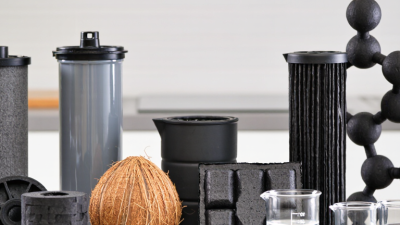
In this guide, we examine how materials, filtration ratings, manufacturing quality, and supplier transparency affect performance. Activated carbon source matters. Coconut-shell carbon often provides a suitable surface structure, while coal-based carbon may perform differently. These details should be confirmed through technical documents, not assumed from marketing language. Look for independent test reports, production records, NSF or equivalent certification where applicable, and clear replacement schedules. Ask about lead testing, batch consistency, housing durability, and the actual contact time inside the cartridge.

The “best” choice is not always the most expensive one. It should match your water report, daily consumption, installation space, and maintenance habits. A filter that sits unused under the sink is not a reliable solution. Real experience also reveals weaknesses: some cartridges reduce flow quickly, and some supplier claims remain difficult to verify. That uncertainty deserves attention. We will compare practical options, explain common carbon technologies, and identify questions buyers should ask before placing an order. Clean water deserves careful evidence.
What Is the Best Carbon Water Filter from China?

What Makes a Carbon Water Filter from China Effective?

What Is the Best Carbon Water Filter from China?

What Makes a Carbon Water Filter from China Effective?

A carbon water filter from China becomes effective through adsorption, design control, and verified testing. Activated carbon can reduce chlorine, unpleasant odors, and several organic chemicals. The U.S. Environmental Protection Agency’s Drinking Water Treatability Database stresses that results depend on carbon type, contact time, and flow rate. Fast water movement often means weaker treatment. Real homes are messier.

The carbon source matters. Coconut-shell carbon usually provides many small pores, while coal-based carbon may suit different compounds. A dense carbon block can also improve particle reduction. However, neither material removes every contaminant. The World Health Organization’s Guidelines for Drinking-water Quality warns that treatment performance must match the specific hazard. A filter designed for taste cannot automatically remove bacteria, nitrate, or heavy metals.

Independent certification provides stronger evidence than a polished product sheet. NSF/ANSI 42 evaluates aesthetic claims, while NSF/ANSI 53 addresses specific health-related contaminants. Test reports should show contaminant names, reduction percentages, rated capacity, and flow conditions. They should also identify the testing laboratory. The WHO and UNICEF Joint Monitoring Programme reported that 2.2 billion people lacked safely managed drinking water in 2022, showing why claims need careful verification. I would inspect seals, replacement dates, and batch records too. A low price is useful, but it proves little. Forgotten cartridge changes remain a common weakness.

Which Types of Chinese Carbon Water Filters Are Available?

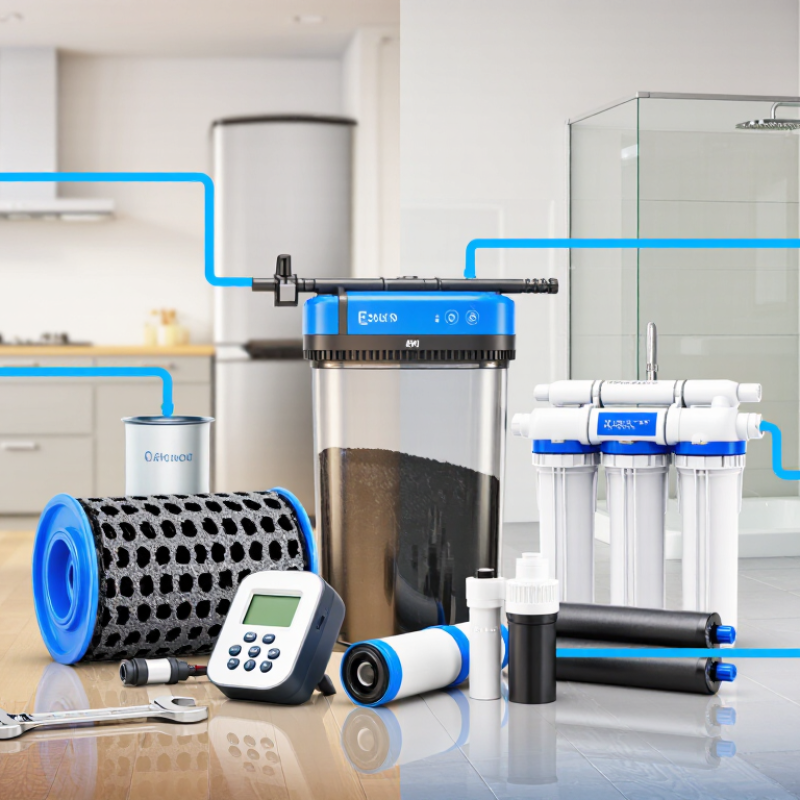
Chinese carbon water filters are available in several practical forms, each serving a different installation. Granular activated carbon filters use loose particles inside a cartridge. They are affordable and improve taste and odor. Carbon block filters compress fine carbon into a dense cylinder. They usually capture smaller particles, but water flows more slowly. These are common under kitchen sinks. Small, but useful. Powdered activated carbon appears in some compact or gravity-fed designs. However, cartridge stability and replacement quality deserve close inspection.

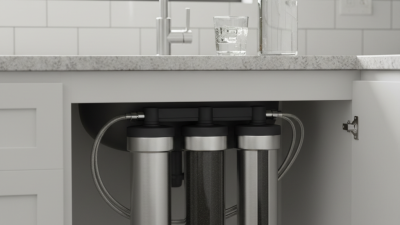
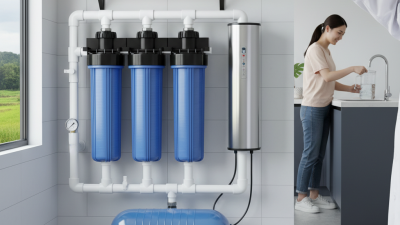
Chinese suppliers also produce inline filters, countertop units, under-sink systems, and whole-house housings. Inline models fit refrigerator lines or narrow drinking-water connections. Countertop filters need little plumbing and suit rented apartments. Under-sink systems offer a cleaner appearance and larger capacity. Whole-house carbon tanks treat showers and taps, yet they may need prefiltration for sediment. Carbon often reduces chlorine and unpleasant odors. It is not a universal purifier. Most carbon media do not reliably remove dissolved salts, nitrates, or microbes without additional treatment. That limitation is easy to overlook.

Material choice also matters. Coconut-shell carbon often offers strong microporosity, while coal-based carbon supports broader adsorption. Wood-based carbon may suit certain organic compounds. Performance depends on contact time, pressure, temperature, and cartridge age. Request independent test reports, production-batch data, and clear replacement instructions. Look for recognized testing against relevant standards, such as NSF/ANSI 42 or 53. Claims need matching test conditions. Specifications can look impressive, yet omit flow rate and service life. That omission should make buyers pause.

How to Compare Filter Materials, Capacity, and Performance

Choosing the best carbon water filter from China requires more than checking carbon weight. Material quality matters first. Granular activated carbon usually offers lower cost and easier flow. Carbon block filters provide tighter contact and often better sediment control. However, dense blocks can reduce pressure quickly. Coconut-shell carbon may perform well for chlorine and taste, but feedwater chemistry still changes results. The WHO Guidelines for Drinking-water Quality identify contact time, carbon type, and water composition as major performance factors. Cheap carbon is not automatically poor. Unverified claims are the real concern.

Capacity should be compared in liters, not cartridge size. Ask for tested capacity, inlet chlorine level, flow rate, and replacement conditions. NSF/ANSI 42 covers aesthetic claims, while NSF/ANSI 53 addresses specific health-related contaminants. NSF/ANSI 401 covers selected emerging compounds. Certification must match the exact contaminant claim. The U.S. EPA Drinking Water Treatability Database also shows that activated carbon performance varies by contaminant and operating conditions. WHO and UNICEF reported 2.2 billion people lacked safely managed drinking water in 2022, but a household filter cannot correct every water risk. I would request independent test results, batch details, and a clear breakthrough curve. Many product sheets omit that uncomfortable detail. A filter may work beautifully for 2,000 liters, then perform poorly after saturation. Sediment prefiltration, a cool storage area, and timely replacement can protect performance. Still, replacement estimates are only estimates. Real testing matters.

What Is the Best Carbon Water Filter from China? — How to Compare Filter Materials, Capacity, and Performance
Filter Material or Configuration Typical Construction Main Contaminant Reduction Typical Micron Rating Typical Service Capacity Typical Flow Rate Performance Advantages Limitations and Selection Notes
Granular Activated Carbon (GAC) Loose granules made from coconut shell, wood, or coal-based activated carbon inside a cartridge or pressure vessel. Chlorine, taste, odor, and many dissolved organic compounds. Usually 20–50 microns as a media bed; it is not primarily a fine-particle filter. Approximately 2,000–20,000 liters for point-of-use cartridges, depending on carbon mass and inlet water quality. Approximately 1–4 liters per minute for common under-sink cartridges. Low pressure drop, relatively high carbon loading, and good adsorption performance when contact time is sufficient. May release carbon fines if not flushed properly. Performance can decline quickly when sediment or organic matter blocks the bed.
Activated Carbon Block Finely powdered activated carbon compressed with a binder into a solid porous block. Chlorine, taste, odor, many organic compounds, and suspended particles; some designs also reduce cysts. Commonly 0.5–5 microns Approximately 2,000–15,000 liters, depending on block size, carbon quality, and certified claims. Approximately 1–3 liters per minute for 0.5–1 micron blocks; higher-flow blocks may reach 4–6 liters per minute. More consistent particle filtration and longer contact between water and carbon than many GAC cartridges. Higher pressure drop than GAC. A sediment pre-filter is recommended when the source water contains visible particles.
Coconut-Shell Activated Carbon Activated carbon produced from coconut shells, commonly supplied as GAC or molded carbon block. Chlorine, taste, odor, and many small-to-medium organic molecules. Depends on the final cartridge design; commonly 0.5–50 microns. Approximately 2,000–12,000 liters in household cartridges. Approximately 1–4 liters per minute, depending on form and pore structure. Microporous structure can provide strong adsorption for chlorine and many low-molecular-weight compounds. Carbon source alone does not determine performance. The iodine number, carbon mass, block density, contact time, and test results should also be checked.
Coal-Based Activated Carbon Activated carbon made from bituminous or other coal-based feedstock, supplied as GAC or carbon block. Chlorine, taste, odor, and a broad range of organic contaminants. Depends on cartridge design; commonly 0.5–50 microns. Approximately 2,000–15,000 liters in household applications. Approximately 1–5 liters per minute, depending on carbon form and pressure. Often provides a balanced pore-size distribution for removing a wide range of organic compounds. Quality varies by activation process and ash content. Request material specifications and independent performance data rather than relying only on the feedstock description.
Catalytic Carbon Modified activated carbon designed to promote faster reactions at the carbon surface. Chloramine, chlorine, hydrogen sulfide, taste, odor, and selected organic compounds. Commonly 5–20 microns in cartridge form; the carbon media itself is not a particle barrier. Approximately 1,000–10,000 liters for household cartridges; chloramine capacity is highly water-specific. Approximately 1–3 liters per minute when adequate empty-bed contact time is provided. Generally more effective than standard activated carbon for chloramine reduction. Chloramine removal requires sufficient contact time. Verify results using the actual chloramine concentration, pH, temperature, and flow rate of the application.
Silver-Impregnated Activated Carbon Activated carbon treated with a small amount of silver, usually to inhibit microbial growth inside the media. Chlorine, taste, odor, and selected organic compounds; it is not automatically a complete disinfection system. Usually 0.5–20 microns, depending on whether the media is GAC or carbon block. Approximately 2,000–12,000 liters, depending on carbon mass and application. Approximately 1–4 liters per minute. May help control bacterial growth within a cartridge during storage or intermittent use. Silver impregnation should not be treated as proof of virus or bacteria removal. Confirm regulatory compliance and migration limits for drinking-water use.
Carbon Block with Sediment Pre-Filter A layered cartridge combining a polypropylene or similar sediment layer with an activated carbon block. Sand, rust, dust, chlorine, taste, odor, and many organic compounds. Commonly 0.5–5 microns for the carbon stage Approximately 2,000–10,000 liters, depending on sediment loading and carbon quantity. Approximately 1–3 liters per minute. Reduces premature clogging of the carbon block and provides a practical balance of particle and chemical filtration. More filtration stages can increase pressure loss. Replace the cartridge when flow drops noticeably or when the rated capacity is reached.
Carbon plus Ultrafiltration Membrane Activated carbon stage combined with a hollow-fiber ultrafiltration membrane. Chlorine, taste, odor, many organics, bacteria, cysts, and fine particles, subject to the membrane rating. Carbon stage commonly 0.5–5 microns; UF membrane commonly about 0.01 microns Approximately 2,000–10,000 liters for the carbon stage; membrane life depends on water quality and cleaning design. Approximately 1–3 liters per minute for gravity or low-pressure household systems. Combines adsorption with physical removal of many microorganisms and colloidal particles. Ultrafiltration does not normally remove dissolved salts. The membrane must be protected from excessive sediment and disinfected or replaced according to the design.
Carbon plus Reverse Osmosis System Pre-carbon, sediment, reverse-osmosis membrane, and post-carbon stages in one system. Chlorine, taste, odor, many organics, dissolved salts, heavy metals, fluoride, and microorganisms, depending on the membrane and system design. Pre-filter commonly 1–5 microns; RO membrane separation is approximately 0.0001 micron equivalent. Common household membrane ratings are approximately 190–380 liters per day under specified test conditions. Typical treated-water delivery is approximately 0.1–0.5 liters per minute; storage tanks improve availability. Broadest contaminant reduction among the configurations listed, especially for dissolved inorganic contaminants. Produces a reject-water stream, requires adequate feed pressure, and removes beneficial minerals unless a remineralization stage is added.
Comparison guidance: Rated capacity and flow rate are not universal values. Actual results depend on carbon mass, iodine number, carbon-block density, empty-bed contact time, inlet pressure, temperature, pH, contaminant concentration, and sediment loading. For a reliable purchase decision, request independent test data for chlorine or chloramine reduction, particulate reduction, pressure drop, and capacity under clearly stated conditions. A filter certified to the relevant drinking-water performance standard is preferable to a product evaluated only by laboratory claims.

What Certifications and Quality Standards Should Buyers Check?

When choosing a carbon water filter from China, verify the certification behind each performance claim. The WHO/UNICEF Joint Monitoring Programme reported that 2.2 billion people lacked safely managed drinking water in 2022. That figure makes traceable testing more than paperwork.

Check whether the exact model holds NSF/ANSI 42 certification for chlorine, taste, and odor reduction. NSF/ANSI 53 covers selected health-related contaminants, while NSF/ANSI 401 addresses certain emerging compounds. A supplier saying “tested to” is not the same as certified. Request the certificate number, laboratory report, test contaminant, flow rate, capacity, and replacement interval. Tiny details matter.

The laboratory should preferably follow ISO/IEC 17025 requirements for technical competence. ISO 9001 can support consistent manufacturing, but it does not prove contaminant removal. For Chinese production, compare test results with GB 5749-2022 drinking-water limits and inspect factory batch records. Carbon performance changes with water pressure and contact time. It can disappoint.

Look for independent reports using challenge-water tests, not only internal photographs or broad claims. The U.S. EPA notes that treatment claims must match tested contaminants and operating conditions. Ask how lead, chlorine, or volatile compounds were measured. Also check microbial protection separately; ordinary activated carbon is not automatically a disinfectant. I would hesitate when a seller provides impressive percentages without raw data, expiry controls, or a clear cartridge change warning.

What Is the Best Carbon Water Filter from China?

The best filter should be selected by verified performance claims, not by origin or brand name. This chart shows the main areas covered by widely used drinking-water standards and certifications that buyers should check.

Buyer guidance: NSF/ANSI 42 is commonly associated with aesthetic improvements such as chlorine taste and odor. NSF/ANSI 53 addresses specific health-related contaminant reduction claims. NSF/ANSI/CAN 372 focuses on lead content in drinking-water system components, while NSF/ANSI 401 covers selected emerging contaminants. NSF/ANSI 58 applies to reverse-osmosis systems rather than ordinary carbon-only filters. Always verify the exact model, claim, test method, replacement-cartridge configuration, and certificate status.

How to Choose the Best Carbon Water Filter for Your Needs

Choosing the best carbon water filter from China starts with your actual water problem. Test your tap water before comparing products. Carbon filters can reduce chlorine, odors, and some organic compounds. They do not remove every contaminant.

In my experience, filter selection becomes easier after checking the carbon type, contact time, and rated flow. Granular carbon may suit basic household use. Carbon blocks often provide finer filtration, but they can slow the water stream. Check the pore size carefully. A smaller rating is not always better. Ask for independent test reports, material safety documents, and batch information. For products made in China, reliable documentation matters more than attractive packaging. Look for testing against recognized drinking-water standards. Also confirm whether the claimed performance applies to your exact model.

Think about daily use, not only laboratory figures. A small cartridge may work for one person, but fail in a busy kitchen. Measure your water consumption for a week. Then compare the rated capacity and replacement cost. I once chose a filter with an impressive capacity, but its flow became weak too quickly. That experience changed my priorities. Easy replacement matters. So does a sealed, food-contact housing. Replace the cartridge on schedule, even when the water still tastes normal. Stagnant carbon can become less effective. Local water conditions may also change, so occasional retesting is sensible. No filter fits every home.