10 Best Water Filtration Systems for Home and Business
Choosing among the top water filtration systems starts with understanding the water you use. A home may need help with chlorine taste at the kitchen tap, while a busy café may need greater capacity and steady flow. Those are different jobs. This guide introduces ten options for home and business settings, including under-sink, countertop, and whole-house designs. It considers practical factors such as installation, filter life, maintenance, and the contaminants each system is designed to reduce. A filter’s claims should match its specific model and certification, so check the product documentation rather than relying on broad promises.
There is no universal best choice. A household well and a municipal supply can have different concerns, and a business’s daily demand can change what works. Reviewing a recent water-quality report is a useful starting point; when the results are unclear, qualified testing may help. One detail is easy to overlook: replacement cartridges add ongoing cost and require attention. A neglected filter may not perform as intended. Small chore. The comparisons ahead aim to make trade-offs easier to see, not to replace professional advice or local water testing. Product lists can make this decision seem simpler than it is. Consider your water source, usage, budget, and available space before choosing a system.
How Water Filtration Systems Remove Contaminants
Water filtration is a chain of targeted barriers, not a single “purity” switch. The 2023 WHO/UNICEF Joint Monitoring Programme report estimated that 2.2 billion people lacked safely managed drinking water in 2022. That global figure cannot diagnose a kitchen tap. Local testing can. A glass that looks clear may still contain dissolved metals or microbes, so appearance alone is weak evidence.
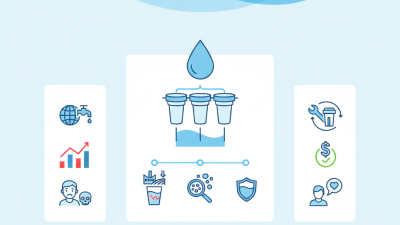
Different stages address different hazards. A sediment cartridge catches grit and rust before they clog finer media. Activated carbon adsorbs many taste- and odor-causing compounds, while reverse osmosis uses a membrane to reduce many dissolved salts and selected contaminants. Performance depends on feed-water chemistry, pressure, and membrane condition. UV treatment can inactivate microorganisms, but it does not remove chemicals; cloudy water can interfere with treatment. The U.S. EPA Drinking Water Treatability Database organizes methods by contaminant, reinforcing a practical point: match treatment to test results. NSF/ANSI standards 42, 53, and 58 cover different reduction claims, not universal purity. Check the specific claim. I would retest after installation, too. Filters can expire quietly.
Key Factors for Evaluating Home and Business Systems
A sound comparison begins with a water test, not a product list.
WHO and UNICEF’s 2023 Joint Monitoring Programme report estimated that 2.2 billion people lacked safely managed drinking water in 2022. That global figure is not a measure of local tap-water risk. Test the source for specific concerns, then match treatment claims to those results. The CDC reports that about one in five sampled private wells had contaminants at levels that could affect health. Wells and municipal supplies need different checks. No shortcut here.
For any home or business system, verify the exact contaminant reduction claim and its independent certification. NSF/ANSI 42 covers aesthetic effects, while 53 addresses specified health effects; 58 applies to reverse-osmosis systems. Certification is claim-specific, not proof that a unit removes everything.
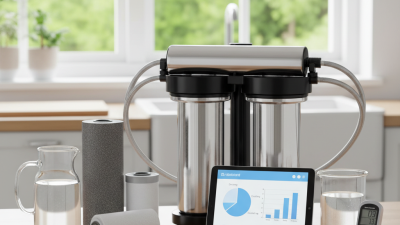
Compare rated flow, capacity, replacement-filter cost, and service intervals. For an office or café, peak-hour demand matters: a unit that fills a glass slowly may frustrate staff. Check installation space and wastewater needs, too. A tidy comparison table can still mislead; published capacity may not reflect your water pressure or daily use. Ask for test results and maintenance records, then leave room for real-world variation.
Ten Top Water Filtration Systems at a Glance
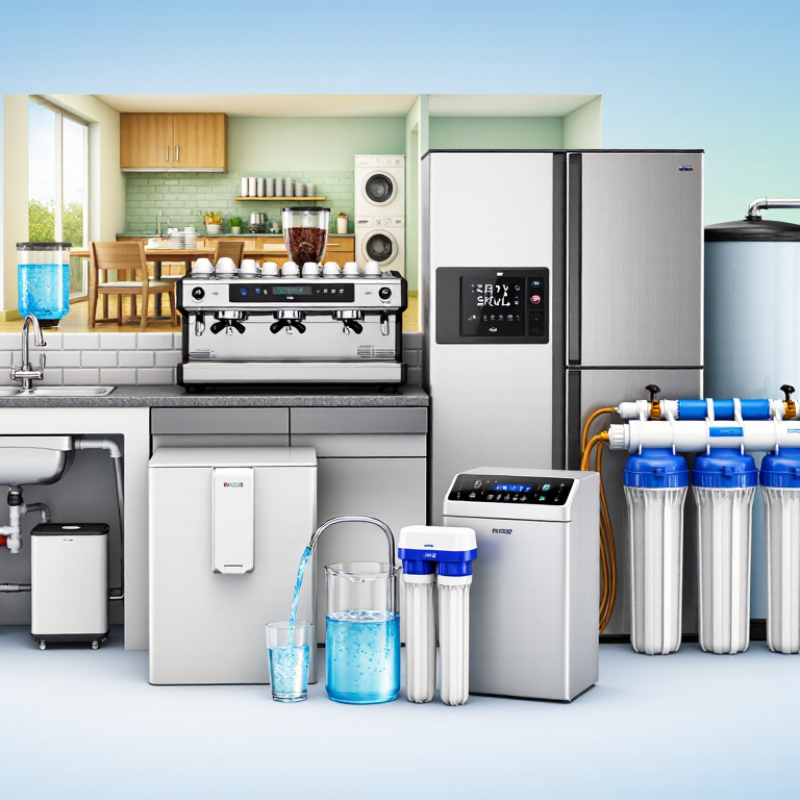
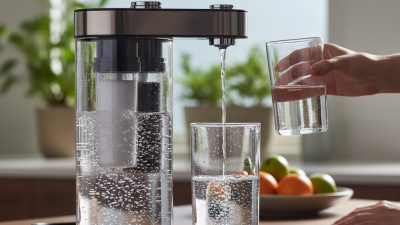
A useful comparison starts with the water problem, not the number of features. Pitcher filters and faucet-mounted units suit renters and light daily use. Countertop gravity filters need no plumbing, while powered countertop units can offer faster flow. Under-sink carbon systems treat water at one tap; reverse-osmosis systems remove a broader range of dissolved substances but may waste some water. Every setup has trade-offs.
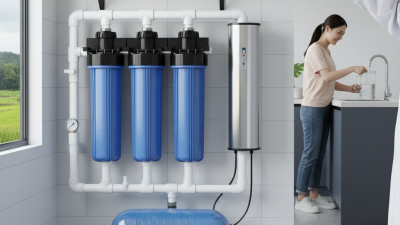
For a whole property, sediment filters catch grit before it reaches appliances. Whole-house carbon systems can reduce certain tastes and odors. Ultraviolet units target microorganisms, but they do not remove sediment or chemicals. Water softeners address hardness; they are treatment devices, not general-purpose filters. Needs vary. A system’s performance depends on the incoming water, correct installation, and timely maintenance. Even a well-designed unit can disappoint if its cartridges are overdue.
Tips: Check a recent water report or use a qualified laboratory when the source is uncertain. Match the system’s independently verified claims to the specific contaminants you need to reduce. Measure available space and water pressure before buying. Keep replacement dates visible; it is easy to forget. A small limitation matters: no single system is best for every home or business.
10 Best Water Filtration Systems for Home and Business
U.S. EPA Drinking Water Contaminant Benchmarks
These bars show U.S. EPA maximum contaminant levels (MCLs), not filtration-system performance ratings. Lower benchmarks indicate stricter allowable concentrations; actual treatment needs depend on local water test results. Nitrate is measured as nitrogen. Source: U.S. EPA National Primary Drinking Water Regulations.
Comparing Systems by Capacity, Technology, and Use
A home system should match the water problem, not just the household size. The WHO/UNICEF Joint Monitoring Programme reported that 2.2 billion people lacked safely managed drinking water in 2022, a reminder that water risks vary widely by location. For a home, an activated-carbon pitcher or under-sink unit may improve taste and reduce certain listed contaminants. Reverse osmosis can reduce a broader range, but it typically uses more water and needs membrane changes. Capacity matters. Check both rated gallons and flow: a filter that serves one kitchen tap may frustrate a busy family filling bottles at breakfast.
For businesses, compare peak demand, daily volume, and service-flow ratings. A café needs steady output during rushes; an office may prioritize simple cartridge changes and predictable maintenance. NSF standards help distinguish claims: NSF/ANSI 42 covers aesthetic effects, while 53 addresses specified health effects; certification applies to particular contaminant claims, not every possible risk. Small detail. A certified label still needs checking against local water-test results. The U.S. EPA’s Consumer Confidence Reports provide local utility data, but private wells require separate testing. I would not choose by capacity alone; maintenance intervals and replacement access are easy to underestimate, and the perfect fit is rarely obvious at first glance.
10 Best Water Filtration Systems for Home and Business - Comparing Systems by Capacity, Technology, and Use
| System Type | Typical Capacity | Primary Technology | Common Uses | Key Consideration |
|---|---|---|---|---|
| Water Filter Pitcher | About 6–12 cups per fill; replacement cartridges commonly last for tens to a few hundred gallons, depending on design | Gravity-fed activated carbon; some cartridges also use ion-exchange media | Small households, renters, and drinking water stored in a refrigerator | Low-cost and portable, but treats water slowly and has limited capacity. Check the cartridge’s certified contaminant-reduction claims. |
| Faucet-Mounted Filter | Typically a few hundred gallons per cartridge; flow is limited by the filter and faucet | Activated carbon or carbon block, sometimes with additional particulate filtration | Kitchen drinking and cooking water where installation needs to be simple | Easy to install, but may not fit every faucet and generally does not treat all household water. |
| Countertop Gravity Filter | Commonly about 1–6 gallons per batch, depending on the container | Gravity-fed ceramic, carbon, or combined filter elements | Homes or offices that need a freestanding, no-plumbing option | Requires manual refilling. Performance depends on the specific filter media and its independently verified claims. |
| Countertop Reverse Osmosis System | Often produces roughly 20–100 gallons per day; actual output varies with water temperature, pressure, and system design | Reverse osmosis membrane, usually paired with sediment and carbon prefilters | Drinking and cooking water where under-sink installation is not practical | Needs electricity on many models and produces a reject-water stream; check water-use and maintenance requirements. |
| Under-Sink Carbon Filter | Cartridges commonly rated for hundreds to a few thousand gallons, with service life affected by water quality and usage | Carbon block or granular activated carbon, often with a sediment prefilter | Dedicated kitchen drinking-water tap in homes or small offices | Usually preserves minerals and produces no reject water, but does not reduce every dissolved contaminant. |
| Under-Sink Reverse Osmosis System | Common membrane ratings are about 50–100 gallons per day under specified test conditions | Reverse osmosis membrane with sediment and carbon pretreatment; some systems include a storage tank | Point-of-use drinking water for households and small workplaces | Requires periodic filter changes and may need a drain connection. Rated production is not the same as instant faucet flow. |
| Whole-House Sediment Filter | Often selected for household flows of roughly 5–15 gallons per minute; sizing depends on plumbing and peak demand | Screen, pleated, or depth-style mechanical filtration | Well or municipal supplies with visible sediment, rust, or suspended particles | Targets particles rather than dissolved chemicals or microbes. Filter pore size and pressure drop matter. |
| Whole-House Carbon Filter | Common residential designs are sized for approximately 5–15 gallons per minute; media volume determines treatment capacity | Granular activated carbon or carbon media in a backwashing tank | Point-of-entry treatment for taste, odor, and certain chemicals, depending on media and contact time | Must be matched to flow rate and water analysis. Not a substitute for disinfection when microbial contamination is present. |
| Ultraviolet Disinfection System | Residential units commonly serve about 5–12 gallons per minute; output must match peak flow and required UV dose | Ultraviolet light inactivates susceptible microorganisms; it does not physically remove them | Microbial treatment for private wells or other supplies when appropriate pretreatment is provided | Water generally needs suitable clarity for effective UV transmission. The lamp needs power and scheduled replacement. |
| Commercial Multi-Stage Filtration System | Ranges from several gallons per minute for small sites to much higher flows for larger installations; engineered to demand | Combinations of sediment, carbon, membrane, or other media selected for the source water | Restaurants, offices, hospitality, and light commercial applications | Requires a water analysis, flow and peak-demand sizing, and a maintenance plan; configuration should match the intended use. |
Capacity figures are broad, typical ranges—not guarantees. Actual performance varies by model, source-water conditions, pressure, temperature, usage, and maintenance. Select a system based on a water test and verify contaminant-reduction claims through applicable independent certification.
Installation, Maintenance, and Long-Term Costs
When comparing ten water filtration systems, installation can change the real price more than the unit itself. A simple under-sink filter may need only a shutoff valve and clear cabinet space. Whole-house systems often require pipe access, a drain, and room for replacement cartridges. Commercial setups may also need pressure checks and planned downtime. Measure the space before ordering. A tight utility closet can turn a routine job into extra labor.
Ask an installer to check water pressure, pipe size, and likely contaminant levels before recommending equipment. These details affect both performance and upkeep. A sediment prefilter may clog quickly in a home with cloudy well water, while a busy café may use cartridges faster than a household. Keep a written record of filter changes and water tests. Small detail. It helps.
Long-term costs include replacement media, electricity, water used during flushing, and occasional service calls. Some systems need frequent cartridge changes; others require periodic membrane or resin replacement. Follow the maker’s schedule, but treat it as a starting point—not a promise. Actual use and water quality matter. Estimates are imperfect. One easy-to-miss expense is disposal or access: a filter hidden behind stored boxes may be neglected, then replaced late. Plan for easy reach and budget for at least one unexpected service visit.
Related Posts
-
Why Drinking Water Filtration is Essential for Your Health and Wellbeing?
-
How to Choose the Top Water Filtration Systems?
-
Discover the Benefits of Using Carbon Water Filters for Healthier Drinking Water
-
Why Top Water Filtration Systems are Essential for Clean Drinking Water
-
10 Essential Tips for Choosing the Best Water Filtration System
-
China Top 10 Well Water Filtration Systems for Clean Drinking Water?