
What Are the Best Welding Tube Types in 2026?
Choosing the right Welding Tube in 2026 is not a simple material-ranking exercise. It starts with service conditions: pressure, temperature, corrosion exposure, joint geometry, and inspection access. A tube suited to a dry indoor frame may struggle near salt spray or process chemicals. Details matter.
Industry forecasts provide useful context, though they do not decide material selection. The World Steel Association’s October 2024 Short Range Outlook forecast global steel demand of 1.772 billion tonnes for 2025, a modest increase from 2024. This figure describes the wider steel market, not welded-tube demand specifically. The American Welding Society’s 2023 workforce report projected that about 360,000 welding professionals would be needed by 2027. Skilled labor matters. Reliable welds depend on fit-up, procedure, operator capability, and inspection—not tube labels alone.
This guide compares common welded tube options, including carbon steel, stainless steel, and aluminum. It weighs strength, corrosion resistance, weight, cost, and fabrication demands for applications such as frames, fluid systems, and vehicle components. It also examines manufacturing routes, because seam quality and traceability can affect service performance. For each project, confirm the grade, wall thickness, applicable specification, and joining procedure using current supplier documentation and engineering review. There is no universal winner. A choice can look obvious on paper, then disappoint during a leak test; selection deserves evidence, not habit.
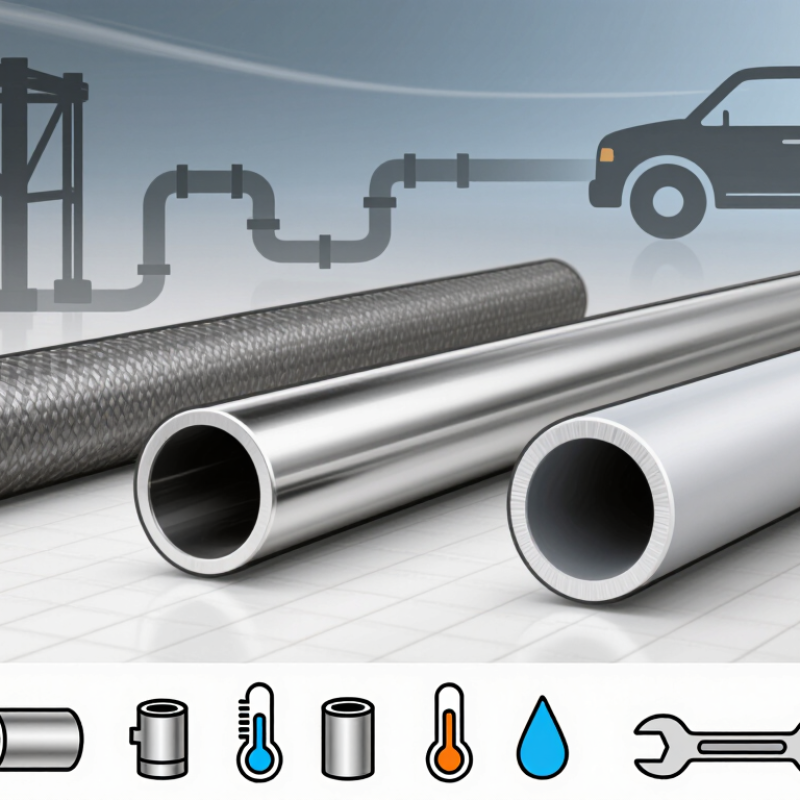
How Welding Tubes Are Classified by Material and Construction
What Are the Best Welding Tube Types in 2026?
Welding tubes are commonly classified by material and construction, and both affect how a tube performs after fabrication. Carbon steel is widely used for frames and supports because it is strong and generally straightforward to weld. Stainless steel offers better resistance to rust, while aluminum is lighter but requires careful control of heat. Material choice should reflect the service environment, not just the purchase price.
Construction matters too. Seamless tubes are formed without a longitudinal weld seam and may suit applications where uniformity is important. Welded tubes are made from formed strip or sheet joined along a seam; they can be economical and available in many sizes. Some welded tubes receive additional sizing or finishing, which can improve dimensional consistency. Check wall thickness and seam quality before selecting a tube for a loaded assembly.
There is no universal winner. A tube used indoors may need different corrosion protection from one exposed to rain or salt spray. Welding also changes the local metal, so matching filler material and following a qualified procedure matter. In real workshops, the neatest-looking tube is not always the best fit. Classification helps narrow the options, but it cannot replace checking drawings, loads, and actual conditions.
Key Properties That Determine Welding Tube Performance
What Are the Best Welding Tube Types in 2026?
Key Properties That Determine Welding Tube Performance
The best welding tube depends on its job, not just its material name. Carbon steel is often practical for general fabrication, while stainless steel can suit equipment exposed to moisture or cleaning chemicals. Aluminum is lightweight, but its heat response and oxide layer call for careful preparation. No option wins every time. Check the tube’s grade, intended service, and welding procedure before choosing.
Wall thickness affects heat input, distortion, and joint strength. A thin tube can burn through if the weld pool grows too hot. A thick wall may need more heat or a suitable joint preparation. Fit matters. Gaps and mismatched edges can make an otherwise sound weld harder to control. Surface condition counts too: oil, rust, and scale can interfere with consistent welding. A material chart alone can mislead; actual dimensions and service conditions deserve a second look.
Tips: Confirm the alloy and wall thickness before cutting. Clean the joint, keep the tube aligned, and use a procedure suited to its material. If the tube will carry pressure or face corrosion, verify requirements with a qualified engineer. Small details matter.
What Are the Best Welding Tube Types in 2026? — Key Properties That Determine Welding Tube Performance
| Tube type | Typical material and manufacture | Key performance properties | Welding considerations | Common applications |
|---|---|---|---|---|
| ERW carbon steel tube | Carbon-steel strip formed into a tube and joined by electric resistance welding. | Widely available, economical, and suitable for many structural and mechanical uses. Properties depend on the steel grade, wall thickness, and manufacturing quality. | Generally weldable with procedures appropriate to the grade and thickness. Clean the joint and confirm that the weld seam will not interfere with the joint design or inspection. | Frames, supports, furniture, general fabrication, and mechanical components. |
| DOM carbon steel tube | Typically made from welded tubing that is cold drawn over a mandrel to improve dimensional consistency and surface finish. | Often offers closer dimensional tolerances and a smoother internal and external finish than standard welded tube. It remains welded tube; drawing does not make it seamless. | Can be welded using a procedure suited to its steel grade and condition. Account for the material’s specified properties and any cold-worked condition when selecting the procedure. | Precision mechanical parts, cylinders, shafts, and applications requiring consistent dimensions. |
| Seamless carbon or alloy steel tube | Produced without a longitudinal weld seam, commonly by piercing and rolling a solid billet. | No longitudinal seam; available in a range of grades and wall thicknesses. Seamless construction does not automatically mean higher strength than a comparable welded product—the grade, dimensions, and specification matter. | Weldability varies with alloy content, carbon equivalent, heat treatment, and thickness. Use a qualified procedure and suitable preheat or post-weld treatment when required by the material specification. | Pressure, high-temperature, hydraulic, and other demanding service where the applicable design specification calls for seamless tube. |
| Welded austenitic stainless steel tube (304/304L) | Stainless strip formed and welded into tube; 304L is a lower-carbon variant of 304. | Good general corrosion resistance and formability. 304L is commonly selected when reducing the risk of sensitization during welding is important. | Use stainless-compatible filler and clean tools that have not contaminated the surface with carbon steel. Control heat input and protect the weld root where the application requires it. | Food-processing equipment, architectural work, tanks, and general-purpose corrosion-resistant fabrications. |
| Welded austenitic stainless steel tube (316/316L) | Welded stainless tube containing molybdenum; 316L is the lower-carbon variant. | Typically provides better resistance than 304 to pitting and crevice corrosion in chloride-bearing environments, though it is not immune to chloride attack. | Apply clean stainless welding practices and a procedure suited to the grade and service conditions. Select filler and any post-weld cleaning or passivation requirements for the application. | Marine equipment, chemical-processing systems, and other applications exposed to more corrosive environments. |
| Welded ferritic stainless steel tube (409) | Ferritic stainless steel tube commonly manufactured by forming and welding strip. | Offers oxidation resistance for many elevated-temperature applications and is often used where moderate corrosion resistance is sufficient. | Welding procedures should account for ferritic stainless behavior, including heat input and grain growth. Use appropriate filler and follow the material and service requirements. | Automotive exhaust components and other heat-exposed fabrications. |
| Galvanized carbon steel tube | Carbon steel tube with a zinc coating applied for corrosion protection; the coating may be applied before or after tube manufacture. | The zinc layer helps protect exposed steel from corrosion, but coating performance depends on coating condition, environment, and maintenance. | Remove coating from the weld area as required by the procedure, provide effective ventilation, and follow safety guidance because heating zinc coatings can produce hazardous fumes. Restore corrosion protection after welding where needed. | Outdoor frames, fencing, supports, and general construction where a zinc coating is appropriate. |
Selection note: The best tube depends on the required strength, corrosion resistance, dimensions, service environment, applicable code, and welding procedure. Confirm the exact grade and product specification before fabrication.
Comparing Carbon Steel, Stainless Steel, and Aluminum Tubes
Carbon steel tube is usually the economical choice for frames, supports, and general fabrication. It is widely available and straightforward to weld, but bare surfaces rust quickly in damp or salty settings. A small weld defect can become a maintenance problem. Coatings help, though they add preparation and inspection work.
Stainless steel suits food-processing equipment, washdown areas, and outdoor installations where corrosion resistance matters. The World Stainless Association reported 58.4 million tonnes of global stainless-steel production in 2023, but output alone does not tell you which grade to choose. Check the service environment and the specific alloy. Heat tint near a weld can reduce corrosion resistance if it is left untreated. Details matter.
Aluminum tube can cut assembly weight substantially. The Aluminum Association’s Aluminum Design Manual gives aluminum a density of about 2.70 g/cm³, compared with roughly 7.85 g/cm³ for steel. USGS estimated 2024 global primary aluminum production at 72 million tonnes in its 2025 Mineral Commodity Summaries. Yet thin aluminum can distort under welding heat, and some heat-treated alloys lose strength around the weld. One caveat: light weight is not automatically lower lifecycle cost. Compare tube thickness, filler compatibility, joint loads, and repair needs before selecting a material.
Matching Tube Types to Welding Processes and Applications
The best welding tube is the one that suits the joint, material, and service conditions—not simply the newest option in 2026. Carbon-steel tube is practical for frames, supports, and general fabrication, where MIG welding can provide speed and steady production. TIG offers finer control on thin walls or visible joints, though it takes more time. Fit-up matters. A small root gap can quickly become a burn-through problem on lightweight tubing.
Stainless-steel tube is common in food, washdown, and corrosive environments. TIG helps control the weld pool, while shielding the inside of the tube can reduce oxidation at the root. Aluminum tube conducts heat quickly and carries an oxide layer, so clean preparation and careful heat input are essential; TIG or MIG may work, depending on thickness and production needs. Thin walls punish heat. I would test a short sample using the actual tube diameter, wall thickness, and joint position before committing to a setup. That step can reveal distortion or poor penetration that a flat coupon may not show. Weldability also depends on alloy, fit, and operator skill, so process charts are a starting point, not a guarantee.
What Are the Best Welding Tube Types in 2026?
Typical tube-wall thickness ranges suited to common welding processes
Thin-wall stainless or precision tubes are often welded with TIG or laser processes; MIG/MAG is widely used for production steel tubing, while submerged arc welding is suited to thicker tube sections. Ranges shown are typical practical guides, not fixed process limits; material, joint design, equipment, and application requirements affect the choice.
How to Choose a Welding Tube for Project Requirements
Choose a welding tube by load, environment, and fabrication method, not by price alone. ASTM A500 covers structural carbon-steel tubing, while ASTM A513 covers electric-resistance-welded mechanical tubing. These designations help narrow options, but they do not replace checking the project drawing and material certificate. Small details matter.
For a machine frame, confirm outside diameter, wall thickness, straightness, and fit-up; a small gap can make a clean weld harder. For damp or chemical exposure, compare stainless steel with coated carbon steel, including maintenance needs and the heat-affected area after welding. The World Steel Association’s World Steel in Figures 2024 reports 1,892.6 million tonnes of crude steel production in 2023. That figure describes the scale of steelmaking, not the suitability of any tube for a specific job. Verify grade, dimensions, and weld procedure against the applicable specification; ASME B36.10M, for example, covers dimensions for welded and seamless wrought-steel pipe, not every mechanical tube. I would still question any choice based only on a catalog label. The service conditions decide.
