Top 10 Best Well Water Testing Kits You Need to Try?
Testing your well water is crucial. Many homeowners rely on well water, yet often overlook potential contaminants. This neglect can lead to health risks for you and your family. Well water testing kits are essential tools to ensure your water's safety.
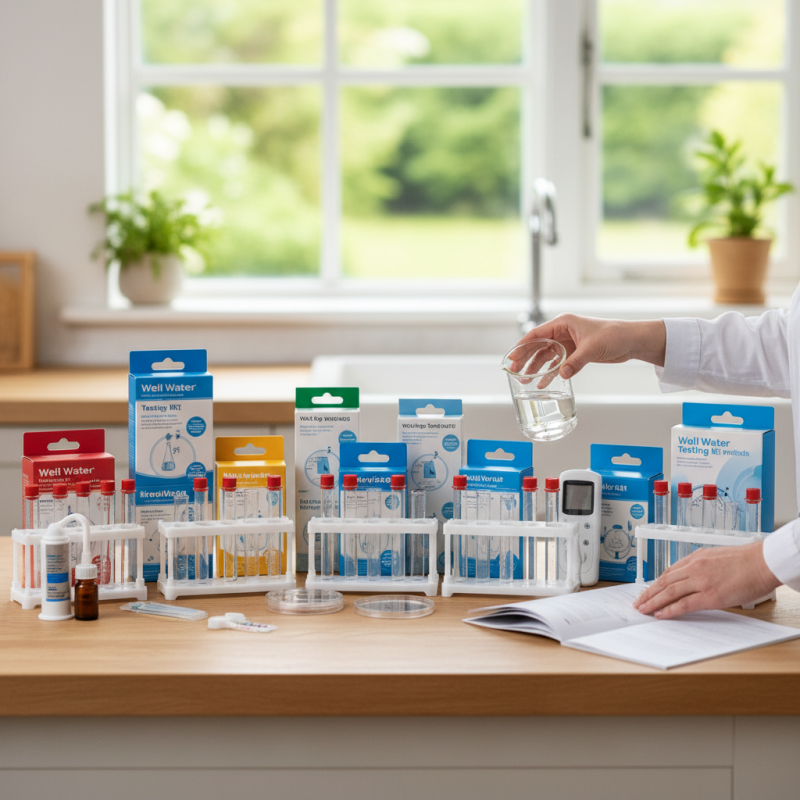
Several types of well water testing kits are available on the market. Each offers unique features tailored for different needs. Some kits test for basic bacteria, while others analyze chemical contaminants. It’s vital to choose the right kit for accurate results. Some people may underestimate the importance of regular testing, thinking their water is fine.
Using a well water testing kit helps identify issues early. Ignoring signs of contamination can lead to serious health consequences. While these kits can be straightforward, some users may struggle with instructions and analysis. It’s essential to approach water testing with care and diligence. By taking the time to test your well water, you can protect your health and make informed decisions.
What to Consider When Choosing a Well Water Testing Kit
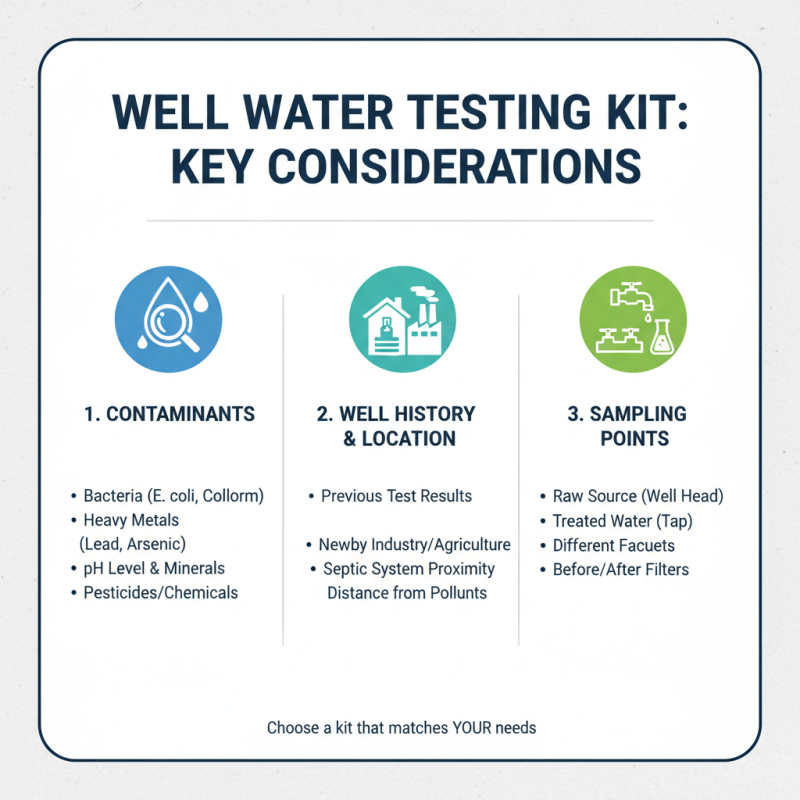
When choosing a well water testing kit, consider the specific contaminants you need to test for. Different kits focus on various elements, such as bacteria, heavy metals, or pH levels. Assess your well's history. If nearby industrial activity exists, you may need a kit that tests for more specific pollutants. Sampling location matters too. Collecting water from different points can provide more accurate insights.
Ease of use is another critical factor. Some kits require complex procedures, while others are very straightforward. If you're not familiar with testing methods, opt for a user-friendly option. Check for clear instructions and sufficient supplies. Also, be aware of how long it takes to get results. Quick results can be beneficial in urgent situations.
Don't forget about the accuracy of the kit. Look for reviews and testimonials, but remember that experiences vary. What works for one person may not work for another. Consider the cost too, but don’t solely base your decision on price. Sometimes, the cheapest option may compromise accuracy. Reflect on what you truly need from your testing kit and research thoroughly before making your choice.
Overview of Common Contaminants Found in Well Water
When it comes to well water, understanding contamination is crucial. Well water can harbor a range of harmful substances. Common contaminants include bacteria, nitrates, and heavy metals. Bacteria, especially coliform, can lead to serious health risks. Nitrates often originate from fertilizers and can cause methemoglobinemia in infants. Heavy metals like lead and arsenic may seep from old pipes or nearby industrial areas.
Testing your well water regularly is essential but often overlooked. Many homeowners may not realize the hidden dangers lurking in their water supply. A simple test can reveal shocking results. People might assume their water is safe, but that assumption can be misleading. Even clear water can contain invisible threats. It’s important to be proactive rather than reactive.
Awareness and action can make a big difference. When you find contaminants, addressing them quickly is key. Clean water is vital for health. Yet, it can be easy to dismiss testing as unnecessary. This mindset can lead to unrecognized risks. Regular testing can keep you informed and safe. Just because water looks clean, it doesn't mean it is. Don’t let ignorance be a risk to your health.
Common Contaminants Found in Well Water
This chart represents the common contaminants found in well water and their average concentration levels in parts per million (ppm).
Top Features to Look for in Water Testing Kits
When selecting a water testing kit, consider accuracy and ease of use. A reliable kit should provide precise results for various contaminants. Look for kits that can test for bacteria, lead, nitrates, and pH levels. Some kits can identify more than ten different substances. It’s crucial to read reviews to assess their performance.
Another important feature is the speed of testing. A good kit should provide results quickly, often within minutes. Depending on your needs, you might prefer kits with color-coded indicators. These visual aids can simplify interpreting results.
Don’t overlook the importance of instructions. Clear, straightforward guides are essential. Some kits may seem complicated at first glance. If you find yourself confused, it may not be the best choice. Keep in mind, personal experience varies. What works for one person may not suit another.
Comparison of Popular Well Water Testing Kits on the Market
When testing well water, having the right kit is crucial for safety. Many kits are currently on the market, yet not all test for the same contaminants. A study by the CDC shows that 15% of private wells contain harmful bacteria. Therefore, choosing a comprehensive testing kit that includes both microbiological and chemical assessments is essential.
Some popular kits focus primarily on pH levels and hardness. This is insufficient for thorough water safety analysis. A report from the EPA indicates that about 10% of private wells have elevated nitrates, which can impact health. Moreover, while many kits offer simple instructions, users often report confusing results. This can lead to a misinterpretation of water safety levels. The presence of lead and other heavy metals is another concern that requires detailed testing.
Even with the best kits, mistakes can occur. Some users overlook critical follow-up tests, believing initial readings. Inaccurate results can lead to complacency. Many households depend heavily on well water but may not consider emerging contaminants like PFAS, which traditional kits may not detect. It is vital to reflect on these potential gaps in testing methods and the implications for health.
Top 10 Best Well Water Testing Kits You Need to Try
| Testing Kit | Parameters Tested | Test Method | Ease of Use | Price Range |
|---|---|---|---|---|
| Kit A | pH, Nitrates, Lead | Test Strips | Very Easy | $20 - $30 |
| Kit B | Bacteria, Hardness | Test Vials | Moderate | $25 - $35 |
| Kit C | Iron, Copper | Colorimetric | Easy | $15 - $25 |
| Kit D | pH, Nitrates, Chlorine | Digital Meter | Very Easy | $30 - $50 |
| Kit E | Fluoride, Sulfate | Test Strips | Moderate | $20 - $40 |
| Kit F | Arsenic, Nitrates | Test Tablets | Easy | $30 - $60 |
| Kit G | Lead, Bacteria | Hydrometer | Moderate | $35 - $55 |
| Kit H | Nitrates, pH | Test Strips | Very Easy | $15 - $30 |
| Kit I | Chlorine, Hardness | Photometric | Easy | $20 - $35 |
| Kit J | Bacteria, Hardness | PCR Testing | Complex | $50 - $80 |
How to Properly Use a Well Water Testing Kit for Accurate Results
When using a well water testing kit, accuracy is key. Start by collecting samples properly. Rinse the bottle with the water you plan to test. This prepares the bottle and helps avoid contamination. It’s vital to label samples with the collection date. According to the EPA, over 20 million Americans rely on well water. Regular testing is essential to maintain safety.
When testing, follow each kit's instructions closely. Use the reagents provided and wait the recommended time. Some tests require precise measurements. For example, pH levels can influence how contaminants behave. A slight error in measurement can lead to significant differences in your results. A report by the CDC indicates that improper testing might overlook harmful elements.
Testing can reveal unexpected issues. Many wells show elevated nitrate levels, often due to nearby agricultural runoff. Others may have high bacterial counts. These findings need urgent attention. A majority of homeowners are unaware of these risks. With proper testing, you can take steps to improve your water quality. Regular assessments help ensure a safe drinking supply.
Related Posts
-
How to Choose the Best Well Filtration System for Your Needs?
-
2025 Guide: How to Choose the Best Water Cleaning System for Your Home
-
What to Know About Well Tank Pressure for Optimal Performance?
-
10 Essential Tips for Effective Well Water Maintenance
-

10 Essential Tips for Choosing the Best Water Filtration System for Your Home
-
2025 How to Choose the Best Well Water Filtration System for Your Home