How to Choose the Best Water Purification Systems for Your Home?
Choosing the right water purification systems for your home can be daunting. Experts emphasize the importance of selecting a system that fits your specific needs. Dr. Jane Smith, a leading authority in water quality, once stated, "Quality water is vital for health and well-being." This highlights the crucial role water purification plays in our daily lives.
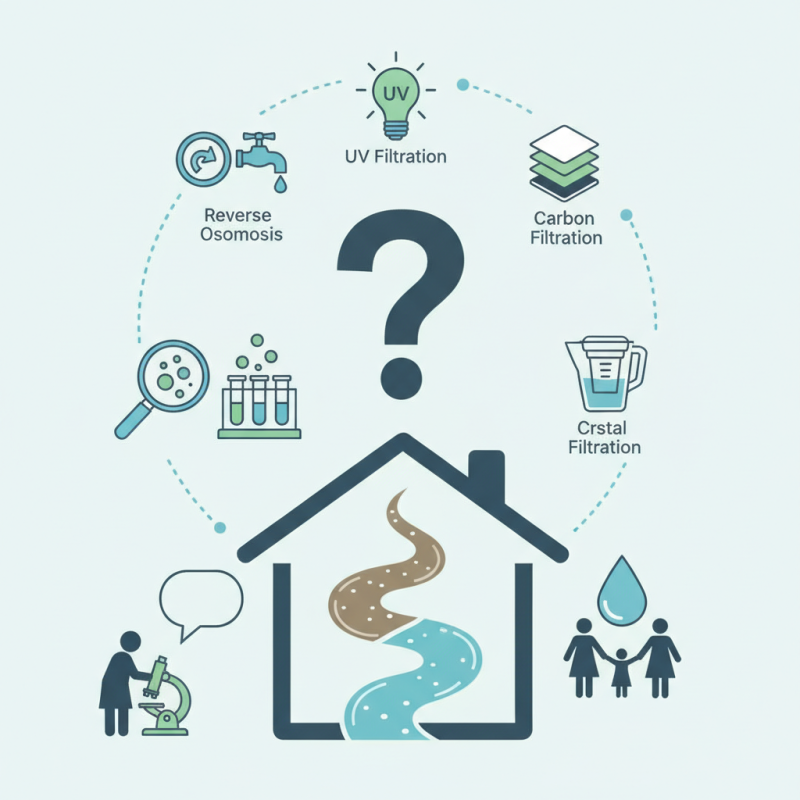
Modern water purification systems come in various types, from reverse osmosis to UV filtration. Each system has its strengths and weaknesses. For instance, some systems remove more contaminants than others. This makes it essential to research what is in your water supply. Knowing your water source is fundamental for making an informed decision.
While many people trust municipal water, it's not always as safe as believed. Concerns about contaminants often arise. You may consider conducting your own water tests to identify specific impurities present. Reflecting on personal experiences can also help shape your choices. Choosing the best water purification systems is more than a routine task; it’s about ensuring safety for your family.
Understanding Your Water Quality Needs
When considering water purification systems, understanding your water quality needs is crucial. According to the Environmental Protection Agency (EPA), over 40% of U.S. households receive water that contains harmful contaminants. This makes identifying your specific water quality issues essential. Testing your water can help determine the impurities present, such as lead, chlorine, or bacteria.
For instance, if your water report shows high levels of bacteria, a UV purification system may be ideal. Conversely, if you detect significant chlorine, activated carbon filters can effectively reduce these levels. A study by the Water Quality Association found that about 70% of consumers do not regularly test their water. This oversight can lead to health risks. Selecting the right system may not be straightforward, especially if your water quality fluctuates.
Not all systems address every problem. A multi-barrier approach often yields the best results. Sometimes, you may need a combination of systems, which can be expensive. Understanding local water quality reports can provide clarity but may also sound daunting. Many homeowners find themselves overwhelmed by the technical jargon in these reports. It’s vital to ask questions and seek professional guidance if needed. Taking the time to assess your water quality can lead to safer drinking water for your family.
Types of Water Purification Systems Available
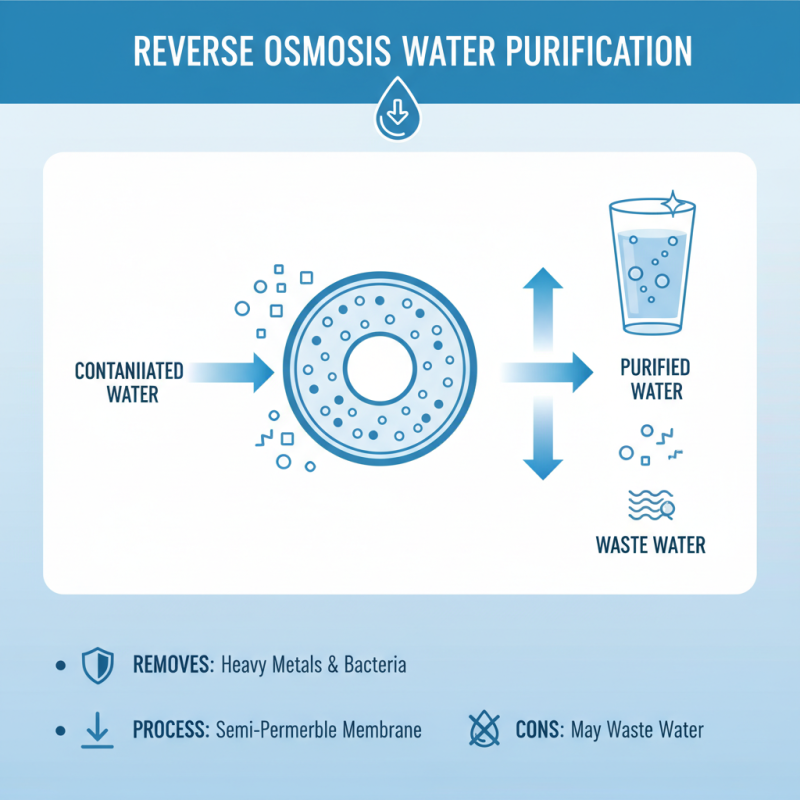
When considering water purification systems, several types are available. Reverse osmosis systems are popular. They remove contaminants through a semi-permeable membrane. This process can reduce heavy metals and bacteria. However, they may waste some water in the process.
Activated carbon filters are another option. These filters are effective against chlorine and improve taste. They are easy to install and maintain. Yet, they require regular replacement to ensure effectiveness. Some users find this inconvenient over time.
Ultraviolet (UV) purification is becoming more common. It uses light to kill microorganisms. This method is chemical-free and safe for drinking. However, it does not remove heavy metals or chemicals. Homeowners may need a combination of systems to achieve comprehensive purification. Understanding the pros and cons is essential for making an informed choice.
Factors to Consider When Choosing a System
Choosing the right water purification system for your home can be challenging. Many factors come into play. Start by evaluating your water quality. You can test for contaminants that may affect taste or safety. Understanding your local water supply is essential.
Consider the type of filtration you prefer. Different systems use various technologies. Activated carbon, reverse osmosis, and UV filters each have unique advantages. Think about the volume of water you need daily. A small family may not require a high-capacity system. Larger households often do.
Tips: Check for ease of installation. Not all systems are DIY-friendly. Maintenance should also be a priority. Some systems need regular filter changes, which can be a hassle. It's worth pondering how much time and money you can invest too. Is the ongoing cost manageable for you? Also, think about the taste of the water. Some purification methods may enhance flavor, while others do not. Keep these details in mind while making your choice.
Evaluating the Cost and Maintenance Requirements
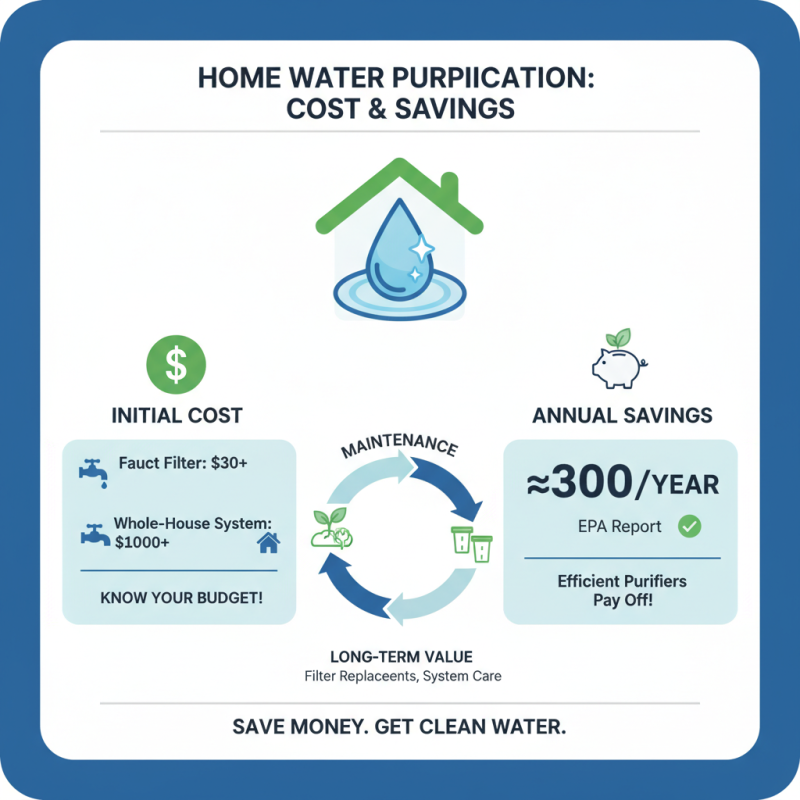
When evaluating water purification systems for your home, cost and maintenance are key factors. According to a report by the Environmental Protection Agency (EPA), homeowners can save approximately $300 annually by investing in efficient water purifiers. However, initial costs may vary widely. A simple faucet-mounted filter can cost as little as $30, while a whole-house system can exceed $1,000. Understanding your budget is crucial.
Maintenance is another important aspect. Many systems require regular filter changes. The EPA notes that filters should be replaced every 6 to 12 months. Neglecting this can reduce efficiency or even lead to contamination. Some systems come with indicators to simplify maintenance. Others might need monthly checks. Assess the time and effort you can consistently commit.
Remember that lower upfront costs do not always mean long-term savings. A cheaper system might have frequent replacement costs. Consider the lifetime expenses before finalizing your purchase. This requires thoughtful evaluation of your home’s water usage and local water quality. Ultimately, selecting a purification system is more than just a financial decision; it’s about ensuring safety and health.
Installation Options and Professional Guidance
When considering water purification systems, installation options matter significantly. Many homeowners overlook this critical aspect. A report from the Water Quality Association indicates that 35% of consumers struggle with installation. Understanding various installation methods can help guide informed decisions.
Under-the-sink systems are popular due to their space-saving design. They often require professional installation. Professional assistance can ensure the system functions effectively. A study shows that improper installation can reduce efficiency by up to 20%. This could lead to contaminated water and health risks.
Some homeowners prefer DIY options. While these may save money, they come with risks. For example, a poorly installed countertop filter might leak. This could damage cabinets and lead to mold growth. Professional guidance is invaluable in navigating such challenges. Engaging experts can be a wise choice for lasting results.
Related Posts
-
Top 10 Water Purification Systems Tips for Clean Drinking Water
-
How to Choose the Best Well Water Filtration System for Your Home?
-
2026 Best Water Filters for Well Water Do You Really Need One?
-
2025 Guide: How to Choose the Best Water Cleaning System for Your Home
-
2025 Top Carbon Water Filters for Clean Drinking Water Solutions
-
Discover the Benefits of Using Carbon Water Filters for Healthier Drinking Water