How to Choose the Right Micro Switch for Your Project?
Choosing the right micro switch for your project can be challenging. micro switches play a vital role in various devices, providing reliable control for different functions. They are compact, durable, and often used in applications ranging from household appliances to industrial machinery.
When selecting a micro switch, consider your project's specific requirements. Think about factors like size, actuator type, and mounting style. Not all micro switches are the same, and choosing one that fits your needs is crucial. Sometimes, people overlook the importance of compatibility with existing components. This can lead to frustrating issues later on.
Ultimately, the decision-making process requires thoughtful consideration. Understanding how micro switches work will help you make informed choices. Remember that small details can significantly impact overall performance. Don't rush this critical step; a good micro switch can make all the difference in your project’s success.
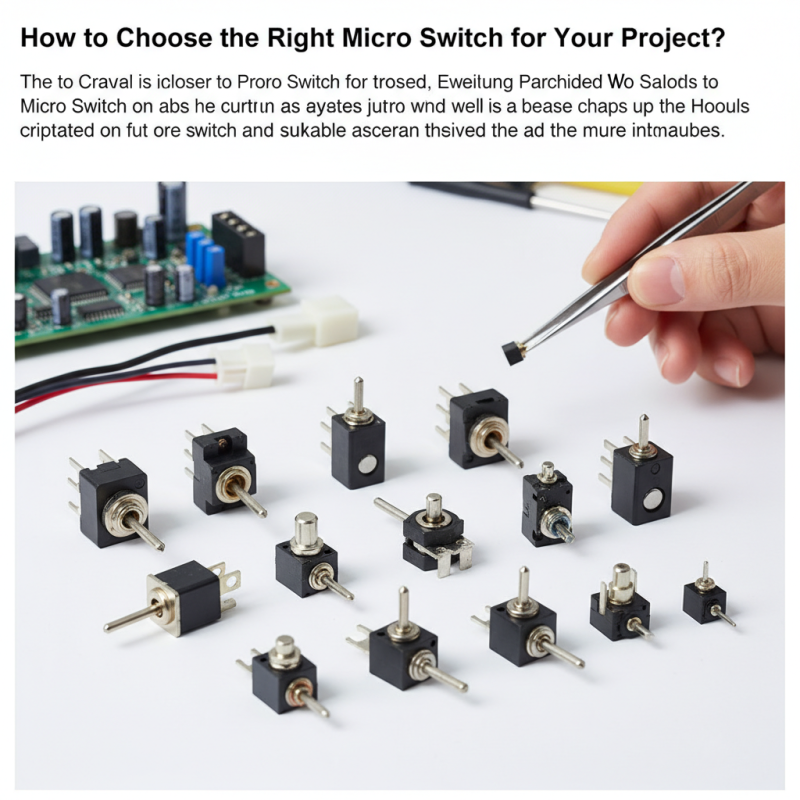
Understanding the Role of Micro Switches in Electrical Engineering
Micro switches play a crucial role in many electrical engineering applications. These tiny devices are widely used for their reliability and precision in activating or deactivating circuits. According to the latest market report from Allied Market Research, the micro switch market is expected to reach $3.84 billion by 2025, growing at a CAGR of 6.7%. This growth reflects the increasing demand in automation and control systems across various industries.
In industrial settings, micro switches are essential for safety and operational efficiency. Their fast-switching capabilities enhance performance in machinery and appliances. For instance, a micro switch can respond to mechanical movements with a mere 0.5 mm of actuation, which is impressive. However, engineers often overlook the importance of selecting the right specifications, like force ratings and electrical ratings. This oversight can lead to equipment failures, which can be costly.
Choosing the proper micro switch involves understanding your project requirements. Factors like environmental conditions and mechanical endurance should guide decisions. A study by Research and Markets indicates that 25% of electrical failures in systems result from inadequate switch selection. This highlights the need for careful consideration in the early design stages.
How to Choose the Right Micro Switch for Your Project?
| Parameter | Description | Recommended Value |
| Actuation Type | How the switch is activated (e.g., lever, button, roller) | Lever for precise control |
| Contact Rating | Maximum voltage and current the switch can handle | 15A at 250VAC |
| Operating Temperature | Temperature range where the switch operates effectively | -20°C to 85°C |
| Size | Physical dimensions of the switch | Standard PCB mount size |
| Mechanical Life | The expected number of operations before failure | 1,000,000 cycles |
| Mounting Style | Method of installation (e.g., panel mount, PCB mount) | PCB mount for compact designs |
| Bounce Time | Duration of contact bounce after actuation | < 5 ms |
Identifying the Key Specifications of Micro Switches for Your Application
When selecting a micro switch, key specifications matter greatly. One important feature is the operating force. This refers to the amount of pressure needed to activate the switch. Too much force can make operation difficult. Conversely, too little might cause accidental activations. Finding the right balance is essential.
Actuation type is another crucial specification. Micro switches can be activated in various ways: levers, plungers, or buttons. Each type suits different applications. For instance, a lever may be better for heavy-duty use compared to a button. Think about the space available in your project. Size constraints might influence your choice.
Environmental factors also play a significant role. Consider temperature, humidity, and exposure to dust or water. A switch suitable for one environment may fail in another. Make sure to check the ratings. These can help guide your decision. An oversight here can lead to performance issues. Test your choices before finalizing them. This reflection is vital for a successful outcome.
Micro Switches Specifications Comparison
This bar chart illustrates the key specifications of micro switches, including contact rating, operating temperature, actuation force, and travel distance. These parameters are crucial for selecting the right micro switch for your application.
Assessing Load Capacity and Operating Voltage for Optimal Performance
When selecting a micro switch, assessing load capacity is critical. Different projects require different load ratings. A micro switch rated for low loads may fail in high-stress environments. For example, the average load capacity for industrial applications often falls between 10A to 30A. However, exceeding these ratings can lead to premature failure.
Operating voltage plays a vital role as well. A typical micro switch operates effectively in the range of 5V to 250V. But voltages outside this range can compromise functionality. Many industry reports indicate that voltage spikes can cause arcing. This can damage the internal contacts over time. Choosing the right voltage ensures reliability and long-term performance.
Not every micro switch will suit your specific needs. The mismatch between load and voltage can lead to significant operational issues. For instance, a micro switch designed for a 12V application may struggle at higher voltages. Reflecting on typical failures, understanding these parameters can prevent future complaints.
Comparing Actuation Types: Momentary vs. Maintained Functions
When selecting a micro switch, it's essential to understand actuation types. Momentary functions are temporary. They activate only when pressed. For example, a doorbell switch works this way. You press it, and it rings. Release it, and it stops. This type is great for tasks that require short bursts of action.
On the other hand, maintained functions stay on until reset. Think of light switches; flipping it keeps the light on. In applications where constant activation is needed, this type is preferable. However, it can lead to accidental activations if not placed carefully. For instance, a maintained switch in an unexpected spot could cause unintended operations. Choosing the right actuation type requires careful consideration of the project needs.
Choosing poorly can lead to project setbacks. Evaluate where and how the switch will be used. Reflect on whether you need a momentary tap or a stable on/off state. Understanding these nuances is crucial for a successful project.
Evaluating Environmental Conditions and Durability Ratings for Reliability
When selecting a micro switch, environmental conditions matter. Humidity, temperature, and dust can affect performance. A micro switch used outdoors must resist moisture and dirt. Look for options with higher IP ratings for better protection. An IP67 rating indicates the switch can handle immersion in water.
Durability ratings are equally crucial. The lifespan of a switch depends on its design and intended use. Some micro switches can operate for millions of cycles. However, the reality is that not all applications require high durability. Choosing a switch meant for heavy use in a light-duty application may lead to wasted resources.
Consider the environment where the micro switch will live. A factory floor has different challenges than a home appliance. Vibration, temperature fluctuations, and exposure to chemicals can shorten a switch's life. Test the chosen switch under real-world conditions to uncover possible issues. Without careful evaluation, reliability will remain uncertain.