
How to Choose Water Filtration for Well Water in 2026?
Choosing water filtration for well water in 2026 requires more than buying the largest tank online. Private wells serve roughly 23 million American households, according to the U.S. Environmental Protection Agency. Unlike municipal supplies, these wells are not routinely monitored by public utilities. Your kitchen tap may look clear while carrying nitrate, arsenic, iron, bacteria, or PFAS.
The chemistry changes with geology, rainfall, farming, and well depth. USGS National Water-Quality Assessment research repeatedly identifies nitrate and naturally occurring contaminants as important groundwater concerns. The CDC also advises private well owners to test water at least annually, especially for coliform bacteria and nitrate. A laboratory report should guide equipment selection. Guesswork is expensive.
The EPA’s 2024 PFAS rule lowered allowable public-water limits for PFOA and PFOS to four parts per trillion. However, the rule generally does not regulate private wells directly. That detail matters. A certified reverse-osmosis system may reduce some dissolved chemicals, while sediment filters, UV disinfection, or iron filtration solve different problems. No single cartridge handles everything.
Begin with a certified laboratory test, not a product advertisement. Check pH, hardness, turbidity, iron, manganese, nitrate, arsenic, coliform bacteria, and PFAS where local risks justify testing. Then compare NSF/ANSI-certified claims, maintenance intervals, flow rates, and wastewater production. Filters are not magic. Even professionals can misread a test or overlook seasonal changes, so retesting after installation remains sensible. A cold glass from the tap should be clean, tested, and explainable.
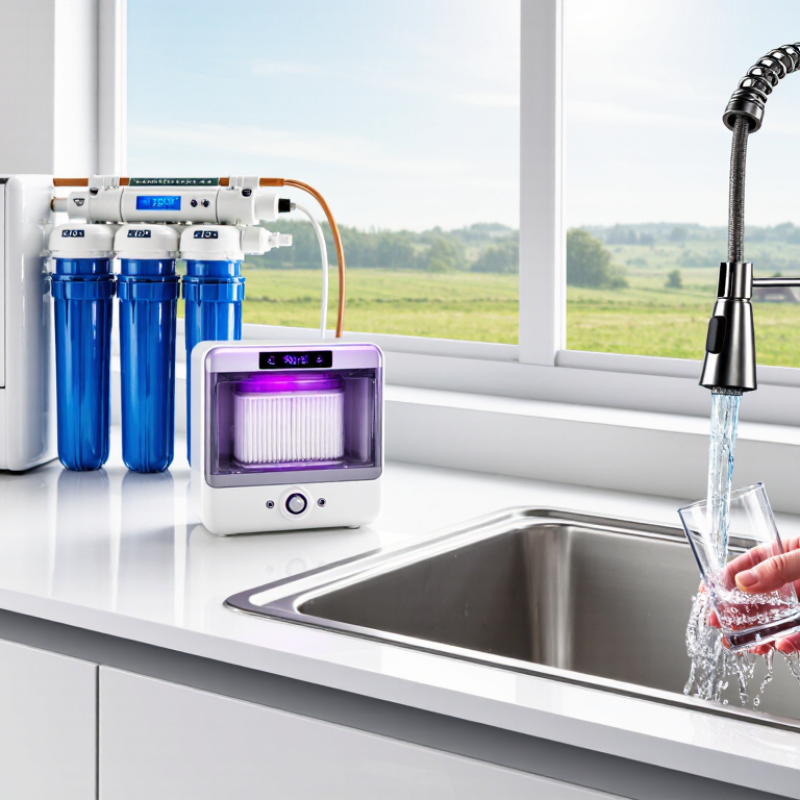
Assess Well Water Quality Before Choosing a Filtration System
Before choosing a filtration system, test your well water under normal household conditions. Use an accredited laboratory, not only a quick home strip. Ask for tests covering bacteria, nitrate, pH, hardness, iron, manganese, arsenic, lead, and volatile organic compounds. Local geology and nearby farming can change the risks.
Collect the sample carefully. Let a cold tap run for several minutes, remove the aerator, and use the laboratory’s sterile container. Avoid touching the lid or inside of the bottle. Record recent flooding, plumbing repairs, unusual odors, and changes in water color. These details help interpret the results.
Numbers matter.
A rusty stain may suggest iron, but it does not prove the cause. A rotten-egg smell can indicate hydrogen sulfide, although plumbing conditions may confuse the diagnosis. I once assumed cloudy water required a sediment filter, but the problem was air released from a pressure change. That mistake was inexpensive, yet it showed why testing should guide equipment decisions. Retest after heavy rain or well repairs, because one sample cannot represent every season. Match treatment to confirmed contaminants, flow rate, household demand, and maintenance ability. A system that removes one contaminant may not address another, and poorly maintained equipment can create new water-quality concerns.
Match Common Contaminants With Suitable Treatment Methods
Choosing filtration for well water starts with a laboratory report, not a product brochure. The USGS estimated in 2023 that about 43 million Americans rely on private wells. These systems usually lack routine public oversight. Test raw water and kitchen-tap water separately. Guessing is expensive.
Match each contaminant to its treatment. Sediment filters catch sand and rust particles, but they do not remove dissolved metals. Oxidation followed by filtration can reduce iron, manganese, and rotten-egg odors. Hardness needs ion exchange or another scale-control process. Bacteria may require ultraviolet disinfection, but UV works poorly through cloudy water. The CDC recommends testing before selecting treatment, especially after flooding or well repairs.
For nitrate, reverse osmosis or certified ion-exchange treatment may be suitable. Boiling does not remove nitrate. The WHO guideline is 50 mg/L as nitrate, while the US EPA limit for arsenic is 10 micrograms per liter. Arsenic often requires adsorption or reverse osmosis, with regular performance checks. The EPA’s 2024 PFAS rule set 4 nanograms per liter for PFOA and PFOS, though implementation details may change. Activated carbon can help with some organic chemicals, but contact time matters. A neglected filter can become part of the problem. Even a careful plan needs retesting after installation.
Compare Whole-House and Point-of-Use Filtration Options
How to Choose Water Filtration for Well Water in 2026?
Choosing filtration for well water starts with testing, not guessing. A laboratory report can reveal bacteria, iron, manganese, hardness, nitrate, or unusual odors. Whole-house filtration treats water as it enters the building. It protects showers, laundry, sinks, and appliances. This option feels convenient when several taps need cleaner water. However, it may require backwashing, drainage, space, and regular servicing. Some systems also need pretreatment for heavy sediment or hardness.
Point-of-use filtration works at one faucet, usually the kitchen tap. It provides focused protection for drinking and cooking water. Installation costs may be lower, and cartridges are often easier to inspect. Yet untreated water still reaches bathroom taps and showers. That matters when contaminants affect skin, plumbing, or indoor air. A combined approach can be practical, but it adds maintenance and expense. I have seen homeowners choose by taste alone, then discover another issue later. Clear water is not always safe water.
Tips: Match the filter to a confirmed contaminant. Check flow rate before selecting whole-house equipment. Ask a qualified water professional about installation and disposal requirements. Choose equipment tested against relevant performance standards. Record cartridge changes and test results. Keep replacement parts available. If results seem unusual, retest the well before changing the entire system. No setup is perfect. Regular review matters.
How to Choose Water Filtration for Well Water in 2026? - Compare Whole-House and Point-of-Use Filtration Options
| Evaluation Dimension | Whole-House Filtration | Point-of-Use Filtration | Selection Guidance |
|---|---|---|---|
| Main purpose | Treats water entering the property so multiple fixtures can receive treated water. | Treats water at one tap or appliance, usually for drinking and cooking. | Choose whole-house treatment when untreated water may affect bathing, laundry, plumbing, or every fixture. |
| Typical installation point | On the main water line after the pressure tank and before the distribution system. | At a kitchen faucet, under the sink, on a countertop, or connected to a refrigerator line. | Confirm available space, pipe size, pressure, drainage, and electrical requirements before installation. |
| Best suited for | Sediment, iron, manganese, sulfur odor, hardness, tannins, or other problems found throughout the water supply. | Improving drinking-water quality when the concern is limited to consumption points. | Match the treatment method to laboratory results rather than choosing by taste or appearance alone. |
| Common technologies | Sediment filtration, catalytic carbon, oxidation and filtration, water softening, selective media, or ultraviolet disinfection. | Activated carbon, ultrafiltration, reverse osmosis, or ultraviolet treatment at the selected tap. | No single filter removes every contaminant. A treatment train may be necessary. |
| Sediment removal | Can protect the complete plumbing system when correctly sized for the well’s sediment load and peak flow. | Usually protects only the treated tap or appliance. | Use a prefilter when sand, silt, or rust particles are present. |
| Iron and manganese | Specialized oxidation, aeration, or media systems can address these contaminants when designed for the measured concentration and water chemistry. | Some drinking-water systems can reduce dissolved metals, but performance depends on the certified model and cartridge condition. | Whole-house treatment is usually more practical when staining or metallic taste occurs at many fixtures. |
| Hardness | A cation-exchange softener can reduce calcium and magnesium throughout the home; it requires regeneration and salt or potassium chloride management. | Reverse osmosis can reduce hardness at one drinking-water tap but does not protect household plumbing. | Use whole-house softening for scale on water heaters, fixtures, and appliances. |
| Microbiological concerns | Ultraviolet disinfection can treat the full flow when water is adequately prefiltered and the system receives proper maintenance. | Ultraviolet or reverse-osmosis systems can provide treatment at the selected drinking-water outlet, depending on system design. | If bacteria are detected, identify and correct the source and disinfect the well system; filtration alone may not be sufficient. |
| Reverse osmosis water recovery | Generally not used for whole-house flow because conventional residential RO can produce reject water and has a comparatively low production rate. | Commonly used for drinking water. Traditional residential units may discharge several gallons of concentrate for each gallon produced; efficiency varies by design. | Check the system’s tested recovery ratio, storage capacity, and drain connection. |
| Typical flow requirement | Must be sized for the well yield, pressure-tank performance, pipe size, and simultaneous household demand. | Usually has a lower flow requirement because it serves one outlet; storage tanks may support peak drinking-water demand. | Avoid sizing a whole-house filter only by pipe diameter; verify service flow and pressure loss. |
| Maintenance frequency | May include sediment-filter replacement, media service, salt replenishment, backwashing, UV-lamp replacement, and periodic water testing. | Usually requires cartridge replacement several times per year, depending on water use and the manufacturer’s rated capacity. | A neglected filter can reduce flow and may compromise treatment performance. |
| Electricity requirement | Some systems are passive; oxidation pumps, electronic controls, or UV disinfection require power. | Carbon and standard membrane systems may operate without a dedicated electrical connection; UV and powered pumps require electricity. | Consider backup protection if disinfection is essential during power outages. |
| Effect on bathing and laundry | Can reduce nuisance problems such as odor, staining, scale, and visible sediment throughout the home when properly selected. | Does not normally change the quality of water at showers, tubs, toilets, or washing machines. | Choose whole-house treatment when non-drinking uses are part of the problem. |
| Installation complexity | Higher. It may require plumbing modifications, a drain, bypass valves, electrical service, a treatment tank, and adequate installation space. | Lower for countertop or faucet-mounted units; under-sink RO systems may require a storage tank, drain connection, and separate faucet. | Professional sizing is advisable for iron, sulfur, hardness, bacteria, or low-pressure conditions. |
| Typical cost range in 2026 | Approximately $1,000–$6,000 installed for many residential systems; complex multi-stage systems can cost more. | Approximately $50–$1,500 installed, depending on technology, capacity, plumbing work, and disinfection requirements. | These are broad U.S. residential estimates, not quotations; local labor, water chemistry, and site conditions can change the total. |
| Water testing before purchase | A comprehensive certified laboratory analysis is strongly recommended before selecting equipment. | At minimum, test for contaminants relevant to drinking water and local well conditions before choosing a certified treatment method. | Common tests include total coliform and E. coli, nitrate, pH, hardness, iron, manganese, turbidity, and total dissolved solids; add arsenic, lead, fluoride, sulfur, or volatile compounds where appropriate. |
| Best overall choice | Best when the well-water issue affects the entire home or when plumbing and appliances need protection. | Best when the main goal is improving drinking and cooking water at a limited number of outlets. | A combined approach—whole-house pretreatment plus point-of-use polishing—may be appropriate for complex well-water conditions. |
Evaluate Flow Rate, Maintenance, Costs, and System Capacity
Choosing water filtration for well water begins with measured conditions, not a colorful brochure. Test the raw water for bacteria, iron, manganese, hardness, pH, and sediment. A certified laboratory provides stronger evidence than home strips alone. Test again after flooding or major seasonal changes.
Flow rate deserves practical attention. Record pressure while several fixtures operate at once. A filter that works at one faucet may restrict showers, washing machines, and irrigation. Check the required service flow and backwash flow. The drain must handle backwashing safely. Leave some capacity above your household’s peak demand. Exact sizing is not always obvious.
Maintenance can determine whether a system protects water quality. Ask how often cartridges, media, lamps, or salt need replacement. Keep a dated service log. A cartridge advertised for six months may clog in three weeks when sediment rises. Backwashing units also need electricity, drainage, and regular inspection. These details are easy to underestimate.
Compare total ownership costs, not only the purchase price. Include replacement media, laboratory tests, power, salt, repairs, and professional installation. System capacity should match contaminant levels, household size, and daily water use. A larger tank is not automatically better. Oversizing can waste money, while undersizing causes pressure loss and frequent servicing. My first estimate would remain provisional until real flow measurements and a second water test confirm it.
Select and Install a Filter Based on Household Water Needs
How to Choose Water Filtration for Well Water in 2026?
Select and Install a Filter Based on Household Water Needs
Well water should be tested before any filter is chosen. Ask for bacteria, nitrate, lead, arsenic, iron, manganese, hardness, and pH testing. Use a certified laboratory, not only a home strip. Results can change after flooding, repairs, or long periods without use. A single test is not enough.
Match the system to your daily water use. Sediment filters protect fixtures from sand and rust. Carbon filters can reduce unpleasant taste and some organic compounds. Water softeners address hardness, while specialized media may target iron or manganese. Disinfection equipment, such as ultraviolet treatment, requires clear water and steady maintenance. No filter removes every contaminant.
Measure flow rate and household pressure before installation. A filter that is too small may cause weak showers and slow washing machines. Place a shutoff valve, pressure gauge, bypass line, and drain where they remain easy to reach. Keep treatment equipment away from freezing temperatures. Replace cartridges on schedule, and record service dates near the system. This detail is often forgotten.
Have a qualified water professional review difficult results or plumbing changes. Recheck treated water after installation. If the taste improves but testing remains unsafe, the system is not doing its job. Needs also change when a baby arrives, a guest suite is added, or irrigation shares the well. A cheaper choice may become expensive through frequent replacements.
Related Posts
-
2026 How to Choose the Best Well Filter System?
-
Best Well Water Filter Systems for Clean and Safe Drinking Water
-
Top 10 Well Filtration Systems for Clean Water Solutions?
-
Best Tips for Choosing a Well Water Filter?
-
10 Essential Tips for Maintaining Your Well Water System
-
Top Well Water System Innovations at the 139th Canton Fair?
