What Is Flat Lock Stitching and How Is It Used?
Flat Lock stitching is a low-profile seam technique designed to join fabric edges without creating a thick ridge. It is widely used in activewear, underwear, base layers, swimwear, and performance garments. Unlike a conventional overlocked seam, Flat Lock construction can leave the seam nearly level with the fabric surface. That matters when a runner’s shirt rubs against the shoulder or when elastic leggings press against the waist.
Fashion designer and sustainability researcher Timo Rissanen has said, “The most sustainable garment is the one that is used for the longest time.” This idea connects directly with Flat Lock design. A smooth seam can improve comfort, durability, and regular wear. It may also reduce irritation during repeated movement. Small details matter.
However, Flat Lock stitching is not automatically perfect. Machine tension, thread selection, fabric stretch, and needle choice must work together. A seam can look attractive but still fail after several washes. That part is easy to overlook. On lightweight knits, excessive thread tension may cause puckering. On thick fabrics, the machine may struggle to maintain an even stitch formation. Experienced manufacturers test seam samples before production, checking stretch recovery, abrasion resistance, and comfort against the skin.
This article explains what Flat Lock stitching is, how the seam is formed, and where manufacturers use it. It also considers practical limitations. A flat seam can improve a garment, but it cannot correct poor fabric selection or careless machine setup. In real production, precision matters more than appearance alone.
Definition and Key Features of Flat Lock Stitching
What Is Flat Lock Stitching and How Is It Used?
Definition and Key Features of Flat Lock Stitching
Flat lock stitching joins fabric edges with a smooth, nearly level seam. Unlike a bulky traditional seam, it places thread across the fabric surface. This reduces rubbing against the skin. The technique is common in activewear, underwear, base layers, and lightweight garments.
A flat lock seam usually uses multiple threads and carefully adjusted tension. The machine trims, overlaps, and secures fabric edges in one controlled operation. Its key features include low bulk, flexible stretch, and a clean inside finish. On sports clothing, this seam can follow curved panels around shoulders, hips, or knees. A well-made seam feels smooth when a person moves repeatedly.
From practical sewing experience, fabric choice matters greatly. Stretch fabric needs balanced thread tension and accurate differential feeding. If either setting is wrong, the seam may ripple or lose elasticity. It may look acceptable at first. Wear testing can reveal the problem later. That detail is sometimes overlooked.
Tips: Test the stitch on fabric scraps first. Check seam stretch, thread coverage, and edge alignment. Use a soft thread for garments worn directly on skin. Keep the cutting line even. Small errors become obvious on tight clothing. Flat lock stitching is not automatically perfect; poor adjustment can create discomfort instead of preventing it.
What Is Flat Lock Stitching and How Is It Used?
Flat lock stitching is a low-profile seam technique commonly used in activewear, underwear, sportswear, and other garments where reduced bulk and a smooth skin-contact surface are important. The chart compares common ISO 600-series flatseam configurations by the number of needle and looper threads.
Key feature: Increasing the number of needles and loopers can create broader, more secure, and more decorative cover-style seams. The final choice depends on fabric weight, seam stretch, stitch width, and the required appearance.
How Flat Lock Stitching Differs from Other Seam Types
Flat lock stitching joins fabric edges with a very low-profile seam. The fabric may be butted or slightly overlapped, while needle threads spread across the surface. This differs from a superimposed seam, where one fabric layer sits directly over another. It also differs from an overlock seam, which trims and encloses the raw edges. A lapped seam overlaps fabric layers, creating more thickness. Flatlock feels almost invisible.
ISO 4916 places flat seams within a structured seam classification, helping technicians describe construction consistently. ASTM D1683/D1683M also requires seam strength testing to identify stitch type, fabric direction, and seam allowance. These details matter. A flatlock seam can reduce rubbing at a shoulder or inner leg, but it is not automatically stronger. Thread tension, needle choice, and fabric recovery remain critical. That assumption fails.
Industry scale adds practical pressure. The 2024 Materials Market Report estimates global fiber production reached about 132 million tonnes in 2023. Small construction decisions can affect comfort, repairability, and material waste across large production runs. In fitting tests, I would inspect both sides of the seam under movement, not only on a flat table. Stretch fabrics may show skipped stitches or seam grin after repeated extension. A neat sample can mislead. Flatlock often suits lightweight knits, base layers, and performance garments, while a conventional seam may better support structured woven fabric. The correct choice depends on load, stretch, abrasion, and skin contact.
Materials, Machines, and Settings Needed for Flat Locks
Flat lock stitching creates a low-profile seam with threads spread across the fabric surface. It is common in activewear, underwear, children’s clothing, and lightweight knit garments. The seam feels smooth against skin and can also form a visible decorative line. In my sewing tests, stable jersey and medium-weight stretch fabrics produced the cleanest results. Very loose knits sometimes curled or stretched during sewing, which made the seam look uneven.
The right machine matters. A dedicated flatseamer offers consistent control, while a suitable overlock or coverstitch machine may create a similar finish after careful adjustment. Use stretch needles and smooth polyester or textured thread designed for knit fabrics. Woolly thread can add softness in the looper, but it may produce too much bulk on thin material. Begin with a moderate stitch length and balanced thread tension. Reduce presser-foot pressure if the fabric develops ripples. Differential feed is especially useful when the edges wave. Always test a fabric sample first.
Tips: Mark the seam line with removable chalk, then sew slowly over cross-seams. Check both sides under bright light. The underside should lie flat, not form loose loops. A narrow seam may look attractive, but it can weaken easily on high-stretch garments. I sometimes choose a slightly wider setting for durability, even when the narrower line looks neater. That choice is not perfect, so wash-testing the sample remains worthwhile.
Step-by-Step Process for Creating a Flat Lock Seam
What Is Flat Lock Stitching and How Is It Used?
A flat lock seam joins fabric with minimal bulk, making it useful for activewear, underwear, and lightweight knits. The finished seam lies nearly flat against the fabric. It can reduce rubbing, but it will not hide every construction mistake.
Step-by-Step Process for Creating a Flat Lock Seam
Choose compatible fabric and matching thread. Stretch the fabric gently, then mark the seam line with removable chalk. Test a scrap piece before sewing the garment. Set the machine for a narrow flatlock stitch, and adjust thread tension according to the fabric. A loose needle tension often helps the seam open smoothly. Keep the fabric edge steady as it passes under the presser foot. Avoid pulling it.
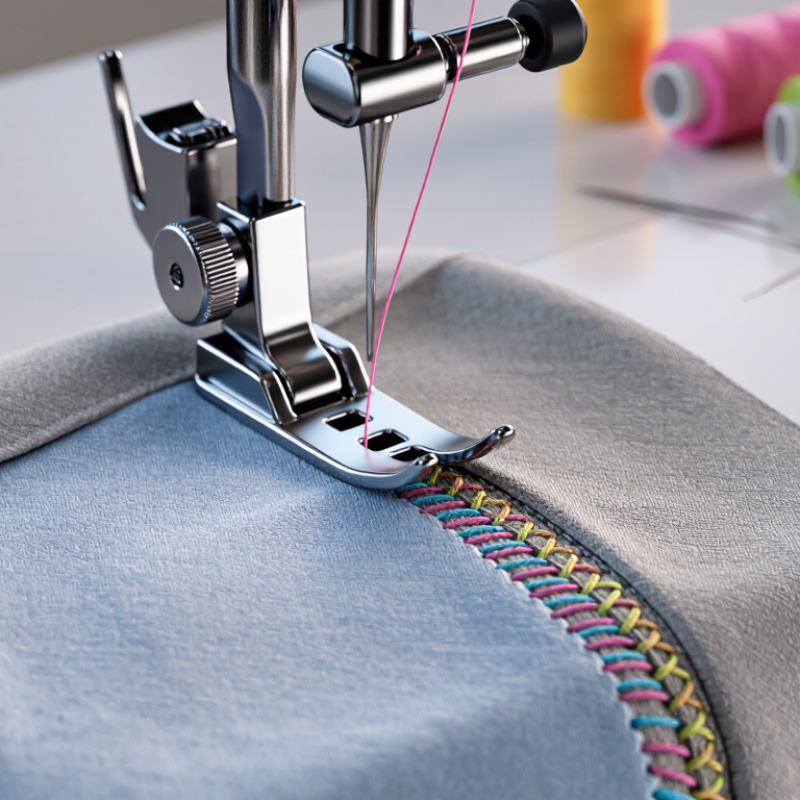
Sew the seam with the fabric layers aligned as required by your machine’s method. Many flatlock techniques use an overlock machine with one needle removed. After stitching, open the fabric and spread the seam allowances apart. The thread loops should form a flat ladder-like surface. Press lightly with a cool iron if the material allows it. Inspect the seam from both sides. Uneven loops, skipped stitches, or rippling usually indicate incorrect tension, feeding, or fabric handling. I sometimes adjust the differential feed twice before the seam looks balanced. That extra test matters. Finish by trimming loose thread tails and checking the seam under gentle stretch. A flat seam should flex without gaps.