What Types of Mining Trucks Are Available?
Mining Trucks are built for different ground, loads, and operating cycles. A rigid-frame haul truck may move hundreds of tonnes across a large open pit, while an articulated truck handles uneven, tighter routes with a pivoting frame. Underground models are lower and narrower, designed to pass beneath confined headings. The names sound simple. The choices are not.
Power systems add another layer. Diesel-electric trucks suit many large operations, while trolley-assist systems draw power from overhead lines on selected uphill routes. Battery-electric options are also developing, though charging time, range, and site infrastructure still matter. Payload is only part of the decision. Road grade, turning space, tire availability, maintenance access, and cycle time shape performance too. Terrain matters. So does the whole fleet.
Mining automation specialist Dr. Ali Soofastaei’s work focuses on digital technologies and operational performance in mining. A useful framing for this topic is: “Choose the truck for the mine’s complete operating system, not payload alone.” This wording is an editorial paraphrase, not a verified direct quotation. That distinction matters when discussing expert views. Even a well-matched truck can underperform if haul roads are poor or maintenance planning falls behind. This guide compares the main Mining Trucks types, their typical applications, and the practical trade-offs buyers should examine. No single category fits every site. That is worth remembering.
How Mining Trucks Are Classified by Design and Operating Environment
What Types of Mining Trucks Are Available? How Mining Trucks Are Classified by Design and Operating Environment
Mining trucks are best classified by frame design, payload, and ground conditions. Rigid-frame trucks suit broad, engineered open-pit roads. Their large bodies and high payloads make sense where haul routes are long and turning space is generous. Published equipment specifications commonly place underground articulated trucks around 20–60 tonnes, while large surface trucks can exceed 200 tonnes. The SME Mining Engineering Handbook explains how mine layout and haulage distance shape equipment selection.
Bigger is not automatically better. A narrow ramp, soft shoulder, or tight loading area can erase the advantage of extra capacity.
Environment changes the choice. Underground trucks use articulated steering, compact profiles, and exhaust controls suited to confined headings. Surface trucks rely on rigid frames, wide access roads, and cooling systems designed for exposed, dusty routes. In its 2018 mobile-equipment time-classification framework, the Global Mining Guidelines Group distinguishes operating time from delays and downtime; that matters because truck fit affects real production, not just rated payload.
On wet ground, tire traction and braking can matter more than capacity. In freezing conditions, material may cling to the body. These details are easy to underestimate, and mine-specific trials are still worth the effort.
Rigid-Frame Haul Trucks for Large Open-Pit Mines
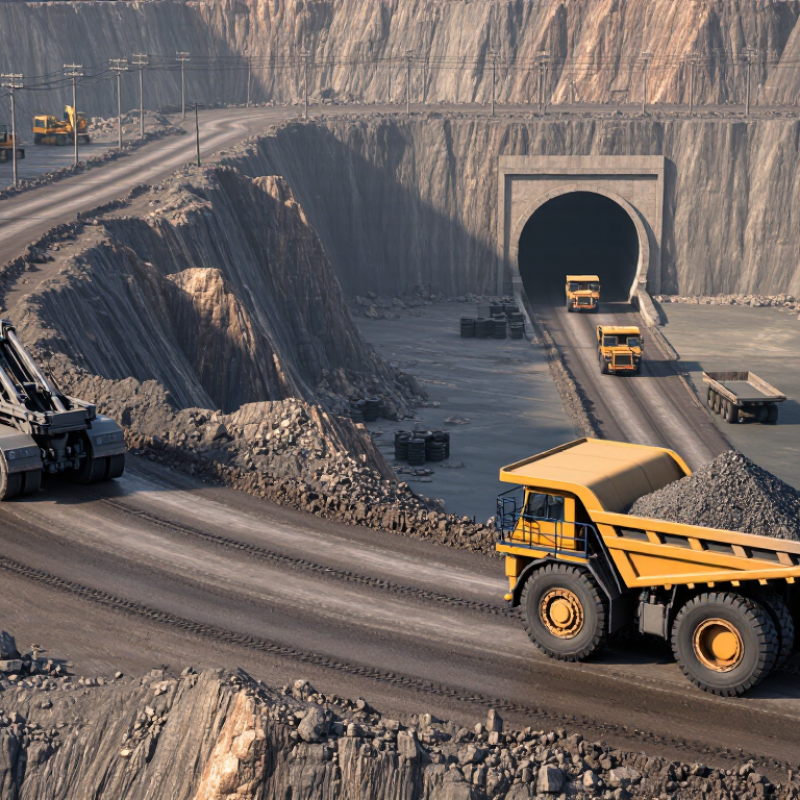
Rigid-frame haul trucks are built for high-volume work in large open-pit mines. Their frame does not articulate in the middle, giving the truck a sturdy structure for carrying heavy loads over prepared haul roads. A large dump body moves blasted rock, ore, or waste to a crusher or dump area. The scale is striking: tires can stand taller than a worker, and each loaded trip puts substantial stress on the road surface.
These trucks suit mines with wide benches, established routes, and space for broad turning circles. Their payload capacity can reduce the number of trips needed, but capacity alone does not determine productivity. Road grade, surface condition, loading time, and queueing at the shovel all affect the haul cycle. A rough patch can increase tire wear and vibration. Operators also need clear sightlines, reliable braking, and well-maintained haul roads. The trade-off is real.
Choosing a truck means matching its capacity and dimensions to the mine’s actual layout. A unit that is too large may struggle on tight switchbacks or add unnecessary pressure to road maintenance. Fuel use and component wear deserve attention alongside tonnes moved. A tidy estimate can miss changing road conditions or uneven loading. Even a small delay at a loading point can ripple through a busy shift.
Articulated Dump Trucks for Rough and Confined Terrain
Articulated dump trucks suit mine and quarry routes where firm, level roads are rare. Their pivoting joint lets the front and rear sections follow uneven ground, while the short turning path helps on winding haul roads and restricted work areas. That matters. Operators still need room to steer, reverse, and tip safely; “confined” does not mean risk-free.
The U.S. Geological Survey’s Mineral Commodity Summaries 2024 estimated U.S. crushed-stone production at about 1.5 billion tons in 2023. That scale helps explain why reliable movement across quarry sites matters, though the figure does not measure truck performance. On a wet, rutted route, articulated steering and traction can help maintain progress where a rigid-frame truck may be less maneuverable. Actual capability depends on slope, ground conditions, payload, and the machine’s configuration.
Before choosing one, check the narrowest turning point, ramp gradient, dumping clearance, and ground bearing strength. Compare rated payload with the route’s real conditions, not just the brochure figure. A full load may behave very differently on slick clay than on packed gravel. One detail is easy to overlook: tight turns can increase tire wear and slow cycle times. Site measurements and a loaded route trial are more dependable than assumptions.
Underground Mining Trucks for Subsurface Haulage
Underground mining trucks move blasted rock through confined headings, where turning space is scarce and gradients can be steep. Low-profile dump trucks fit beneath low roofs; articulated models handle tighter bends, while larger haul trucks suit wider tunnels and longer runs. Payload must match the route, not just the production target. A truck that is too large can slow traffic and strain roadways. One that is too small may require extra trips.
Diesel trucks remain common, but their exhaust adds heat and particulate matter to air that ventilation systems must clear. Battery-electric trucks can reduce local exhaust, though charging time, battery heat, and maintenance needs require careful planning. The U.S. EPA’s Tier 4 standards set particulate limits roughly 90% below earlier limits for covered nonroad engines; this is a regulatory benchmark, not a promise of the same reduction in every mine. MSHA recorded 40 U.S. mining fatalities in 2023 across the sector, a reminder that haulage design must account for braking, visibility, and traffic separation. Small details matter. Blind corners still deserve a second look.
Underground Mining Truck Payload by Size Class
Underground haul trucks are available in compact through extra-large size classes. The values shown are representative nominal payload capacities in metric tonnes; actual capacities vary by truck design and operating conditions.