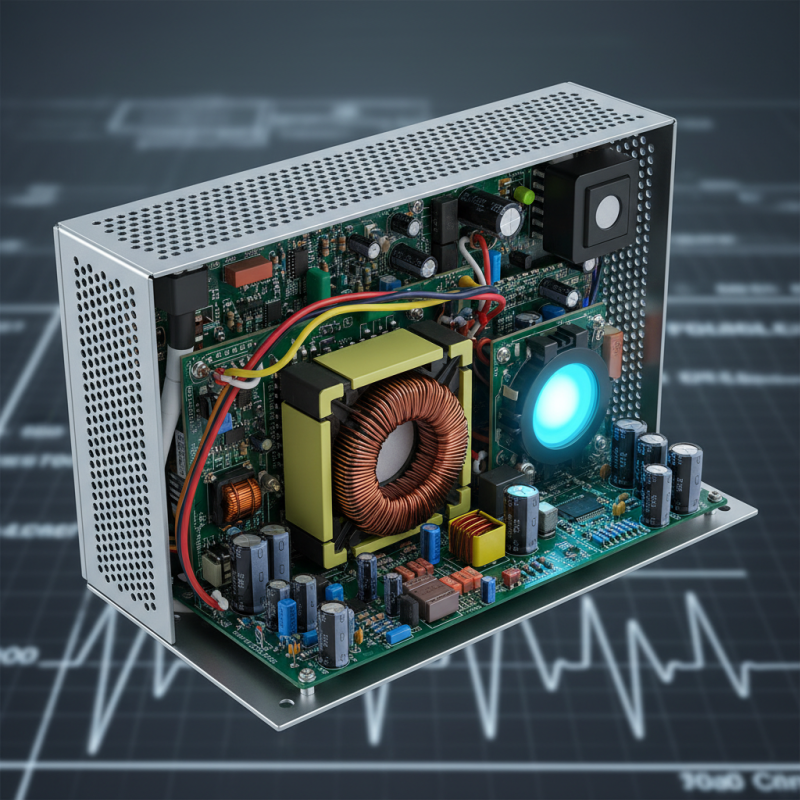
What is a Regulated Power Supply and How Does it Work?
A Regulated Power Supply is essential in many electronic devices. Its primary role is to provide constant voltage. This feature ensures that devices operate reliably and efficiently.
These power supplies regulate output voltage, preventing fluctuations. This is crucial for sensitive equipment. Without regulation, devices can malfunction or become damaged. The components within a regulated power supply work together to maintain voltage levels. However, not all regulated power supplies are the same. Some are more efficient than others, leading to energy waste in less effective models.
Understanding how a regulated power supply works can improve electronic designs. Many users overlook the importance of regulation. They may assume all power supplies function similarly. Yet, the details matter. Recognizing these nuances helps in choosing the right power supply. It fosters a better appreciation for technology.
What is a Regulated Power Supply?
A regulated power supply is an essential component in many electronic devices. It provides a stable output voltage, regardless of variations in input voltage or load current. This stability ensures that sensitive electronics operate effectively without interruption. The regulated power supply achieves this through various methods, including linear regulation and switching regulation.
In linear regulation, the power supply manages voltage by dissipating surplus energy as heat. This process can be simple yet inefficient, especially at higher voltages.
Switching regulation, on the other hand, is more efficient. It rapidly switches the input voltage on and off, controlling energy transfer. This method is often more complex but results in less heat generation.
However, not all regulated power supplies are perfect. Sometimes, they can introduce noise into the system, affecting performance. Also, choosing the right type for specific needs can be challenging. Users must consider voltage range, efficiency, and load requirements. These factors can lead to confusion and miscalculations. It's crucial to evaluate each application carefully.
Key Components of a Regulated Power Supply
A regulated power supply is essential for providing stable voltage and current. Its critical components ensure consistent output, which is vital for many electronic devices. Understanding these components helps us appreciate their roles in the overall function.
One key component is the transformer. It adjusts voltage levels to the desired specifications. Without a proper transformer, devices can receive too much or too little power. This can lead to malfunctions or damage over time. Another important part is the rectifier. It converts alternating current (AC) to direct current (DC). The success of this conversion determines how effectively the power supply meets device needs.
Filters are also crucial. They smooth out any fluctuations, ensuring the output is stable. However, not all filters work perfectly. Some may allow unwanted noise to pass through. This can interfere with sensitive equipment. Lastly, voltage regulators maintain the desired output level despite variations in input. If these regulators fail, devices may experience power issues. Understanding these elements highlights the intricate balance needed in regulated power supplies.
Principles of Voltage Regulation in Power Supplies
Voltage regulation is crucial in power supplies. It ensures that the output voltage remains stable despite variations in input voltage or load conditions. A regulated power supply uses feedback mechanisms to achieve this stability.
One common method involves using a voltage reference. This reference serves as a target for the output voltage. If the output deviates from this target, the feedback system adjusts the input. This process is often automatic, allowing for real-time adjustments.
Tips: Always check the load requirements. Underestimating the load can lead to voltage drops. Use a multimeter to verify output voltage regularly. It’s essential for maintaining your equipment’s performance.
Another key principle is the use of linear versus switching regulation. Linear regulators are simple but less efficient. Switching regulators are more complex but offer better efficiency. However, efficiency comes at the cost of possible noise. This noise could affect sensitive devices.
Tips: For noise-sensitive applications, consider filtering techniques. They can help reduce unwanted interference. Properly managing the output can ultimately improve overall system reliability.
Applications and Importance of Regulated Power Supplies
Regulated power supplies play a crucial role in many applications. They provide a stable voltage output, essential for sensitive electronic devices. These supplies are found in computers, medical equipment, and communication systems. Without them, devices may experience fluctuations that lead to malfunction.
In everyday devices, stability is key. For instance, consider a medical monitoring device. It needs precise voltage levels to operate correctly. A regulated power supply ensures that the readings are accurate. That’s why engineers prioritize these supplies in design.
Tips: Always check the specifications of a power supply. It should match the requirements of your device. Also, if a device shows erratic behavior, analyze the power source. Sometimes, the simplest issues are overlooked. Regular maintenance of power supplies can prevent unexpected failures.
Industry Standards and Efficiency Metrics for Power Supplies
When we discuss regulated power supplies, industry standards play a crucial role in determining their efficiency and reliability. These standards, set by organizations, guide manufacturers in designing safe and effective power supplies. A notable metric is the efficiency rating, which measures how well a power supply converts input power to output power. Higher efficiency reduces energy waste and heat generation, leading to lower operating costs.
For instance, the 80 PLUS certification is widely recognized. It requires a power supply to achieve certain efficiency levels at various loads. Meeting such standards is not just beneficial. It can also pose challenges for manufacturers. Some struggle to balance cost and performance. Others may find it difficult to reach certification without higher initial investment in components. This situation calls for careful planning and testing.
Yet, even with standards in place, discrepancies can occur. Not all products meet consumer expectations, despite claiming certification. Customers often experience misinformation regarding efficiencies. This can lead to disappointment when real-world performance deviates from advertised metrics. Manufacturers need to address these concerns transparently, creating trust in the regulated power supply market.
Regulated Power Supply Efficiency Metrics