Top Conveyor Rollers Manufacturers for Global Buyers
Conveyor rollers look simple. Their performance is not. A roller that turns smoothly under a light load may struggle with abrasive dust, heavy cartons, or continuous operation. For global buyers, choosing a Conveyor Rollers Manufacturer means checking more than price: material, bearing quality, load capacity, sealing, tolerances, and replacement support all matter.
The market context is expanding. Grand View Research estimated the global conveyor systems market at USD 10.3 billion in 2022 and projected a 4.8% compound annual growth rate from 2023 to 2030. MHI’s 2024 Annual Industry Report also found that 88% of surveyed supply-chain leaders planned to increase technology and innovation investment. These figures cover broader systems and supply chains, not rollers alone, but they signal why dependable components and supplier capability deserve careful review.
Details matter.
In his technical paper on belt-conveyor technology, conveyor engineer M. A. Alspaugh emphasizes a practical principle: equipment design should match the operating duty and route. Buyers can apply that thinking when comparing manufacturers. Ask for documented load ratings, roller dimensions, material specifications, and evidence of quality controls. Check how the supplier handles samples, lead times, and after-sales questions. A polished catalog helps, but it cannot replace clear test data. This guide examines manufacturers through those practical criteria, helping buyers compare options across regions without treating a low quote as proof of long-term value.
What Conveyor Rollers Are and Why Manufacturers Matter
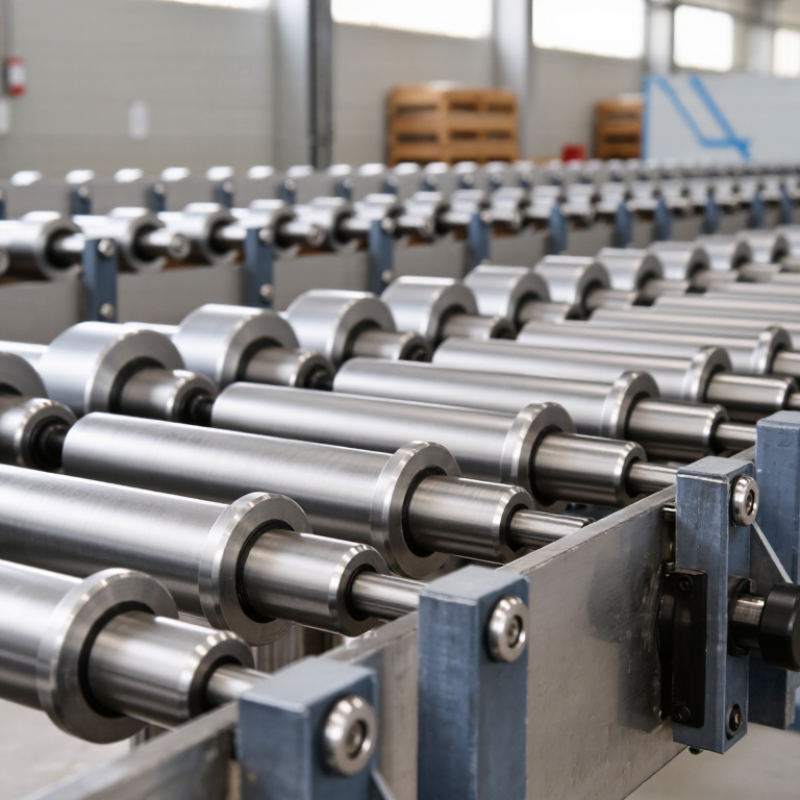
Conveyor rollers are the rotating cylinders that support and move a belt, or guide individual goods along a line. They may look simple, but their diameter, wall thickness, bearing type, and surface finish affect how smoothly a system runs. In a warehouse, a parcel can pass over dozens of rollers in minutes. A rough surface or poorly aligned shaft may cause noise, belt wear, or uneven movement. Small parts matter.
Manufacturers matter because they turn operating requirements into components that fit the application. A capable producer can discuss load, speed, conveying environment, and maintenance access before recommending roller dimensions and materials. For example, dusty surroundings may call for better-sealed bearings, while frequent washdowns require suitable corrosion resistance. Ask how products are tested, what tolerances are controlled, and whether replacement parts remain available. Clear answers are useful. A polished catalogue alone is not proof of dependable performance.
Buyers should compare documented specifications with actual site conditions, not just price or delivery promises. Installation still matters, and even a well-made roller can perform poorly if the frame is misaligned. I have seen specifications treated as guarantees when they are really starting points. That distinction deserves attention. Reliable manufacturers explain limits as well as strengths, helping buyers select rollers that suit real workloads rather than ideal assumptions.
Main Types of Conveyor Rollers and Their Industrial Uses
Conveyor rollers look simple, but their geometry affects noise, tracking, and maintenance. Idlers support belt conveyors carrying ore, grain, or aggregates; troughing sets hold the belt’s load, while return rollers support its empty side. Impact rollers use rubber rings beneath loading points, where falling stone can damage an ordinary steel shell. Small details matter. A poorly matched roller can increase belt wear.
Gravity rollers suit cartons and totes in packing lines, gravity conveyors, and accumulation zones. Their spacing must support the smallest package, not just the heaviest one. Powered rollers use motors or drive belts for controlled movement in distribution and assembly systems. Tapered rollers help guide parcels around curves. Stainless-steel rollers are common in washdown areas, while polymer rollers can reduce noise or resist corrosion. Neither material is right for every load.
The MHI 2024 Annual Industry Report found that 55% of surveyed supply-chain professionals planned to increase investment in supply-chain innovation over the following five years.
That wider investment trend makes roller selection worth careful attention: match diameter, bearing protection, and surface material to the load and environment. Check actual operating conditions. Dust, moisture, and uneven loading can defeat a tidy specification; even experienced buyers sometimes overlook the smallest package or the dirtiest transfer point.
Key Criteria for Comparing Global Roller Manufacturers
When comparing global conveyor roller manufacturers, start with the conditions the rollers must handle. Note belt width, load, speed, temperature, dust, and moisture. A roller tested for a clean warehouse may wear quickly beside a damp, abrasive transfer point. Ask for load ratings, shell and shaft materials, bearing details, and documented test methods. Specific data is more useful than broad claims.
Check whether product dimensions and tolerances are clearly stated. Small differences in shaft length or bearing fit can complicate installation across multiple conveyor sections. Request drawings and sample inspection records before approving a large order. Ask how the manufacturer controls runout, sealing, and noise. Then compare warranty terms, production lead times, spare-part availability, and packaging for long-distance transport. Details matter.
Communication is part of performance. Can the supplier explain a failure in plain language and provide a practical corrective action? Review technical documents for consistent units and revision dates. If answers are vague, pause. A polished catalog cannot confirm service life in your operating environment. Trial rollers under representative loads, inspect them after a defined operating period, and record wear, temperature, and noise. Even a careful trial has limits; site conditions change, and early results may not predict every season.
Leading Conveyor Roller Manufacturing Regions and Capabilities
Conveyor roller manufacturing clusters reflect more than factory count. They depend on steel supply, machining skills, bearings, and reliable logistics. World Steel Association data for 2023 recorded crude steel output of about 1,019 million tonnes in China and 140 million tonnes in India. These figures show substantial upstream metal capacity, not roller output. Buyers should treat them as context, not a supplier ranking.
China offers broad production ecosystems, from formed steel tubes to automated welding and surface treatment. India combines a large steel base with growing engineering capacity and competitive fabrication. Japan and South Korea produce less steel by volume, but their industrial sectors support precision machining and consistent process control. Europe, including Germany, is known for specialized engineering and quality-focused production. Details matter: ask how a factory controls tube straightness, bearing fits, runout, and coating thickness.
The World Steel Association’s figures describe national steel production, not conveyor components. That distinction is easy to miss. A capable region does not guarantee a capable plant. Request dimensional inspection records, load-test results, material traceability, and samples from the actual production line. Check spare-parts availability, too. It can be overlooked. Some buyers focus on unit price and forget the cost of downtime, while regional labels alone reveal little about quality consistency.