Top 5 Geomembrane Welding Machines You Should Know?
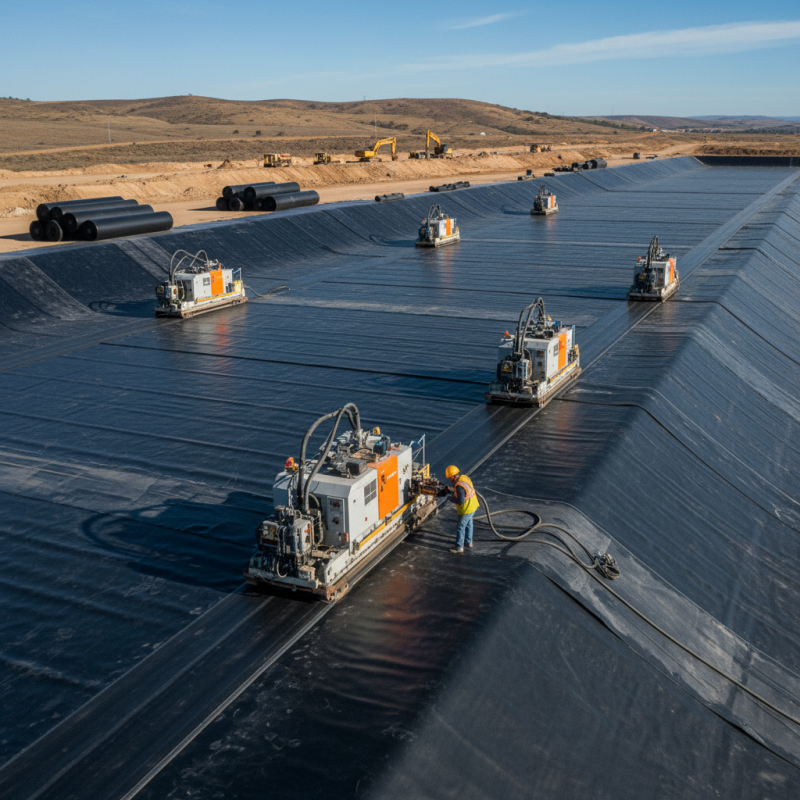
geomembrane welding machines play a crucial role in various industries. These machines are designed for joining geomembranes effectively. They ensure strong and durable seals in applications like landfill liners and water reservoirs.
Choosing the right geomembrane welding machine can be challenging. The market offers many options, each with unique features. It's essential to understand your specific needs. The machine's efficiency and reliability should be at the forefront of your decision.
This guide highlights the top five geomembrane welding machines worth knowing. Each machine brings different advantages and potential drawbacks. Reflecting on these choices will lead to better outcomes for your projects. Selecting the right tools can significantly impact your work. Make informed decisions to enhance your operations.
Top Criteria for Selecting Geomembrane Welding Machines
Selecting the right geomembrane welding machine is crucial for successful projects. First, evaluate the machine type based on your requirements. Look for a device that offers versatility. Many machines are tailored for specific applications, such as landfills or ponds. Consider whether you need hot wedge, extrusion, or other types. Each type has its pros and cons.
Next, assess the machine's efficiency. Speed can impact project timelines. Fast machines may save time but could jeopardize weld quality. Understand the balance between speed and reliability. Some users overlook this aspect, focusing solely on performance metrics. Remember, a slow but consistent machine can sometimes deliver better results. Also, check the machine's portability. If frequent relocations are necessary, a lightweight option is preferable.
Lastly, ensure operator comfort and ease of use. A complex machine can slow down production. Operators should feel confident while using it. Many machines come with user-friendly interfaces. However, spending time on training can be critical. Reflect on potential areas for improvement in your selection process, as these factors can often be underestimated.
Understanding the Main Types of Geomembrane Welding Machines
When exploring geomembrane welding machines, understanding their types is crucial. There are several commonly used types, each with unique features. Hot air welders are popular in the industry. They provide a controlled environment for welding, ensuring strong seams. These machines can handle a variety of geomembrane materials. A recent study indicated that hot air welding accounts for nearly 40% of all geomembrane welding processes.
Another type is extrusion welders. These machines extrude additional material into the weld joint. They work well for thicker materials. Reports show that extrusion welding achieves joint strength that can exceed 90% of the base material’s strength. However, their use requires careful calibration to avoid defects.
Moreover, wedge welders are commonly employed for their speed and efficiency. They can weld multiple layers simultaneously. Despite their advantages, improper settings can lead to insufficient bonding. Users often need to practice to master their operation. The choice of machine impacts the project outcome significantly. Understanding these specifications can lead to more successful installations.
Top 5 Geomembrane Welding Machines You Should Know
| Machine Model | Welding Technology | Max Welding Speed (m/min) | Material Compatibility | Weight (kg) |
| Model A | Hot Air | 2.5 | HDPE, LDPE | 15 |
| Model B | Ultrasonic | 3.0 | PVC, TPO | 12 |
| Model C | TIG | 1.5 | PP, PVC | 20 |
| Model D | Extrusion | 4.0 | HDPE, PVC | 25 |
| Model E | Plasma | 2.0 | LDPE, TPO | 18 |
Key Features of High-Performance Geomembrane Welders
When selecting a high-performance geomembrane welder, there are key features to consider. The first is the heating element. A strong heating system ensures consistent seam temperatures. This is critical for effective welding. Additionally, look for models with adjustable speed control. This allows operators to tailor the speed to the material type. Faster speeds might work for thinner membranes, while thicker materials require slower settings.
Another vital feature is portability. Some machines are designed to be lightweight and easy to transport. This is important for field work, where flexibility is necessary. It’s also worthwhile to consider the weld width. Wider welds can provide added strength but may not always be achievable. Operators should evaluate their specific projects and needs.
Ease of use is often overlooked. User-friendly controls can greatly enhance efficiency. Complicated machines may lead to errors. Reviewers often mention this issue as a point of frustration. Support and availability of parts also matter. If a machine breaks down, finding components can be challenging. High-performance geomembrane welders should offer a balance of features for real-world application.
Industry Trends: Advances in Geomembrane Welding Technology
Advances in geomembrane welding technology have significantly transformed the industry in recent years. According to a recent market report, the geomembrane market is projected to grow at a CAGR of 8.5% from 2022 to 2030. This growth is driven by increased environmental regulations and infrastructure developments. New welding machines now feature enhanced automation and precision. These machines ensure consistent results in joint integrity, crucial for landfill liners and retention ponds.
Moreover, the integration of advanced materials has improved operational efficiency. Geomembranes made from polyethylene and PVC are now more resilient, thanks to the latest welding techniques. However, the rapid adoption of these technologies presents challenges. Operators must undergo extensive training to manage these sophisticated machines. A skills gap remains, leading to potential errors in critical applications.
Data from industry studies shows that about 35% of welding failures are attributed to operator error. As innovative solutions emerge, the industry must address the need for proper education and training. The balance between advanced technology and skilled labor is essential for reducing risks in geomembrane projects. Enhanced quality control measures will also play a vital role in ensuring the longevity and effectiveness of these installations.
Top 5 Geomembrane Welding Machines Performance Comparison
This chart illustrates the welding speed of the top 5 geomembrane welding machines, showcasing their performance efficiency. The data indicates that Machine B offers the highest welding speed, while Machine C has the lowest performance in this comparison.
Comparative Analysis of Top Brands in Geomembrane Welding Equipment
The geomembrane welding equipment market has seen significant growth, driven by increasing demand in various sectors such as construction and environmental protection. A report from XYZ Research indicates that the market size is expected to reach $300 million by 2025, with a compound annual growth rate (CAGR) of 8%. This growth highlights the importance of choosing the right welding machine for efficient geomembrane installations.
When comparing top brands, it’s crucial to consider factors like temperature range, welding speed, and user-friendly interfaces. Most machines operate effectively between 200°F and 600°F, ensuring versatility for different materials. However, many operators report challenges in achieving consistent weld quality, often linked to machine calibration and operator skill. This highlights a critical area for improvement in the industry.
Furthermore, while certain brands dominate due to advanced features, some machines lack adequate power options. This can lead to inconsistent results, frustrating contractors. Inadequate training and machine selection can also negatively affect project timelines and budgets. Understanding these aspects is vital for making informed purchasing decisions.