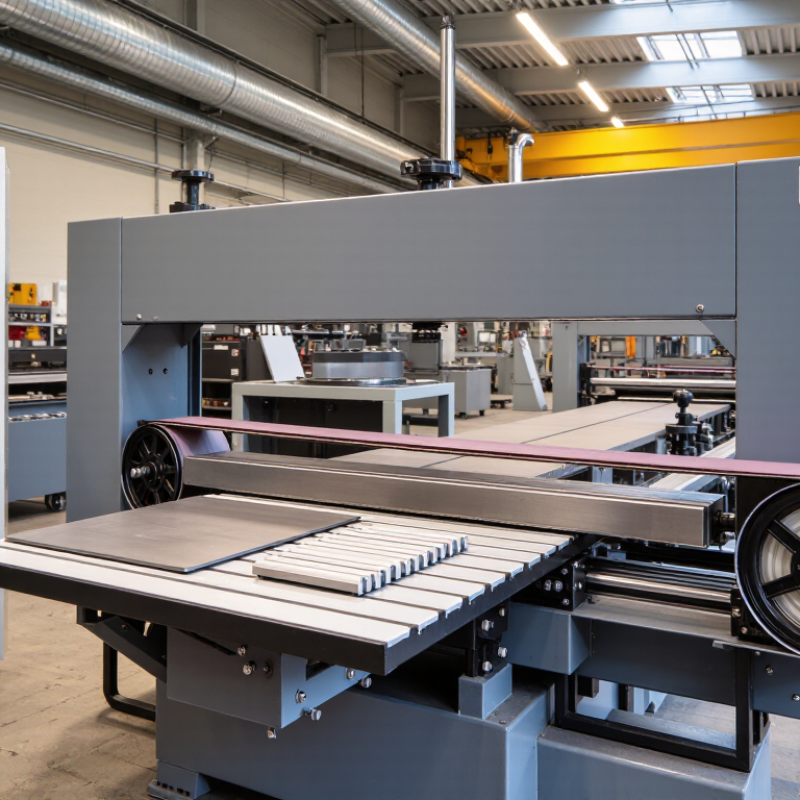
Top Wide Belt Sander Metal Sanding Machine Suppliers?
When manufacturers need smooth, consistent metal surfaces, supplier choice affects throughput, safety, and finishing quality. A Wide Belt Sander Metal Sanding Machine must handle real production demands, not only impressive brochure claims. This guide examines leading suppliers through practical criteria, including abrasive-belt width, sanding pressure, feed speed, motor capacity, dust extraction, and service response. Details matter. A machine may appear powerful yet struggle with heat, vibration, or uneven stock. Factory trials can reveal these weaknesses. They show scratch patterns, edge consistency, and finish stability on actual steel, stainless steel, or aluminum samples.
Reliable suppliers explain their engineering choices and provide measurable specifications. They should offer clear manuals, maintenance schedules, spare-parts access, operator training, and documented quality controls. Experience matters here. Engineers who understand abrasive selection can recommend belts for deburring, scale removal, satin finishing, or precision calibration. Independent certifications and traceable test records add confidence, but they should not replace hands-on evaluation. Buyers should compare total ownership cost, including energy use, consumables, downtime, and technical support. No supplier is perfect. Our assessment can still miss regional service differences or long-term wear. Therefore, this overview favors transparent evidence over marketing language. It helps purchasing teams identify dependable partners and ask sharper questions before investing in a metal sanding line.
Understanding Wide Belt Sanders for Metalworking
Wide belt sanders remove scale, weld marks, burrs, and uneven edges from metal sheets. Their wide abrasive belt creates a more consistent finish than handheld tools. In practical shop use, belt width should match the workpiece size. A narrow machine may leave uneven passes on larger panels.
Metal type matters. Stainless steel often needs controlled pressure and suitable abrasive grains to reduce heat discoloration. Aluminum cuts quickly, but it can clog an unsuitable belt. Steel may require stronger contact rollers and slower feed speeds. Operators should check belt tracking, platen pressure, and table alignment before production begins. Small setup errors become visible lines across the surface.
A dependable supplier should provide clear specifications, abrasive recommendations, replacement parts, and operator training. Ask about feed-rate control, dust extraction, emergency stopping, and guarding. These details show practical engineering, not just sales language. Machines should also support measurable thickness control for repeat orders. I have found that a polished sample does not always prove long-term reliability. Test metal from your own process instead. Record surface roughness, material removal, heat marks, and belt life during the trial. One overlooked issue is noise. It can affect communication and operator concentration during extended shifts.
Key Features of High-Performance Metal Sanding Machines
High-performance metal sanding machines should deliver consistent finishes, not just impressive specifications. Look for a rigid frame, balanced rollers, and a powerful drive system. Stable construction reduces vibration during heavy grinding. That matters on stainless steel sheets.
Variable-speed abrasive belts help operators control heat and surface texture. A wide working area improves productivity on panels and long components. Automatic thickness adjustment can protect delicate parts from uneven material removal. Effective dust extraction is also essential, especially when sanding produces fine metal particles.
Reliable suppliers should provide clear machine tolerances, maintenance instructions, and practical testing. Ask for sample sanding on your actual material. A polished demonstration may not reflect factory conditions. Check belt replacement time, emergency controls, electrical protection, and access to wear parts. Supplier experience matters, but documented support matters more. I have seen capable machines lose value because service responses were slow.
Tips: Measure your common workpieces before comparing machines. Record belt speed, feed rate, and finish quality during testing. Inspect the first sample under strong light. Small scratches can reveal poor alignment. Do not choose the widest machine automatically. It may consume more energy and complicate daily maintenance. Leave room for improvement; real production is rarely as clean as a showroom test.
Top Wide Belt Sander Metal Sanding Machine Suppliers? – Key Features of High-Performance Metal Sanding Machines
| Evaluation Dimension | Typical High-Performance Specification | Why It Matters for Metal Sanding | Recommended Supplier Evidence |
|---|---|---|---|
| Working Width | Approximately 600–1,600 mm, with wider custom configurations available for large sheet and plate processing. | Determines the maximum part width that can pass through the machine in one operation. | Technical drawing showing usable sanding width, maximum part dimensions, and working-height limits. |
| Workpiece Thickness | Commonly about 0.5–150 mm, depending on the machine frame, contact roller, table design, and application. | Affects whether the machine can process thin sheet, structural components, or thicker fabricated parts. | Documented minimum and maximum thickness range supported by the standard configuration. |
| Abrasive Belt Speed | Typically about 10–30 m/s for metal grinding and finishing applications; variable-speed control is preferred. | Higher speed can improve material removal, while adjustment helps prevent overheating and surface damage. | Motor rating, speed-control method, belt-speed range, and application-specific test results. |
| Abrasive Belt Size | Common industrial belt lengths are approximately 1,900–2,600 mm, with width matched to the working area. | Correct belt dimensions are essential for stable tracking, effective cooling, and compatible abrasive selection. | Complete belt-size specification and confirmation of locally available replacement abrasives. |
| Abrasive Options | Aluminum oxide, zirconia alumina, ceramic alumina, silicon carbide, and non-woven abrasive belts. | Different abrasives balance cutting performance, finish quality, heat generation, and service life. | Recommended abrasive type and grit range for carbon steel, stainless steel, aluminum, and non-ferrous metals. |
| Grit Range | Typical finishing ranges include approximately P24–P240; finer finishing may use non-woven or specialty belts. | Coarse grits remove welds and scale; fine grits reduce scratches and prepare surfaces for coating or polishing. | Sample panels or test reports showing removal rate, surface appearance, and achievable roughness. |
| Main Drive Power | Often about 15–75 kW per sanding head, depending on working width, material, removal rate, and contact roller design. | Sufficient power helps maintain belt speed during heavy stock removal and reduces production bottlenecks. | Motor power, electrical requirements, rated duty, overload protection, and energy-consumption information. |
| Sanding Heads | One to four heads are common. Configurations may combine contact rollers, platen units, brush heads, or non-woven heads. | Multiple heads can combine grinding, deburring, edge rounding, and surface finishing in one production line. | Head-by-head process description, tool arrangement, and recommended sequence for the target material. |
| Thickness Control | Motorized table adjustment with digital thickness display; automatic compensation is available on advanced systems. | Stable height control improves dimensional consistency across batches and reduces setup time. | Adjustment resolution, calibration method, repeatability data, and control-system demonstration. |
| Belt Tracking | Pneumatic or electronic tracking with automatic correction and adjustable tracking sensitivity. | Accurate tracking reduces belt damage, uneven sanding, and unplanned replacement. | Tracking-system description, sensor type, maintenance requirements, and belt-alignment procedure. |
| Cooling and Heat Control | Variable-speed belt operation, suitable contact-wheel selection, coolant options, and adequate airflow where required. | Heat control helps limit discoloration, distortion, metallurgical changes, and premature abrasive wear. | Cooling recommendations for stainless steel, aluminum, and heat-sensitive parts, including coolant compatibility. |
| Dust and Spark Extraction | Enclosed sanding zone with dedicated extraction ports; spark-resistant extraction design is required for combustible dust risks. | Effective extraction improves visibility, protects operators, and reduces accumulation of abrasive and metal dust. | Airflow requirements, port dimensions, filter specifications, spark-control measures, and installation layout. |
| Deburring and Edge Rounding | Optional brush or abrasive units can remove burrs and create a controlled edge radius after laser, plasma, or punching operations. | Consistent edge treatment improves handling safety, coating adhesion, and downstream assembly. | Before-and-after samples with measured burr height or edge-radius results. |
| Surface-Finish Capability | Can range from aggressive scale and weld removal to directional finishing and preparation for painting or coating. | The final surface depends on abrasive type, grit, contact pressure, belt speed, and number of passes. | Measured roughness data where applicable, sample parts, and defined acceptance criteria. |
| Control System | PLC-based control with touchscreen settings, recipe storage, alarm history, emergency stops, and interlocked guards. | Automated settings improve repeatability and reduce operator-dependent variation. | Control-system specification, language options, cybersecurity policy, and operator-training materials. |
| Safety Features | Guarding, emergency-stop circuits, access-door interlocks, overload protection, belt-break detection, and safety labeling. | These features help control mechanical, electrical, pinch-point, abrasive, spark, and dust hazards. | Risk assessment, conformity documentation, safety-circuit diagrams, and applicable regional compliance information. |
| Frame and Table Construction | Heavy welded steel frame, rigid conveyor or support table, vibration control, and corrosion-resistant working surfaces. | Rigid construction supports dimensional stability and reduces vibration marks on the finished surface. | Machine mass, frame details, table-load rating, vibration-control method, and factory inspection records. |
| Throughput Measurement | Production capacity varies with material grade, stock-removal depth, abrasive grit, belt speed, and number of passes. | A stated feed rate without material-removal conditions is not sufficient for comparing machine performance. | Test data specifying material, dimensions, initial surface condition, removal amount, feed speed, and belt specification. |
| Service and Spare Parts | Standardized bearings, rollers, sensors, belts, filters, and electrical components with documented replacement procedures. | Accessible parts and service support reduce downtime over the machine’s operating life. | Spare-parts list, recommended inventory, response time, warranty terms, and remote-support capability. |
| Acceptance Testing | Factory or site testing based on agreed dimensional, throughput, surface-finish, safety, and repeatability criteria. | Objective testing verifies that the machine meets the buyer’s actual production requirements. | Formal acceptance protocol, sample-workpiece requirements, inspection instruments, and sign-off procedure. |

How to Evaluate Wide Belt Sander Suppliers
Choosing a wide belt sander supplier requires more than comparing catalog prices. Start by matching the machine to your actual material, working width, thickness range, and daily production volume. Ask for sanding samples using your own metal grades. A supplier should explain belt speed, feed speed, motor power, pressure control, and dust extraction clearly. Vague answers are warning signs.
Inspect the supplier’s engineering experience through drawings, test records, and documented quality procedures. Request details about frame rigidity, roller alignment, abrasive belt tracking, and emergency-stop systems. Reliable suppliers provide inspection reports, maintenance schedules, spare-parts lists, and realistic delivery dates. A factory visit can reveal practical details, such as clean assembly areas and properly protected electrical cabinets. Small details matter.
I once gave too much weight to a low quotation. That was a mistake. The cheaper machine had limited adjustment options and slower technical support. Ask for references from facilities with similar metals and production demands. Speak with operators, not only sales staff. Check warranty coverage, installation training, remote assistance, and response times for replacement parts. The best evaluation is not always the fastest one. Leave room for doubt, and verify every important promise in writing.
Comparing Leading Suppliers by Quality, Service, and Value
Selecting a wide belt sander supplier requires more than comparing purchase prices. The World Steel Association reported 1.892 billion tonnes of crude steel production in 2023. That scale increases demand for stable, repeatable surface finishing. A capable supplier should provide measured sanding tolerances, roller alignment records, and abrasive belt tracking tests. Ask for sample results on your actual steel grade.
Quality must connect with service. The ISO Survey 2023 recorded more than 1.2 million ISO 9001 certificates worldwide, but certification alone proves little about machine performance. Request factory acceptance data, maintenance intervals, and clear warranty exclusions. Service response matters when a bearing fails during a night shift. Spare rollers, sensors, and belts should have stated delivery times. Vague promises are costly.
Value includes energy, labor, dust control, and downtime. The U.S. Department of Energy identifies motor-driven systems as a major industrial electricity load, so compare motor efficiency and standby consumption. Examine feed-rate stability, abrasive usage, and changeover time. A cheaper machine may lose value through uneven finishes and frequent adjustments. In practical evaluations, operators often notice controls before engineers do. That feedback can expose awkward designs. I would still leave room for doubt: one polished demonstration cannot represent twelve months of production. Trial the machine with real parts, record output quality, and calculate total ownership cost before signing.
This procurement benchmark gives the greatest weight to sanding performance and machine build quality, followed by after-sales service and total cost of ownership. The percentages represent a transparent evaluation framework for comparing wide belt sander suppliers without identifying individual companies or brands.
Selecting the Right Supplier for Your Production Needs
Top Wide Belt Sander Metal Sanding Machine Suppliers?
Selecting the Right Supplier for Your Production Needs
Choosing the Right Supplier for your production needs starts with your production details, not a sales brochure. Define metal type, sheet width, target thickness, abrasive grain, and daily workload. A machine for stainless steel may need different pressure control than one for mild steel. Confirm feed speed, sanding tolerance, motor capacity, and dust extraction performance. Small mismatches can create expensive rework.
Ask suppliers for practical evidence. Request test results using your own metal samples and finishing requirements. Check surface consistency across the full belt width. Inspect the machine’s adjustment system, emergency controls, guarding, and maintenance access. Reliable suppliers explain limitations clearly. That matters.
Service quality often decides long-term value. Review installation support, operator training, spare-part availability, response times, and warranty conditions. Ask for references from factories with similar production volumes. Speak with their maintenance teams, not only sales staff. Their experience may reveal vibration, belt tracking, or heat issues that brochures omit.
I once assumed the lowest purchase price offered the best value. That judgment was incomplete. A cheaper machine may consume more abrasive belts or require longer setup time. Compare energy use, consumable costs, downtime risks, and expected service life. Require a written acceptance plan before ordering. Include sanding accuracy, throughput, noise limits, and repair responsibilities. Leave room for adjustment. Production conditions rarely match the first specification perfectly.