What Is the Best Carbon Water Filter System in 2026?
Choosing the best carbon water filter system in 2026 starts with a simple question: what do you need it to remove? A carbon block beneath the sink may improve taste and reduce certain chemicals, while another model may have different capabilities. The cartridge label alone is not enough. Check the exact model’s independent certification and replacement schedule.
The U.S. Environmental Protection Agency’s 2024 PFAS rule set limits for six PFAS in public drinking water, including 4 parts per trillion for PFOA and PFOS. That regulatory change makes careful product comparisons more important, but it does not mean every carbon filter removes PFAS. NSF/ANSI 42 covers specified aesthetic effects, while NSF/ANSI 53 addresses specified health effects. Certification applies to tested claims, not every contaminant. Water-treatment expert Dr. Joseph Cotruvo’s practical guidance is: “Match the treatment technology to the contaminant you need to reduce.” Verify the precise wording against a current, reliable source before publication.
This guide will compare under-sink, countertop, and whole-house systems by certified reduction claims, flow rate, capacity, upkeep, and cost. Imagine filling a glass at the kitchen tap: the water may taste cleaner, yet taste alone cannot confirm safety. That distinction is easy to miss. Even a well-researched comparison has limits; local water reports and household plumbing can change what makes sense. The strongest choice is not the most expensive system, but one whose documented performance fits your water and daily use.
How Activated Carbon Adsorbs Contaminants Through Porous Surface Area
What Is the Best Carbon Water Filter System in 2026?
Activated carbon captures some dissolved contaminants by adsorption: molecules attach to the carbon’s internal surfaces. It is not simply a fine sieve. Its pores create an enormous contact area. The U.S. EPA’s granular activated carbon treatment fact sheet gives a typical surface-area range of about 500–1,500 square meters per gram. A teaspoon-sized amount can therefore contain a surprisingly vast network of pores. But surface area alone does not predict how well a filter performs.
Pore structure, water chemistry, and contact time all matter. The Interstate Technology & Regulatory Council’s 2023 PFAS guidance notes that granular activated carbon generally adsorbs longer-chain PFAS more readily than shorter-chain compounds. Other dissolved organics can compete for the same sites. That matters in a real kitchen, where water composition changes and filters eventually fill. Not magic.
For a 2026 system, look for independent test results naming the specific contaminants it reduces, plus clear replacement guidance. “Carbon filter” alone says little about capacity or performance. I would treat broad removal claims cautiously; even a large porous surface has limits.
Compare GAC, Carbon Block, and Point-of-Use Filter Designs
GAC, carbon block, and point-of-use describe different parts of a carbon water filter choice. Granular activated carbon uses loose granules, giving water many surfaces to contact as it flows through. It can reduce chlorine taste and odor, but performance depends on the media, flow rate, and tested claims. A fast-flowing tap may leave less contact time. Small detail, big difference.
Carbon block filters compress fine carbon into a solid cartridge. Their dense structure can capture some particles while adsorbing certain chemicals, but “carbon block” alone does not prove a filter removes a specific contaminant. Check independent certification and the exact reduction claims, such as NSF/ANSI 42 for aesthetic effects or NSF/ANSI 53 for certain health-related contaminants. The label matters. So does cartridge replacement.
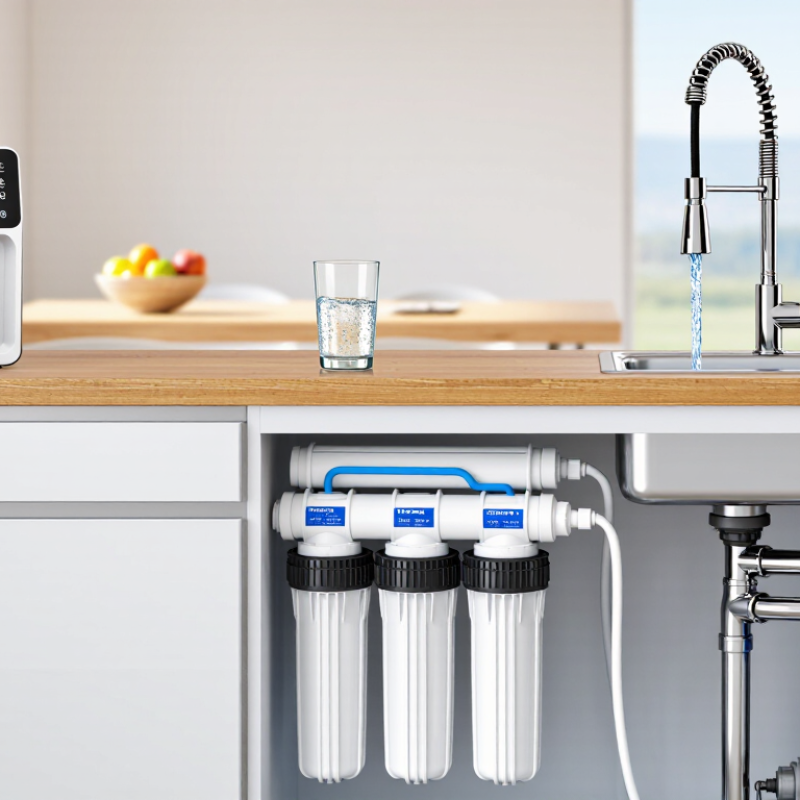
Point-of-use describes where a filter is installed, often under a sink or on a countertop; it may contain GAC, carbon block, or several stages. An under-sink unit can serve a dedicated drinking-water faucet, while a countertop model may suit renters who cannot modify plumbing. Compare installation, rated capacity, and flow. A filter that sits unused is not useful. I’ve also learned that taste can improve before a cartridge is due, so taste alone is a poor replacement schedule. Follow the manufacturer’s instructions, and test water when a specific contaminant is a concern.
Assess Rated Capacity, Flow Rate, and Replacement Costs
What Is the Best Carbon Water Filter System in 2026?
A filter’s rated capacity is useful only when matched to actual use. A 600-gallon cartridge lasts about 300 days at two gallons daily, but only 150 days at four. Treat those figures as estimates: sediment, water chemistry, and household demand can shorten service life. The NSF/ANSI 42 and 53 standards cover different kinds of performance claims, so check which specific contaminants a system has been independently certified to reduce.
Flow rate matters at the sink. A slow filter can turn filling a cooking pot into a small daily frustration. Compare the stated rate with your needs, and check whether the rating applies near the end of cartridge life or only under test conditions. NSF certification listings can help verify specific claims; a broad “carbon filtration” label alone tells you little.
Replacement costs are easy to underestimate. Divide a cartridge’s price by its expected service interval, then account for how often your household uses filtered water. The EPA’s 2023 Drinking Water Infrastructure Needs Survey estimated $625 billion in public-system investment needs over 20 years; that figure is not a household-filter cost, but it underscores why local water conditions deserve attention. A neat spreadsheet still cannot predict every clog. Check your own water report and budget for earlier replacement.
Check NSF/ANSI 42, 53, and 401 Contaminant-Reduction Claims
A carbon filter can improve water, but the word “carbon” alone proves very little. Check whether the exact system is certified to NSF/ANSI 42, 53, or 401, and which contaminants are listed in its certification. A standard number is not a promise to remove everything.
NSF/ANSI 42 generally covers aesthetic effects, such as chlorine taste and odor. NSF/ANSI 53 addresses specific contaminants with health effects, such as lead, when the product is certified for that reduction. NSF/ANSI 401 covers certain emerging compounds, but only those named in the product’s tested claims. Read the fine print. A filter certified for one contaminant under a standard may not reduce another.
Look up the exact model in the certifier’s online directory; similar-looking versions may have different claims. Check the rated capacity and flow rate, too. A filter that slows to a thin trickle can be frustrating, while overdue cartridges may reduce performance. Certification is useful evidence, not a guarantee for every home’s water. If your water has a known issue, compare the test results with the filter’s specific reduction claims. Even then, the match can be imperfect. That deserves a second look.
Choose a System Based on Certified Performance and Your Water Test
The best carbon water filter system in 2026 is not necessarily the one with the longest list of claims. It is the one tested for the substances you actually need to reduce. Start with a recent water report or a laboratory test, especially if your home uses a private well. A glass of clear water tells you little about dissolved contaminants. That matters.
Check the exact certification and its scope. NSF/ANSI 42 generally covers aesthetic effects such as chlorine taste and odor; NSF/ANSI 53 addresses specific health-related contaminants. A certification applies to named reduction claims, not automatically to every substance a filter might encounter. Read the model’s performance sheet and confirm the contaminant you care about is listed. The small print counts.
Match the filter to your results, then consider flow rate, installation space, and replacement costs. If a test shows elevated lead, choose a system specifically certified for lead reduction and follow its cartridge schedule. Carbon filters have limits, and a missed replacement can weaken performance. A faint chlorine smell may improve after filtration, but taste is not a reliable safety test. I still think this is easy to overlook: the right choice can be less convenient, or less impressive on paper, than expected. Re-test when conditions change.
What Is the Best Carbon Water Filter System in 2026?
Use your water test results and verified contaminant-reduction claims to choose a system. These WHO guideline values provide context; they are not filter performance ratings or necessarily local legal limits.
Guideline values vary widely, so the horizontal axis is logarithmic. Before buying, check that the system’s independent certification specifically covers the contaminants found in your water; activated carbon does not remove every contaminant.
Source: WHO, Guidelines for Drinking-water Quality, fourth edition incorporating the first and second addenda (2022). Values shown in mg/L.
Related Posts
-
Top Carbon Water Filter Manufacturers in China for Global Buyers
-
How to Choose the Best Well Water Filtration System?
-
Discover the Benefits of Using Carbon Water Filters for Healthier Drinking Water
-
7 Best Well Filters for Clean Water in 2026?
-
7 Tips for Choosing the Best Well Filtration System
-
2026 Best Filter System What Should You Consider?