Top Carbon Water Filter Manufacturers in China for Global Buyers

For global buyers, choosing a carbon water filter manufacturer in China involves more than comparing prices. Product performance depends on the carbon source, cartridge design, flow rate, and how consistently each unit is assembled. A sample that works well on a test bench may behave differently in a household system with changing water pressure. Details matter.

China’s suppliers range from focused cartridge factories to larger filtration companies offering housings, fittings, and private-label services. Buyers should ask what carbon media is used, how cartridges are sealed, and whether performance claims are supported by current test reports. Clear answers are more useful than a glossy catalog. Sometimes, the paperwork needs a closer look.

This guide introduces manufacturers relevant to international sourcing and outlines practical points for comparing them. It considers production capabilities, quality-control processes, customization, communication, and export experience. These factors can help buyers shortlist suppliers, but they do not replace independent checks. Request samples, confirm specifications in writing, and clarify who handles testing and after-sales support. A low unit price can become costly if cartridge dimensions vary or replacement parts are difficult to obtain.

No single supplier fits every project. A distributor building a retail range may need flexible packaging, while an equipment brand may prioritize stable media supply and repeatable output. The right choice comes from matching verified capabilities to the intended use. Even then, some uncertainty remains; good sourcing makes it visible early.
Top Carbon Water Filter Manufacturers in China for Global Buyers

Carbon Water Filters: Types, Materials, and Filtration Principles

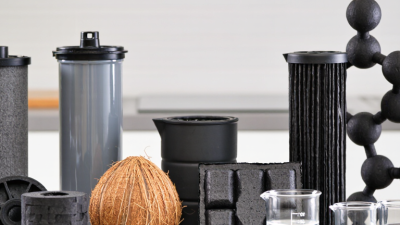
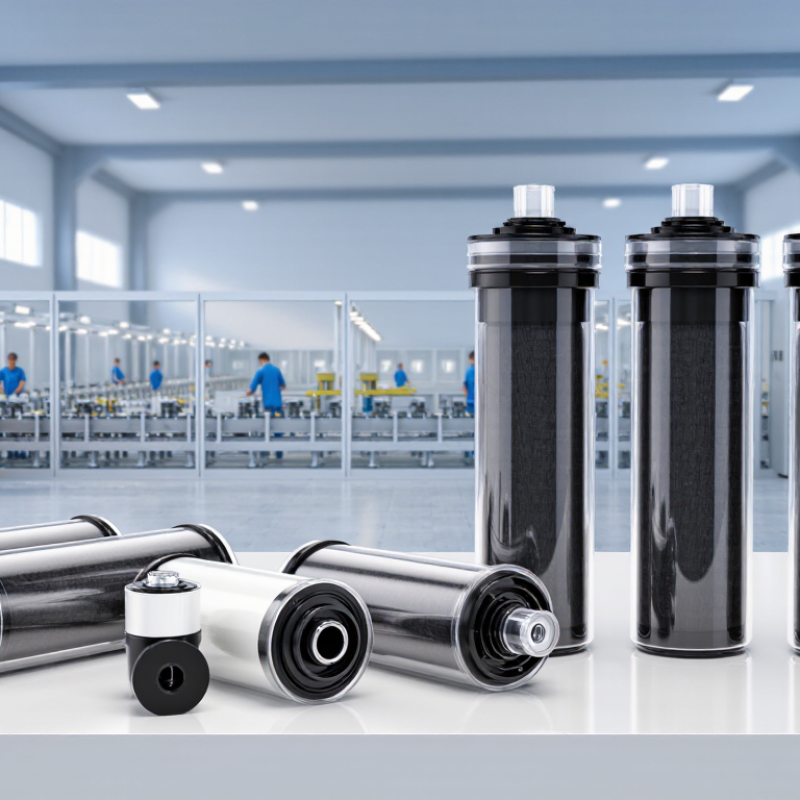
Carbon water filters commonly use granular activated carbon (GAC) or compressed carbon blocks. Their carbon may come from coconut shells, coal, or wood; activation creates pores that trap certain compounds by adsorption. Pore structure matters. GAC allows water to pass through loose particles, while blocks provide a denser path that can also reduce sediment, depending on design. Neither type removes every contaminant.

Performance depends on the target substance, carbon quality, flow rate, and contact time. The WHO/UNICEF Joint Monitoring Programme reported that 2.2 billion people lacked safely managed drinking water in 2022. That figure highlights treatment needs, but carbon filters are not a complete safety solution: they do not reliably disinfect water or remove dissolved salts. Buyers should check independently verified claims. NSF/ANSI 42 addresses aesthetic effects such as taste and odor; NSF/ANSI 53 covers specified health-related contaminant-reduction claims.

Tips: Match the filter’s certified reduction claims to a water test, not a broad “purification” label. Check replacement intervals and rated flow; a clogged cartridge can slow a faucet, while excessive flow may reduce contact time. Small detail, big difference.

China’s Carbon Water Filter Manufacturing Industry

China’s carbon water filter manufacturing industry is built around practical choices: carbon source, pore structure, cartridge design, and repeatable quality checks. Factories may use coconut-shell or coal-based activated carbon, then select granule size to balance adsorption with water flow. A cartridge can look finished while still allowing bypass at a poorly seated seal. Details matter.

Demand is linked to wider activated-carbon use, not only household filters. Grand View Research’s Activated Carbon Market Size, Share & Trends Analysis Report estimated the global market at USD 4.72 billion in 2023 and projected an 8.3% compound annual growth rate from 2024 to 2030. This is global context, not a China-specific filter-sales figure. Buyers should compare iodine value, carbon fines, pressure drop, and batch test records, rather than relying on appearance alone. Small checks help. Yet test methods and reporting formats can differ between suppliers, making direct comparisons imperfect. That gap deserves attention. A clear specification, sample testing, and traceable production records provide a firmer basis for evaluating manufacturers than broad capacity claims.

Notable Chinese Manufacturers and Their Product Strengths

Chinese carbon water filter manufacturers serve global buyers with products ranging from activated-carbon blocks to granular-carbon cartridges. Many offer custom dimensions, private-label packaging, and export documentation. The useful distinction is often process control, not catalog size.

Some factories specialize in coconut-shell carbon, valued for its hardness and adsorption characteristics. Others focus on molded blocks with controlled pore structures. A well-made block should fit its housing without leaving bypass gaps. Ask for carbon-source details, iodine value, pressure-drop data, and batch inspection records. Numbers matter. Test conditions can differ, so compare results only when methods and flow rates match.

Manufacturing strength also appears in practical details: end-cap bonding, consistent gaskets, and packaging that protects cartridges from moisture and dust. Samples may reveal uneven density or loose granules, but one sample cannot represent every production run. Request lot-based quality reports and check whether performance claims are independently verified. Vague test protocols deserve a closer look. Buyers should also assess replacement availability, lead times, and technical support alongside filtration performance, especially when cartridges must fit existing systems.

Carbon Water Filter Standards: What Their Scope Covers

A quick guide to common NSF/ANSI certification categories relevant to carbon filtration. The chart maps each standard to its broad claim category; it does not show product performance or guarantee that every filter reduces every contaminant listed.

How Global Buyers Evaluate Suppliers and Certifications

Global buyers should evaluate carbon water filter manufacturers by verified performance, not catalog claims. The WHO/UNICEF Joint Monitoring Programme reported that 2.2 billion people lacked safely managed drinking water in 2022. That figure highlights the stakes, but it does not prove any filter can make unsafe water safe. Ask suppliers for test reports covering the exact model, flow rate, rated capacity, and contaminants reduced. NSF/ANSI 42 addresses aesthetic effects, while NSF/ANSI 53 covers specified health effects. A certification applies only to listed products and claims. Check the certifier’s public directory.

Technical documents should identify carbon type, iodine value, particle size, and contact time. Request testing from an ISO/IEC 17025-accredited laboratory, plus production records showing how batches are controlled. Paperwork matters. A test report can still leave questions. Compare results with the conditions your customers will actually face, including water pressure and expected daily use. Ask how the supplier handles failed batches and changes to carbon sources. Those answers may be less polished than a brochure, but they reveal useful process details.

For export orders, review factory audit scope, traceability, packaging tests, and replacement-part availability. Confirm that certificates remain valid and match the shipment’s product configuration. A supplier may provide a strong sample yet struggle with consistent mass production. Request pilot-batch results and inspect several units, not just one. Keep a record of unanswered questions; procurement teams sometimes overlook them when timelines tighten.

Export, Customization, and Procurement Considerations

Top Carbon Water Filter Manufacturers in China for Global Buyers

Export, customization, and procurement considerations deserve as much attention as product specifications. Before requesting quotes, define the water source, target contaminants, flow rate, and expected cartridge life. These details help suppliers recommend suitable carbon media and housing dimensions. Ask for current test reports and confirm which conditions the results cover. A test result is not a guarantee for every installation.

Export readiness matters. Confirm carton size, pallet requirements, lead time, and shipping terms before approving an order. Request samples in the intended packaging, then inspect seals, threads, and carbon fines after transport. For custom filters, agree on drawings, labeling, tolerances, and sample approval in writing. Small changes can affect fit. Procurement teams should also check production capacity and how defects or delayed shipments are handled. Specifications may look complete, yet one overlooked detail can still cause trouble.

Tips: Compare quotes using the same performance criteria. Keep a signed sample and approved specification for production checks. Recheck documents before shipment. It takes time, but it can prevent avoidable surprises.

Top Carbon Water Filter Manufacturers in China for Global Buyers - Export, Customization, and Procurement Considerations

Evaluation Dimension Relevant Facts and Options What Global Buyers Should Verify
Carbon Filter Format Common formats include granular activated carbon (GAC) cartridges and carbon-block cartridges. Carbon blocks combine activated carbon with a binder and may also provide particle filtration, depending on their construction. Confirm the intended application, dimensions, connection type, pressure limits, and whether the stated filtration rating is nominal or absolute. Ask for the rating test method.
Carbon Media Activated carbon may be made from feedstocks such as coconut shell, coal, or wood. Feedstock alone does not establish a cartridge’s contaminant-reduction performance. Request the media specification, source and batch traceability, and performance data for the finished cartridge. Compare products by tested results rather than feedstock claims alone.
Contaminant-Reduction Claims Activated carbon is commonly used to reduce chlorine taste and odor. Reduction of other substances depends on the media, cartridge design, water conditions, and validated test results. Ask which specific substances are tested, under what conditions, and at what rated capacity. Do not assume a carbon filter removes dissolved salts, microorganisms, or every chemical contaminant.
Performance Standards NSF/ANSI 42 addresses aesthetic effects such as chlorine taste and odor; NSF/ANSI 53 covers specified health effects; NSF/ANSI 401 covers specified emerging compounds. A standard’s scope does not mean every product is certified for every claim within it. Verify the exact product model, reduction claim, rated capacity, and issuing certification directory. Treat ISO 9001 as a quality-management-system certification, not proof of a particular filter’s treatment performance.
Capacity and Service Life Rated capacity is tied to defined test conditions and an end-of-life criterion. Actual service life can vary with incoming water quality, flow, and usage. Compare capacity and flow-rate data under the same test conditions. Obtain the replacement interval guidance and confirm that the cartridge’s rated capacity matches the intended use.
Customization Depending on production capability, customization may include cartridge dimensions, end caps, connections, media blend, housing, labels, and retail packaging. Request a written specification and approve a production sample before ordering. Confirm tooling charges, minimum order quantity, change-control procedures, and ownership of custom artwork or tooling.
Factory Quality Controls Useful controls can include incoming-material checks, in-process inspections, finished-product checks, batch identification, and retention of production records. Ask for the inspection plan, relevant test methods, sample test reports, lot-traceability process, and procedures for handling nonconforming products. Consider an independent pre-shipment inspection.
Export Documentation International shipments commonly require commercial and transport documents; exact requirements depend on the destination, product classification, and shipping arrangement. Agree in advance on the commercial invoice, packing list, transport document, certificate of origin if required, and any destination-specific conformity or import documents. Confirm the tariff classification with a qualified customs professional.
Packaging and Labeling Packaging may need to protect cartridges from damage and contamination during storage and transit. Labeling rules differ by market and product category. Check destination-market requirements for materials, language, claims, instructions, traceability, and any food-contact or drinking-water requirements applicable to the product.
Commercial Terms Incoterms® 2020 rules allocate specified delivery responsibilities, costs, and risks between seller and buyer; they do not replace the sales contract or determine product conformity. Specify the named place or port, delivery rule, payment terms, production and shipment schedule, warranty, inspection rights, and remedies for defects in the purchase agreement.