What Is the Best Well System in 2026?
Choosing the best well system in 2026 starts with your water source, not a product ranking. A deep residential well may need a submersible pump, while a shallow well can often use a jet pump. Neither option wins everywhere. The right choice depends on well depth, household demand, water quality, available power, and local service support. A pressure tank, properly sized pipes, and accessible controls matter too. Picture a pump cycling repeatedly during a shower: that small warning can point to poor sizing or a pressure problem.
Groundwater expert Dr. John Cherry’s work emphasizes careful, science-based groundwater management. A practical paraphrase of that principle is: understand and protect the source before choosing equipment. That is not a product endorsement. It is a useful starting point for comparing a well system’s reliability, efficiency, and maintenance needs. Ask for a current flow test, inspect the pump and pressure controls, and test water quality through a qualified laboratory. Check how the setup performs during peak household use, not just when one tap runs. Look closely at warranties and local repair availability.
There is no universal winner. A system that works beautifully on one property may struggle on another. That part gets overlooked. This guide compares common pump types and system components, then explains what to verify before buying or upgrading in 2026. It also flags a practical uncertainty: a low upfront price can hide higher energy use or difficult repairs. Use the recommendations as a decision framework, and confirm specifications with a licensed local well professional.
Types of Well Systems Available in 2026
In 2026, private wells generally fall into three construction types: dug, driven, and drilled. Dug wells are broad and relatively shallow, often lined with stone or concrete. Their water level can respond quickly to rain, but shallow sources may be more exposed to surface contamination. Driven wells use a narrow pipe pushed into loose sand or gravel. They suit some shallow aquifers, not every soil. Drilled wells use specialized equipment and casing to reach deeper water-bearing formations. They often provide more protection from surface influences, but drilling deeper does not guarantee a better yield or water quality. Depth matters.
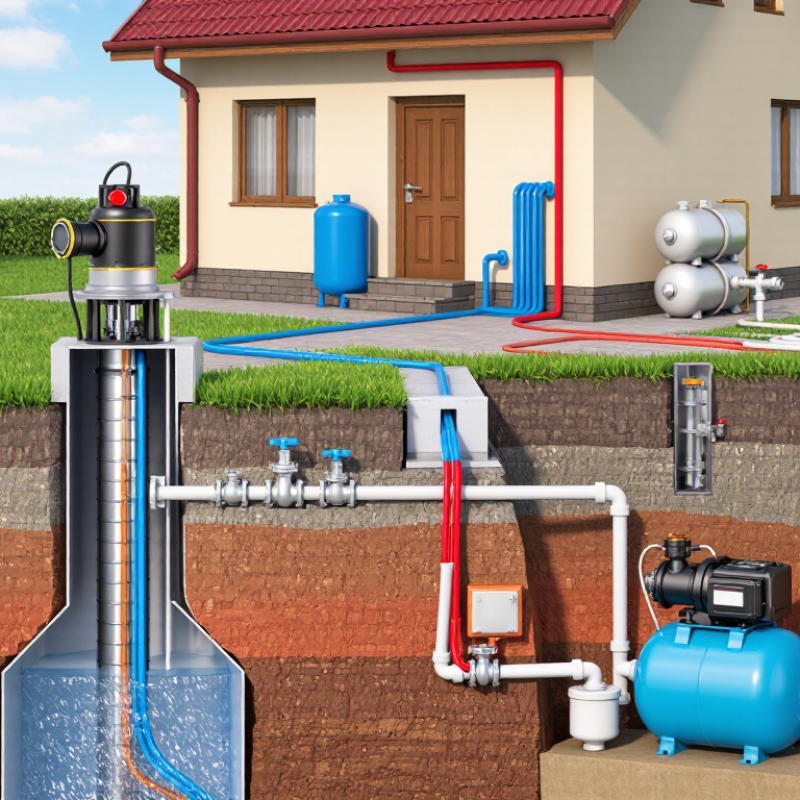
The right system depends on local geology, seasonal water levels, household demand, and test results. A submersible pump is commonly used in deeper wells, while a jet pump may serve some shallower setups. Pressure tanks help maintain steady flow at taps; storage and treatment equipment can be added when testing shows a need. A glass of clear water is not proof that it is safe. Have the water tested by a qualified laboratory, and ask a local well professional about construction requirements and maintenance. Even a carefully built well can change over time, and that is easy to overlook.
How a Well System Delivers Water
A well system moves groundwater from below the property to faucets, appliances, and sometimes irrigation lines. Water enters through a screened section of casing, which helps keep sand and debris out. A pump then pushes it upward. Submersible pumps sit down in the well, while some shallower wells use above-ground pumps. The right setup depends on well depth, water level, and household demand.
When a faucet opens, water leaves the pressure tank and enters the plumbing. As pressure drops, a switch signals the pump to run and refill the tank. The tank cushions pressure changes; it does not store an unlimited supply. You may notice a brief pause before the pump starts. Frequent cycling, sputtering taps, or sudden pressure changes are clues worth checking, not details to ignore.
Before water reaches the kitchen sink, it may pass through treatment equipment selected for the water’s actual test results. A laboratory test can reveal concerns such as bacteria, minerals, or nitrate, but no single filter addresses everything. Flow rate matters, too: treatment can reduce pressure if poorly matched to the system. Even a tidy setup can hide a weak point, so regular checks of the pump, tank, and water quality help catch problems early.
Key Factors for Choosing a Well System
The best well system in 2026 depends less on a label than on your site. Start with household water demand, local geology, well depth, and seasonal groundwater changes. Ask for reliable yield information, not just the well’s total depth. Measure, don’t guess. A well that recovers slowly may struggle during morning showers, laundry, and irrigation.
Pump capacity should match the well’s yield and your peak demand. An oversized pump can cycle too often, adding wear and wasting energy. A properly sized pressure tank helps keep flow steady. Water quality matters just as much. Test a sample through a qualified laboratory before choosing treatment. Hardness, iron, and bacteria need different solutions; clear water is not always safe water.
Consider power reliability, maintenance access, and winter conditions where relevant. Keep enough space around equipment for a technician to inspect it without moving stored boxes or tools. I would not treat a single test or contractor estimate as the whole story. Conditions can change, and recommendations deserve a second look when costs or results seem unclear. A local well professional can help interpret site records and match equipment to actual test results. Small details matter.
What Is the Best Well System in 2026? — Key Factors for Choosing a Well System
| Well System Type | Typical Construction | Best Suited For | Main Advantages | Key Limitations | Water Protection Considerations | Overall Fit |
|---|---|---|---|---|---|---|
| Drilled well in unconsolidated material | A borehole is drilled through soil, sand, or gravel. Casing and a properly selected screen help support the well and admit groundwater. | Properties where a suitable aquifer is present in sediment or other unconsolidated formations. | Can reach deeper aquifers than shallow dug or driven wells; can be constructed with a relatively small surface opening. | Construction depth, yield, and cost vary with local geology. A screen must be matched to the aquifer to limit sediment entry. | Requires a sanitary well cap and correctly installed casing and surface seal. Test water quality after construction and periodically thereafter. | Often a strong option when local geology and a qualified well professional confirm a suitable aquifer. |
| Drilled bedrock well | A borehole passes through overburden and enters bedrock. Casing commonly seals the upper section; groundwater may enter through fractures in the rock. | Areas where groundwater is obtained from water-bearing fractures in bedrock. | Can access groundwater below shallow surface conditions and has a small surface footprint. | Fracture locations are variable, so drilling depth does not guarantee a particular water yield. Water chemistry can vary by location. | Protect the casing and wellhead from surface water. Test for locally relevant natural contaminants as well as common indicators of contamination. | Potentially suitable where bedrock is the local groundwater source; site assessment is essential. |
| Driven well | A small-diameter screened point is driven into shallow, loose, water-bearing sand or gravel. | Shallow aquifers with suitable loose materials and a water table within the practical installation depth. | Can be comparatively simple to install where soil and groundwater conditions are appropriate. | Limited to suitable shallow formations; may have lower capacity and greater vulnerability to seasonal water-level changes than a deeper well. | Shallow groundwater can be more exposed to nearby contamination. Maintain a sanitary wellhead and follow local setback and construction rules. | Best for specific sites with shallow, permeable aquifers and appropriate local approval. |
| Dug well | A large-diameter excavation is made by digging or excavating and then supported or lined; a cover and surface protection are needed. | Limited situations where groundwater is very shallow and other well construction methods are unsuitable or unavailable. | The large diameter can provide some short-term water storage within the well. | Usually shallow and more susceptible to water-level fluctuations, surface-water entry, and contamination than a properly constructed deeper well. | Needs a secure, sanitary cover and effective grading or drainage to keep surface water out. Regular inspection and water testing are important. | Generally a site-dependent choice; assess contamination risk and local requirements carefully. |
Choosing the best system: There is no universally best well type. The appropriate choice depends on local geology, aquifer depth and yield, water quality, household demand, construction requirements, and local regulations. Have a qualified local well professional assess the site, and test well water before use and as recommended by local health authorities.
Comparing Costs, Reliability, and Maintenance
What Is the Best Well System in 2026?
For most homes, a properly constructed drilled well offers a strong balance of reliability and protection. It usually costs more upfront than a shallow dug well, because drilling depth, casing, pump capacity, and local geology drive the bill. A shallow well may be cheaper to install, but it can be more exposed to surface contamination and seasonal water changes. No single winner. The U.S. Geological Survey’s Circular 1441 estimated that 42.5 million people relied on self-supplied domestic water in 2015, nearly all from groundwater. That scale matters, but it does not make every site comparable.
Compare lifecycle costs, not just the drilling quote. Ask whether the estimate includes casing, a submersible pump, pressure tank, electrical work, and water testing. A dependable system should deliver steady pressure without frequent pump cycling. Keep a written record of repairs and water levels; it makes gradual problems easier to spot. The CDC recommends testing private well water at least annually for total coliform bacteria, nitrates, total dissolved solids, and pH. Treatment needs can add ongoing filter or disinfection costs. I would not treat annual testing as a perfect reliability score. It is a practical check, not a guarantee. Sources: USGS, Estimated Use of Water in the United States, 2015, Circular 1441; CDC, Private Ground Water Wells.
How to Select the Best Well System for Your Property
What Is the Best Well System in 2026?
How to Select the Best Well System for Your Property
The best well system is the one that fits your property’s water supply, household demand, and site conditions. Start with a professional assessment of local geology, expected well yield, and seasonal groundwater changes. A deep drilled well may need a different pump than a shallow well. Not just depth. The pump must also meet your home’s peak demand without running constantly.
Ask for recent flow and water-quality test results before choosing equipment. A laboratory test can identify issues such as hardness, iron, or bacteria, helping you decide whether treatment is needed. Avoid buying a filter based only on a neighbor’s setup. Their water may look similar but contain different minerals. That matters.
Consider the pressure tank, electrical supply, service access, and space for treatment equipment. A properly sized tank can reduce frequent pump starts, while accessible components make future maintenance simpler. Request written details on pump capacity, installation depth, expected pressure, and maintenance needs. It is easy to trust one test or estimate too much; groundwater and household use can change. Leave room in your plan for adjustments, especially if water levels vary through the year.
Related Posts
-
Top 10 Tips for Choosing the Best Water Cleaning System?
-
10 Essential Tips for Maintaining Your Well Water System
-
What Is Water Testing and Why Is It Important?
-
2026 Top Water Filtration Systems What Are the Best Options?
-
What Is the Best Drinking Water Filtration System in 2026?
-
China Top Water Testing Methods and Technologies Explained