How to Choose a Water Filtration System in 2026
Choosing a water filtration system in 2026 starts with a plain question: what is actually in your water? The WHO/UNICEF Joint Monitoring Programme reported that 2.2 billion people lacked safely managed drinking water in 2022. That global figure does not describe every household, but it underscores why access alone cannot confirm water quality. Your first clue may be a local water-quality report, a test result, or a stubborn metallic taste. Taste is useful to notice, but it cannot identify every contaminant.
Water-quality researcher Dr. Shane Snyder’s work offers a practical reminder: treatment should target specific contaminants, not broad marketing promises. Check whether a system is independently certified for the substances you need to reduce. NSF/ANSI certification standards can help you compare claims, though the exact standard and contaminant matter. A carbon pitcher may improve taste and reduce certain substances; reverse osmosis can address a different range, while requiring more upkeep and water. Read the performance data. Look closely.
This guide will help you compare filter types, certifications, installation needs, and ongoing costs before choosing a water filtration system. It will also explain when a simple point-of-use filter may fit, and when professional testing deserves consideration. Replacement cartridges matter. So does fit: a system that sits unused under the sink protects no one. Be cautious with dramatic claims, especially when they lack test results or clear certification details. The right choice is rarely the fanciest one. It may still involve trade-offs, and those deserve an honest look.
Assess Your Water Source and Identify Relevant Contaminants
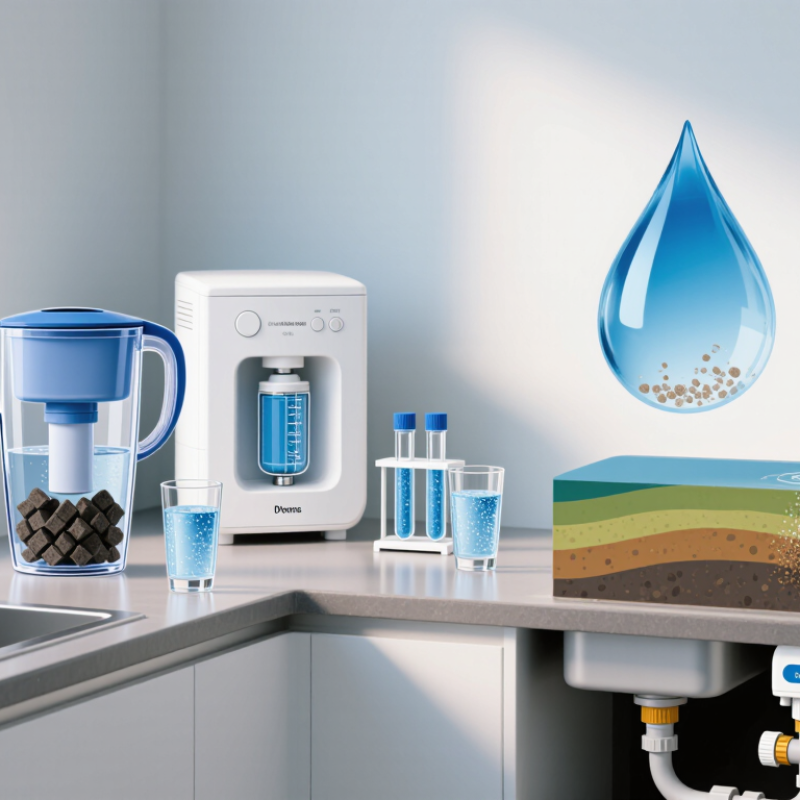
Choosing a filtration system starts with knowing where your water comes from.
If you use municipal water, read your utility’s latest Consumer Confidence Report, which lists detected contaminants and compliance information. Match those findings to your household concerns, such as lead from older plumbing or disinfection by-products.
The report describes the system, not necessarily the water at your kitchen tap. That matters.
For a private well, arrange testing through a qualified laboratory; well water is not routinely monitored by a public water utility. CDC guidance recommends testing private wells at least annually for coliform bacteria, nitrates, total dissolved solids, and pH. Local geology and nearby land use can point to other tests, including arsenic or pesticides.
A cloudy glass is not a reliable test.
National findings offer context, not a household diagnosis. A 2023 USGS study estimated that at least one PFAS may occur in roughly 45% of U.S. tap water. I would not treat that estimate as proof about one home. Check local results, consider plumbing age, and ask a certified lab which sampling method fits the contaminant.
Keep the report. Revisit it when the source changes or new local findings emerge.
Define Your Treatment Goals and Household Water Needs
Before choosing a filtration system, define what you want it to improve.
Is the concern chlorine taste, sediment, hardness, or a specific contaminant? Start with evidence. Review your water utility’s quality report, or arrange suitable testing if you use a private well. A test can narrow the options, but it does not answer every question. Check which substances the system is designed and independently certified to reduce.
Household needs matter just as much. A renter who wants better-tasting water at one kitchen tap may need a different setup from a family seeking treatment throughout the home. Consider how many people use water, peak demand, available installation space, and how often you can replace filters. A small unit may be convenient, yet frustrating when several taps run at once. It is easy to focus on purchase price and overlook replacement costs. Needs can change, too.
Tips:
List your top two water concerns and your daily usage. Match those needs to test results and product documentation. Check filter life, maintenance steps, and flow rate before deciding. If the results seem unclear, pause and ask a qualified water professional. Sometimes the first guess is wrong.
Compare Filtration Technologies and Performance Certifications
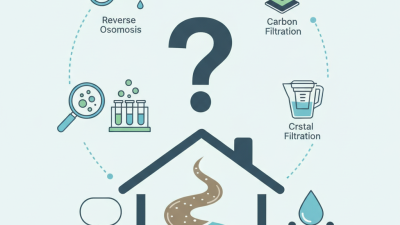
Choosing a water filter starts with identifying what is actually in the water. Activated carbon can reduce chlorine taste and odor, while reverse osmosis can reduce many dissolved substances. Ultraviolet treatment targets microorganisms, but does not remove dissolved chemicals. Not every home needs it. A system’s technology matters less than whether it is tested for your specific concern.
Performance certifications help separate tested claims from broad promises. NSF/ANSI 42 covers aesthetic effects such as taste and odor; 53 addresses specified health effects. Standards 58 and 401 cover reverse osmosis systems and certain emerging compounds, respectively. These labels are not a guarantee that a system removes every contaminant. Check the certification directory and confirm the exact model and reduction claim.
Also compare filter capacity, replacement intervals, and flow rate. A slow tap can become frustrating when filling a cooking pot, and neglected cartridges may perform poorly. For private wells or changing local conditions, consider testing the water and revisiting the choice later. That part is easy to overlook; one old test may not describe today’s supply.
Evaluate Installation Requirements and Long-Term Maintenance Costs
How to Choose a Water Filtration System in 2026
Installation affects both the first bill and future service costs. An under-sink unit may need cabinet space, a nearby cold-water line, and a drain connection if it uses reverse osmosis. A whole-house system needs room near the main water line and enough clearance to change its media. Measure twice. Check water pressure and access before requesting an installation quote; a tight cabinet can turn a simple cartridge change into an awkward service call.
Maintenance is not just the filter price. Check replacement intervals, cartridge availability, disposal instructions, and whether the system needs a plumber. For a simple estimate, multiply each replacement cartridge’s price by how often it must be changed, then add any service fees. U.S. EPA WaterSense guidance says household leaks waste nearly 10,000 gallons of water per year on average. That figure concerns plumbing leaks, not filter performance, but it shows why checking fittings matters. Not glamorous.
Water quality changes filter life, so treat published schedules as starting points, not guarantees. Compare the system’s certified contaminant-reduction claims with a local water report or, for a private well, a current test. NSF/ANSI certification can help verify specific claims; the standard number alone does not mean a unit removes every contaminant. One planning weakness is relying on the purchase price alone. A lower-cost unit may need frequent cartridges, while a more complex model can bring extra installation and service expenses.
Match System Capacity to Your Budget and Usage Needs
A water filter should match the water you actually use, not the largest capacity on the shelf. The USGS report Estimated Use of Water in the United States in 2015 puts domestic water use at about 82 gallons per person per day. That includes showers, laundry, and other household uses; it is not a drinking-water estimate. Use it as context, not as a filter-sizing target. Track how much filtered water your household uses for drinking and cooking over several ordinary days.
For example, four people using about half a gallon each daily need roughly two gallons of filtered water per day. Add a little room for guests or busy days. Check the system’s rated daily output and storage capacity, then compare those figures with your measured demand. Small under-sink units can suit modest use, while larger households may need more output or storage. Capacity claims are not always easy to compare.
Budget beyond the purchase price. Replacement filters, installation, and any required water testing add to the real cost. For whole-house systems, check peak flow rate too; a unit sized only by daily volume may reduce pressure when several taps run. Match the filter’s certified contaminant-reduction claims to a reliable water-quality report, and review the certification standard, such as NSF/ANSI 53 where relevant. Your estimate may be imperfect. Recheck it after a month.