What Are the Top Water Filters for Well Water?

Choosing the right water filter starts with the water beneath your home, not with a glossy product label. Private wells serve millions of American households, yet the U.S. Environmental Protection Agency does not regulate most private wells. The Centers for Disease Control and Prevention recommends testing well water at least once a year for coliform bacteria, nitrates, total dissolved solids, and pH. Local risks may also include iron, manganese, arsenic, sulfur, or PFAS.

The best water filters for well water depend on measured contaminants, flow rate, and household use. A sediment filter may trap sand and rust at the kitchen tap. An activated carbon system can improve taste and reduce selected chemicals. Reverse osmosis may address certain dissolved contaminants, but it can waste water and remove beneficial minerals. NSF/ANSI standards offer useful benchmarks: NSF/ANSI 42 covers aesthetic effects, while NSF/ANSI 53 addresses specific health-related contaminants. NSF/ANSI 58 applies to reverse osmosis systems.

Testing comes first. Always.

Reports from the CDC, EPA, and NSF show why treatment claims require careful interpretation. Certification does not mean a filter removes everything. It confirms performance for specific contaminants and conditions. That distinction matters when a glass appears clear but contains invisible nitrate or arsenic. Some buying guides make the process look simple. It is not always simple. Well depth, plumbing age, seasonal flooding, and nearby agriculture can change the risk profile. This guide compares practical water filters for well water using test results, certified performance, maintenance demands, and realistic operating costs.
What Are the Top Water Filters for Well Water?

Identify Well-Water Risks Using EPA Limits: Arsenic 10 µg/L, Nitrate 10 mg/L

What Are the Top Water Filters for Well Water?

A clear glass of well water can still contain invisible contaminants. Arsenic should remain below the EPA limit of 10 µg/L. Nitrate should remain below 10 mg/L, measured as nitrogen. These limits are practical warning lines, not proof that every household has the same risk.

Agricultural areas may raise nitrate concerns. Certain rock formations may release arsenic. Children and pregnant people can face greater nitrate-related risks.

Testing should guide the filter choice. Use an accredited laboratory, not taste or smell. Test untreated well water, then repeat testing after installation. Reverse osmosis can reduce both arsenic and nitrate at a kitchen tap. Activated alumina may help with arsenic. Ion exchange can target nitrate, but it needs careful maintenance. Distillation is another point-of-use option. Whole-house treatment is not always necessary.

Check the filter’s certified contaminant claims and rated capacity. A cartridge can look clean while performance declines. Keep a written replacement date. I have seen maintenance plans fail because reminders were too vague. That mistake is easy to repeat. Water pressure, pH, and competing minerals can affect results. A water professional should interpret unusual test values. Retest after repairs, flooding, or changes in taste.

Boiling does not remove arsenic or nitrate. In fact, it can concentrate them as water evaporates.

Match Contaminants to NSF Standards 42, 53, and 58 Filtration Claims

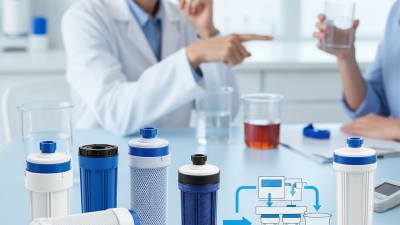
Choosing a water filter for well water starts with testing, not guessing. A clear glass does not prove safety. Well water may contain sediment, iron, manganese, sulfur odors, or microorganisms. A certified laboratory can identify the actual problem. Keep the report nearby when comparing filtration claims.

NSF/ANSI 42 usually covers aesthetic concerns, such as chlorine taste, odor, and visible particles. However, many private wells have little chlorine exposure. A filter certified only to Standard 42 may improve taste but leave dissolved contaminants unchanged. It is easy to overvalue a clean-looking cartridge. I have seen homeowners focus on cloudy water while overlooking laboratory results.

NSF/ANSI 53 addresses specific health-related contaminants, but certification applies only to listed substances and tested reduction claims. Check the exact contaminant, capacity, and replacement schedule. Standard 58 applies to reverse osmosis systems. These systems can reduce certain dissolved substances, including some metals and salts, when properly certified. They also create wastewater and require pressure and maintenance. That trade-off matters.

Read the performance data sheet carefully. “Tested to” is not the same as certified for reduction. The filter must match the contaminant and the flow rate in your home. For bacteria or other biological risks, ordinary sediment and carbon filters are not enough. Treatment may require a separately certified method and professional evaluation. A useful filter is not automatically the right filter.

What Are the Top Water Filters for Well Water? - Match Contaminants to NSF Standards 42, 53, and 58 Filtration Claims

Well-Water Concern Filter Type to Consider Relevant NSF/ANSI Standard What to Verify Important Limitation
Sediment, sand, or visible particles Sediment cartridge or backwashing sediment filter NSF/ANSI 42 may cover specific particulate-reduction claims The exact particulate class or reduction claim, plus the filter’s flow rate and replacement schedule A sediment filter does not remove dissolved chemicals or disinfect water.
Unpleasant taste or odor, including chlorine after treatment Activated carbon filter NSF/ANSI 42 for specified aesthetic effects A listed claim for the particular taste, odor, or chlorine reduction you need Many untreated wells do not contain chlorine; a 42 claim does not establish removal of every contaminant.
Lead or another health-related contaminant A point-of-use filter selected for the contaminant found in the test NSF/ANSI 53 for specific health-effects claims; NSF/ANSI 58 may apply to reverse osmosis systems The exact contaminant-reduction claim on the product’s certification listing A standard number alone is not proof that the system reduces a particular contaminant.
Nitrate or nitrite Reverse osmosis system or another treatment specifically validated for the result NSF/ANSI 58 for a reverse osmosis system with a relevant reduction claim An explicit nitrate or nitrite claim and the system’s operating and maintenance requirements Do not assume all RO systems reduce nitrate or nitrite; confirm the specific claim and retest the water.
Arsenic or elevated dissolved solids Reverse osmosis, chosen for the tested water and target contaminant NSF/ANSI 58 for specified RO performance claims The exact arsenic or total dissolved solids (TDS) reduction claim, where applicable Arsenic treatment depends on water chemistry and arsenic form; obtain a laboratory test and confirm suitability.
Iron or manganese staining and metallic taste A treatment system designed for the measured iron and manganese levels, such as oxidation followed by filtration NSF/ANSI 42, 53, or 58 only when the exact reduction claim is listed The treatment’s stated capacity for iron and manganese at your water’s pH and flow rate These standards do not automatically establish iron or manganese removal; test the water and check the specific claim.
Hardness and scale buildup Water softener or another treatment selected for hardness NSF/ANSI 44 is the standard commonly associated with residential cation-exchange water softeners Softening capacity, hardness settings, and regeneration requirements Standards 42, 53, and 58 are not general water-softening claims.
Possible bacteria, viruses, or other microorganisms Disinfection treatment, such as a properly selected UV system, after appropriate pretreatment NSF/ANSI 55 applies to ultraviolet microbiological water treatment systems The applicable microbiological performance claim, required water clarity, and maintenance instructions Standards 42, 53, and 58 do not by themselves establish disinfection. Test for coliform bacteria and follow public-health guidance.

Selection note: Test well water through a qualified laboratory before choosing treatment. NSF/ANSI standards apply to specific products and verified reduction claims, not to every contaminant a system might encounter. Check the certification listing, installation requirements, and maintenance schedule for the exact model and claim.

Compare Sediment, Carbon, UV, and RO Systems by Removal Capability

What Are the Top Water Filters for Well Water?

Well water can carry fine sand, rust flakes, sulfur odors, bacteria, and dissolved minerals. A sediment filter handles visible particles first. It protects later equipment, but it cannot remove nitrate, lead, or microbes. I have seen clear-looking water clog a filter quickly after heavy rain. Appearance can mislead.

Activated carbon improves taste and reduces chlorine, odors, and many organic chemicals. It is less dependable for hardness, iron, nitrate, or high mineral content. Carbon also needs timely replacement. An exhausted cartridge may look normal while performing poorly. That detail is easy to miss.

Ultraviolet treatment inactivates bacteria, viruses, and other microorganisms without adding chemicals. It does not remove sand, metals, or dissolved contaminants. Water must be filtered and reasonably clear before UV exposure works consistently. Reverse osmosis removes many dissolved solids, including certain salts, arsenic, fluoride, and nitrate, when the membrane is suitable. It wastes some water and needs pressure, storage, and regular sanitizing. Testing the well water before choosing equipment is essential. A basic test may miss seasonal contamination, and that is where my confidence would stop. Pairing sediment filtration, carbon, UV, or RO should follow measured needs, not fear.

What Are the Top Water Filters for Well Water?

Compare the typical treatment scope of sediment, activated carbon, UV, and reverse osmosis systems.

How to read: 0 = not a primary treatment target; 1 = limited or system-dependent; 2 = primary treatment target. Scores describe typical treatment scope, not guaranteed removal percentages. UV inactivates microorganisms rather than physically removing them. Check water-test results and contaminant-specific product certifications when choosing a system.

Assess Flow Rate, Capacity, Maintenance, and Well-House Installation Needs

Selecting a water filter for well water starts with evidence, not appearance. Have the water tested by an accredited laboratory before choosing equipment. Results may reveal sediment, iron, hardness, sulfur odor, or bacteria. Each problem needs a different treatment method. One filter rarely handles everything well.

Flow rate should match the busiest household demand. Record the pump’s output and the pressure tank’s operating range. Then compare those figures with the filter’s rated gallons per minute. An undersized unit may cause weak showers and pressure loss. Capacity matters too. A cartridge holding more sediment lasts longer, but it may also cost more and require greater installation space. Check replacement intervals carefully. Real usage often differs from estimates.

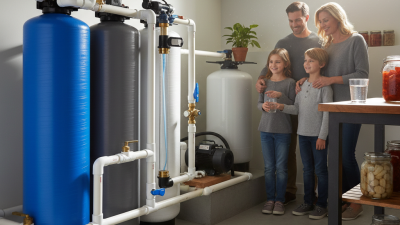
A well-house installation needs practical planning. Place treatment equipment after the pressure tank, with shutoff valves and a bypass line. Leave enough room to remove a heavy cartridge without spilling water across the floor. Provide a nearby drain when backwashing or flushing is required. Protect housings, pipes, and electrical controls from freezing temperatures. Keep a pressure gauge before and after restrictive filters. That small detail makes clogging easier to detect. Maintenance is not optional. Inspect leaks, record pressure changes, and replace media on schedule. I have seen homeowners choose a high-capacity system, then discover that the well house door cannot open fully. Measure the room twice. The first plan is often wrong.

Verify Performance Through Annual CDC-Recommended Testing and Certified Data

What Are the Top Water Filters for Well Water?

The best filter depends on what your well water actually contains. Clear water can still carry bacteria, nitrates, arsenic, or excess minerals. Start with a laboratory test before choosing equipment. Test annually. The CDC recommends yearly testing for private wells, plus testing after flooding, repairs, or unusual taste and odor. A recent report gives you a practical baseline for selecting treatment.

Look for performance data tied to specific contaminants, not broad claims such as “pure water.” Independent certification should confirm the filter’s reduction claims under defined test conditions. Check the tested flow rate, cartridge life, pressure limits, and replacement schedule. A sediment filter may protect plumbing, while activated carbon can address certain chemicals and odors. Neither option removes every contaminant. That distinction matters.

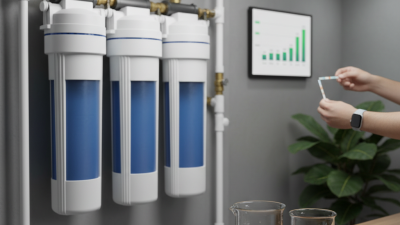
Keep the laboratory report, installation date, and maintenance records together. Retest treated water when the system is new, after major servicing, and during the annual check. Compare results over time. Small changes can reveal a failing component before the water looks different. One easy mistake is testing only the untreated well water. Testing the kitchen tap matters too, because pipes, tanks, and filters can change the final result. Certified data is useful, but it still reflects controlled conditions. Your well is less predictable.