2026 Best Water Testing Kits for Global Buyers?
Choosing the right water testing kit in 2026 requires more than comparing prices and colorful packaging. Global buyers face different water sources, climates, regulations, and testing priorities. A household in Toronto may monitor chlorine and lead, while a rural buyer in Kenya may need nitrate, fluoride, or microbial screening. The best choice depends on the question the kit must answer.
This guide examines practical water testing options for homes, farms, facilities, travelers, and small businesses. It considers test accuracy, detection ranges, sample handling, shelf life, documentation, and ease of interpreting results. Clear instructions matter when testing a glass beside a private well or a tank after heavy rain. Small details can change the outcome.
No kit is flawless. That matters.
Many strips provide fast screening, but they may produce broad color ranges. Digital meters can offer clearer readings, yet calibration and storage affect performance. Laboratory confirmation remains important when results suggest contamination or a health risk. Buyers should also check whether a kit supports local units, replacement reagents, and recognized testing methods.
Our evaluation follows practical experience and evidence-based comparison rather than marketing claims. We highlight trusted manufacturers, transparent specifications, and limitations that sellers sometimes overlook. Some recommendations may still need reconsideration as products, standards, and availability change across markets. Reliable testing begins with the right kit, but it does not end there.
What Makes a Water Testing Kit Reliable in 2026?
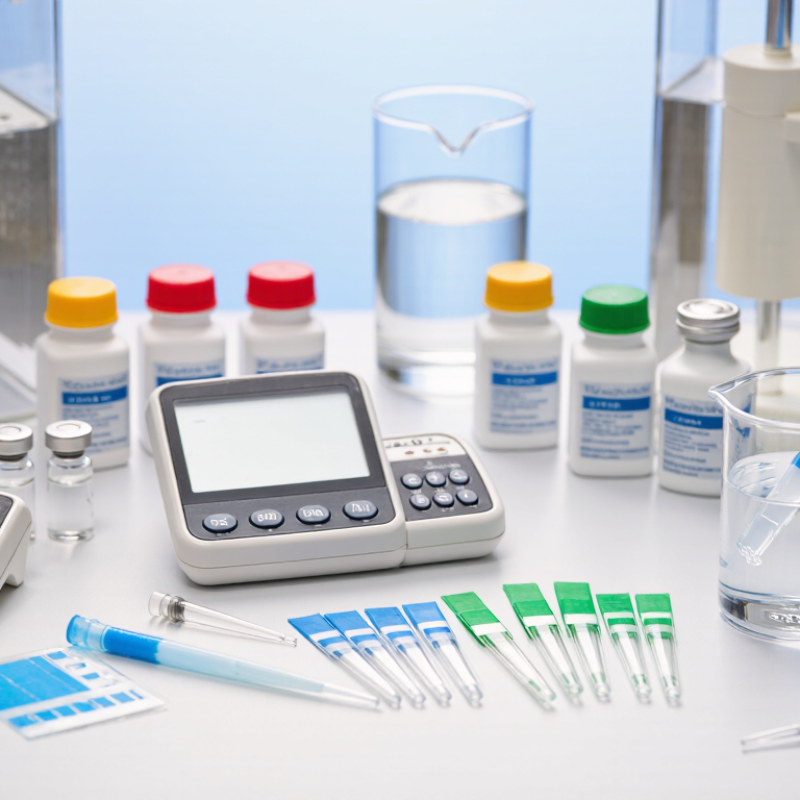
A reliable water testing kit in 2026 should provide repeatable results, not merely colorful reactions. Reliability starts with clear detection limits, measurable ranges, and documented accuracy. The instructions should explain sample volume, waiting time, temperature, and lighting. Small errors can change a reading. An attractive box proves little.
In practical field checks, I would test the same water sample twice. The results should remain close, even when the sample comes from a cold tap or a dusty storage tank. Good kits include control procedures, sealed reagents, batch information, and visible expiration dates. Their calibration process should be traceable to recognized laboratory standards. Independent validation adds confidence, especially for drinking water, wells, and agricultural supplies. Test strips are convenient, but digital meters may require regular calibration and careful cleaning.
Water chemistry is rarely simple. Minerals, chlorine, color, and sediment can interfere with some tests. A kit may detect one substance while missing another important risk. I would record the date, source, temperature, result, and unusual sample appearance. That record supports better decisions and reveals inconsistent readings. No field kit is perfect. I still question results that look surprisingly safe or unsafe. A second method, or confirmation through a competent laboratory, may be necessary before taking serious action. Storage also matters; heat and moisture can quietly damage reagents.
2026 Best Water Testing Kits for Global Buyers? - What Makes a Water Testing Kit Reliable in 2026?
| Testing Category | Typical Field-Test Range | Common Measurement Unit | Practical Detection Target | Typical Test Time | Reliability Requirement | Recommended Verification |
|---|---|---|---|---|---|---|
| pH | Approximately 0–14 pH units | pH units | Drinking-water screening commonly focuses on mildly acidic to mildly alkaline conditions | Less than 5 minutes | Clear color scale or calibrated digital sensor; resolution of about 0.1 pH unit is preferred | Use fresh buffer solutions and compare with a laboratory-calibrated meter when results are unusual |
| Free Chlorine | About 0–5 mg/L for many household field kits | mg/L as Cl2 | Residual disinfectant screening in treated water | 1–5 minutes | Reagent should specify a defined reaction time and protect the sample from strong sunlight during testing | Confirm unexpected results with a validated photometric or laboratory method |
| Total Chlorine | About 0–5 mg/L in common field applications | mg/L as Cl2 | Free chlorine plus combined chlorine screening | 1–10 minutes | The kit must clearly distinguish total chlorine from free chlorine and include a fixed reading time | Run a reagent blank and test a known-quality water sample periodically |
| Nitrate | Approximately 0–50 mg/L as nitrate-nitrogen or a higher nitrate-ion range, depending on the method | mg/L as N or mg/L as NO3− | Agricultural runoff and groundwater screening | 5–20 minutes | The reporting unit must be clearly stated because nitrate-nitrogen and nitrate-ion values are not interchangeable | Confirm elevated results through an accredited laboratory, especially for private wells and infant-use water |
| Nitrite | Usually a low-mg/L screening range | mg/L as N or mg/L as NO2− | Recent contamination or nitrification screening | 5–15 minutes | Low detection capability and strict reaction timing are important because nitrite may occur at low concentrations | Repeat the test with a fresh sample and use laboratory confirmation for any positive result |
| Hardness | Approximately 0–500 mg/L as CaCO3, depending on the kit | mg/L as CaCO3 or °dH | Scale formation and water-treatment planning | 1–10 minutes | Drop-count titration is generally more informative than a broad color strip for dosing decisions | Check the stated conversion between mg/L as CaCO3 and local hardness units |
| Alkalinity | Commonly about 0–500 mg/L as CaCO3 | mg/L as CaCO3 | Buffering capacity and corrosion-control screening | 5–15 minutes | A defined titration endpoint and easy-to-read color transition improve repeatability | Use laboratory titration when calculating chemical-treatment requirements |
| Copper | Often a low-mg/L screening range | mg/L Cu | Plumbing corrosion and metallic taste screening | 5–15 minutes | The method should state whether it measures dissolved copper or total recoverable copper | Collect both first-draw and flushed samples when investigating household plumbing |
| Lead | Low-µg/L or low-ppb screening range is preferred | µg/L or ppb Pb | Older plumbing and fixture contamination screening | 10–30 minutes | Low detection capability, contamination-resistant packaging, and clear sampling instructions are essential | Any positive or near-limit result should be confirmed by an accredited laboratory using an approved analytical method |
| Iron | Approximately 0–5 mg/L in many household screening kits | mg/L Fe | Staining, taste, and groundwater-condition screening | 5–15 minutes | The kit should identify whether it measures ferrous iron, ferric iron, or total iron | Use a filtered and unfiltered comparison when determining whether iron is particulate or dissolved |
| Fluoride | Low-mg/L range with a clearly stated detection limit | mg/L F− | Regional groundwater and treated-water screening | 5–20 minutes | Because fluoride may require greater analytical sensitivity, a laboratory method is preferred for regulatory decisions | Confirm results with an ion-selective electrode or accredited laboratory method |
| Turbidity | Visual kits may provide broad categories; electronic meters may report low NTU values | NTU | Cloudiness and suspended-particle screening | 1–5 minutes | Transparent sample cells, consistent lighting, and protection from bubbles improve repeatability | Use a calibrated nephelometric instrument for compliance or treatment-performance testing |
| Microbiological Screening | Presence/absence or estimated-count format, depending on the method | Presence/absence or CFU/100 mL | Screening for indicator organisms such as total coliforms and E. coli | 24–48 hours for many culture-based field methods | Sterile containers, correct incubation temperature, sealed handling, and contamination controls are critical | Positive results should be confirmed by an approved laboratory; do not rely on a color change alone without instructions |
| Multi-Parameter Coverage | Usually 5–16 parameters per kit, depending on the test format | Parameter-specific units | Initial household, well, aquarium, pool, or environmental screening | 5–30 minutes for a complete test set | Each parameter should have its own range, detection limit, reaction time, and storage requirement | Select a kit based on the actual local risk profile rather than the number of parameters alone |
| Shelf Life and Storage | Varies by reagent type; many chemical strips and reagents are moisture- and heat-sensitive | Months or years from manufacture | Long-term result consistency | Not applicable | Manufacture date, expiry date, lot number, sealed packaging, and storage temperature should be visible | Do not use discolored, wet, damaged, or expired reagents |
| Documentation and Traceability | Instruction manual, lot information, reaction times, limitations, and quality-control guidance | Documented test characteristics | Repeatable testing across countries and users | Not applicable | Instructions should use SI units, explain interferences, and provide sampling and disposal guidance | Prefer methods aligned with recognized international or national water-analysis standards |
Buyer note: Field-testing kits are useful for screening and trend monitoring, but they do not automatically replace accredited laboratory analysis. Detection limits, reporting units, sample requirements, and acceptable limits vary by country, water source, and intended use. Always check the kit’s technical data sheet before purchase.