How to Choose the Best Well Filter System?
Choosing the best well filter system begins with the water beneath your home, not with a glossy product label. Private wells can contain iron, manganese, sediment, sulfur odor, hardness, bacteria, or naturally occurring chemicals. These problems vary by location, season, and well condition. A clear glass sample may still hide serious contaminants.
Dr. Joseph Cotruvo, a respected water-quality expert, offers a useful principle: “Test first, then choose treatment.” His advice reflects sound professional practice. A certified laboratory analysis should guide every equipment decision. Test results reveal what must be removed, how much water the household uses, and whether treatment needs regular disinfection or backwashing. They also prevent expensive guesswork.
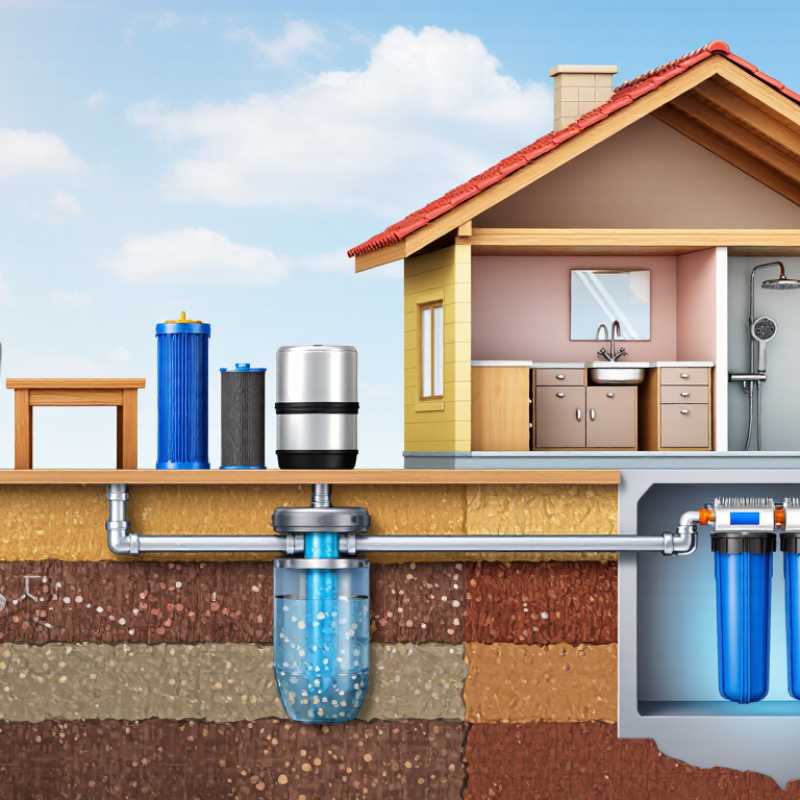
A practical well filter system should match the contaminant, flow rate, plumbing size, and maintenance ability. For example, a sediment filter may protect fixtures from sand, but it cannot reliably remove dissolved iron. Carbon can improve taste and odor, yet it may not address hardness or every chemical concern. Some systems also need electricity, drain access, salt, or replacement media.
Look closely at performance data. Check certification, rated capacity, pressure loss, warranty terms, and service requirements. Ask who will install and inspect the equipment. Small details matter.
I have seen homeowners choose based on price alone. That often becomes an expensive lesson. The “best” system is not always the largest one. It is the system that treats verified problems consistently and can be maintained for years. Even careful recommendations deserve review when test results, household needs, or local conditions change.
Test Well Water Annually, Following EPA Private-Well Guidance
How to Choose the Best Well Filter System?
Private-well water should be tested at least annually, not only when taste changes. The U.S. Environmental Protection Agency recommends regular testing for total coliform bacteria and nitrates. It also highlights pH, total dissolved solids, and local contaminants as useful checks. A clear glass is not proof of safe water.
Choose filtration after reviewing laboratory results. Bacteria, iron, manganese, nitrate, and hardness require different treatment methods. The U.S. Geological Survey reported that about 23% of sampled domestic wells contained at least one contaminant above a health benchmark in its national assessment. That figure makes generic, one-size-fits-all systems a poor starting point. Test first.
Keep records beside the pressure tank. Note the sample date, laboratory method, rainfall, and recent plumbing work. A certified laboratory is preferable, especially for nitrate and bacteria analysis. Retest after flooding, well repairs, changes in taste, or a nearby land-use change. Annual testing can still miss a short seasonal problem. That is an uncomfortable limitation. For example, a spring sample may not represent late-summer conditions. A filter can also become a neglected container for trapped contaminants if cartridges are not replaced on schedule. EPA private-well guidance supports using test results and local health advice to manage these decisions, rather than trusting advertising claims.
How to Choose the Best Well Filter System? - Test Well Water Annually, Following EPA Private-Well Guidance
| Annual Testing or Water-Quality Consideration | Why It Matters | Useful Indicator or Typical Concern | Potential Treatment Category | Recommended Testing or Maintenance Timing | Selection and Safety Guidance | Priority |
|---|---|---|---|---|---|---|
| Total coliform bacteria | Indicates possible contamination pathways in the well, plumbing, or storage system. A positive result requires follow-up testing for more specific contamination. | Presence or absence in a laboratory water sample. | Disinfection, commonly ultraviolet treatment or chlorination, often combined with sediment prefiltration. | Test at least annually and after flooding, well repairs, long periods of non-use, or a noticeable change in taste, odor, or appearance. | UV systems require clear water and regular lamp and sleeve maintenance. Treatment should be selected after identifying the contamination source. | High |
| Nitrate and nitrite | These contaminants can enter groundwater from septic systems, fertilizers, manure, and other land-use activities. Elevated nitrate is especially important for infants. | Laboratory concentration, commonly reported in milligrams per liter as nitrogen. | Reverse osmosis or anion exchange designed and certified for nitrate reduction. | Test at least annually; test more often where agricultural activity, septic systems, flooding, or previous elevated results create additional risk. | Do not assume a basic sediment, carbon, or taste-and-odor filter removes nitrate. Verify the treatment claim and maintain the system as specified. | High |
| pH | pH affects corrosion, scale formation, taste, and the performance of some treatment processes. It can also influence the release of metals from plumbing. | Acidic or alkaline water; pH is measured on a scale from 0 to 14. | Neutralizing filtration, chemical feed, or corrosion-control treatment, depending on the water chemistry. | Test at least annually and whenever plumbing corrosion, staining, or treatment-performance problems are observed. | pH should be interpreted with alkalinity, hardness, iron, manganese, and other laboratory results rather than treated as an isolated number. | Medium |
| Total dissolved solids (TDS) | High dissolved-solids content may affect taste, scaling, appliance performance, and the suitability of water for some household uses. | Aggregate concentration of dissolved minerals and salts, usually reported in milligrams per liter. | Reverse osmosis or other membrane treatment for selected point-of-use or whole-house applications. | Test at least annually and after changes in taste, salinity, scaling, or nearby groundwater conditions. | TDS alone does not identify individual contaminants. Confirm the specific dissolved substances before choosing a treatment system. | Routine |
| Iron and manganese | These naturally occurring minerals can cause metallic taste, staining, sediment, clogged fixtures, and nuisance odors. | Colored water, black or orange staining, metallic taste, or laboratory concentration. | Oxidizing filtration, aeration, catalytic media, or properly selected water softening, depending on chemistry. | Test during the initial water assessment and whenever staining, odor, or sediment changes. Follow the media manufacturer's service schedule. | Iron and manganese treatment depends on pH, dissolved oxygen, hardness, and whether the minerals are dissolved or particulate. | Medium |
| Hardness and scale | Hard water can produce scale on heaters, fixtures, and appliances and can reduce soap efficiency. | Calcium and magnesium concentration, commonly expressed as calcium carbonate. | Ion-exchange water softening or scale-control equipment selected for the measured hardness and household demand. | Test before sizing equipment and monitor when scale or changes in water use occur. Regenerate or service equipment according to measured demand. | Softening does not provide general disinfection and may increase sodium in treated water. A separate drinking-water option may be appropriate. | Routine |
| Arsenic, lead, and other site-specific contaminants | Private wells are not regulated in the same way as public water systems, and local geology or land use can create contaminant risks not covered by basic annual screening. | Risk depends on well location, geology, nearby industry, mining, agriculture, fuel storage, or older plumbing. | Contaminant-specific adsorption, reverse osmosis, ion exchange, or other verified treatment. | Test when recommended by local health or environmental authorities, after land-use changes, and whenever a risk assessment identifies a concern. | Use a certified laboratory and choose equipment with an independently verified reduction claim for the specific contaminant and concentration range. | High |
| Sediment, turbidity, and well condition | Particles can damage pumps, clog treatment equipment, reduce UV effectiveness, and signal well or plumbing problems. | Cloudy water, visible particles, pressure loss, or elevated turbidity. | Spin-down, cartridge, multimedia, or other sediment filtration selected for particle size and flow demand. | Inspect after heavy rain, flooding, construction, pump work, or changes in water clarity. Replace or clean filters based on pressure loss and manufacturer instructions. | Sediment filtration does not remove dissolved chemicals or reliably disinfect water. Investigate sudden changes rather than masking them with a filter. | Medium |
| Filter capacity and flow demand | An undersized system can reduce household pressure and fail to provide the required contact time or treatment performance. | Peak flow rate, daily water use, pressure range, incoming water temperature, and treatment capacity. | Point-of-use treatment for a single drinking tap or point-of-entry treatment for water used throughout the home. | Review before purchase and whenever household occupancy, fixtures, or water use changes. | Size the system from laboratory results and actual peak demand. Include bypass protection and a maintenance plan where appropriate. | Routine |
| Post-installation verification | Testing confirms that the selected system is reducing the intended contaminant and that installation or maintenance has not introduced a problem. | Laboratory comparison of untreated and treated water, using the same contaminant-specific methods where possible. | Any treatment system, including disinfection, carbon, membranes, softeners, and specialty media. | Test after installation, after major maintenance, and periodically according to the contaminant risk and treatment instructions. | Keep installation, filter-change, sanitization, and laboratory records. Replace cartridges, lamps, membranes, and media on schedule. | High |
Important: Private well owners should test for total coliform bacteria, nitrates, total dissolved solids, and pH at least once each year, while also considering local contaminants and well-specific risks. If a test result is positive or elevated, contact the local health department or a qualified water professional before selecting treatment. Filter performance varies by model, water chemistry, flow rate, and maintenance.
Related Posts
-
How to Choose Water Filtration for Well Water in 2026?
-
7 Tips for Choosing the Best Well Filtration System
-
2026 Best Well Filtration System for Clean Safe Water
-
How to Choose the Best Well Water Filtration System?
-
How to Choose the Best Well Water Filter?
-
7 Tips for Choosing the Best Well Water Filter?