How to Choose the Right Water Filtration System
Choosing a water filtration system begins with a simple question: what is in your water? A cloudy glass, chlorine smell, or mineral scale on a kettle can offer clues, but they cannot identify every contaminant. Private wells and municipal supplies also have different testing needs. The right choice depends on evidence, household use, and maintenance—not the boldest label on a box.
Purdue environmental engineer Dr. Andrew Whelton studies drinking-water safety and treatment concerns. In paraphrase, a practical lesson from his work is: “Match treatment to the water problem, not the product promise.” That distinction matters. A carbon filter may improve taste and reduce some chemicals, while reverse osmosis can address other dissolved substances. Neither method removes everything. Check independent performance certifications and confirm which specific contaminants a model is tested to reduce. Read the fine print.
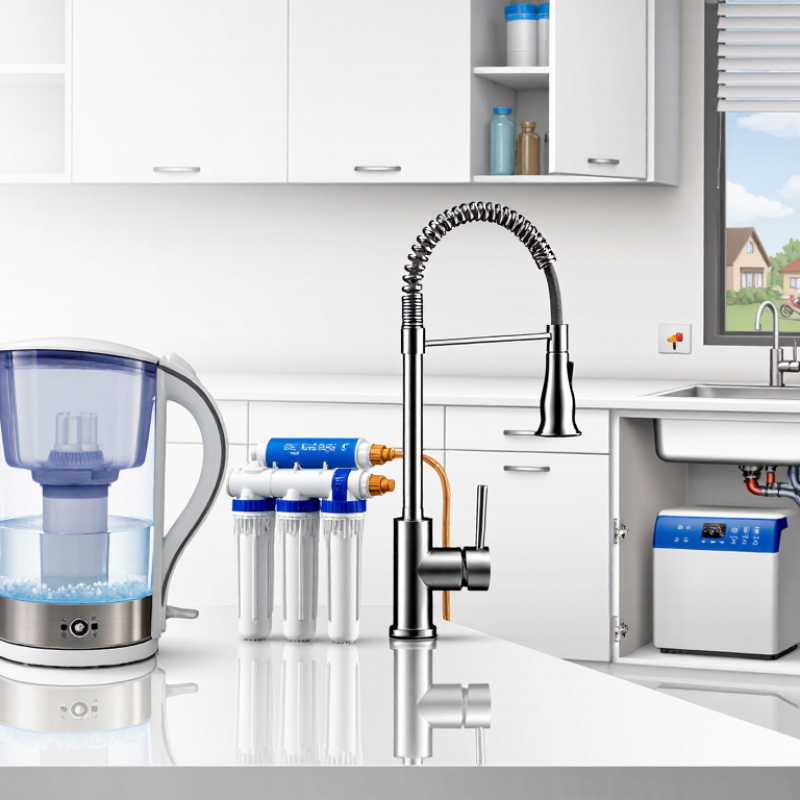
The sections ahead explain how to test your supply, compare filter types, and estimate installation and replacement costs. A pitcher may suit one person in a small apartment; a family may need a higher-capacity system under the sink. Check cartridge life, water pressure, and the space beneath the cabinet. These details are easy to overlook. I should be candid: there is no universal best filter, and a system can become less effective when its cartridge is overdue for replacement. Start with a water report or suitable lab test, then choose a system that fits the results and your daily routine.
Assess Your Water Source and Quality
Your water source is the starting point. Municipal water usually comes with a public quality report; check its date and note any listed contaminants. Private wells need more direct testing, since their quality can change after heavy rain, nearby construction, or flooding. A clear glass proves very little. Looks can mislead.
Write down what concerns you: sediment, hardness, chlorine taste, or a specific contaminant named in a report. Smell and taste can offer clues, but they cannot reliably identify many health-related contaminants. For a well, consider testing through a qualified laboratory, especially for locally relevant risks such as bacteria, nitrate, or arsenic. Ask local health officials which tests make sense for your area.
Keep the report. Match any filtration system to the contaminants you actually need to reduce, and check that its performance claims cover those substances. A filter designed for taste may not address metals or microbes. Retest when your source changes or results seem unusual; one test is only a snapshot. I would not treat an old report as a permanent guarantee, even if the water has always tasted fine.
How to Choose the Right Water Filtration System - Assess Your Water Source and Quality
| Water source or concern | What to check | Useful assessment | Treatment to consider | Selection guidance |
|---|---|---|---|---|
| Public municipal supply | Disinfection by-products, disinfectant taste or odor, and any locally reported contaminants | Review the utility’s latest Consumer Confidence Report; test your tap water if you have a specific concern | Activated carbon may reduce chlorine taste and odor; other treatment depends on the contaminant | Match the filter’s independently verified reduction claims to the contaminant you want to address |
| Private well | Bacteria, nitrate, arsenic, and other locally relevant contaminants | Use a certified laboratory; test at least annually for total coliform bacteria and nitrate, and check local guidance for additional testing | Choose treatment only after testing; options may include ultraviolet disinfection, reverse osmosis, or contaminant-specific media | There is no single filter that treats every well-water problem. Retest after treatment and when water quality changes |
| Lead concern, such as older plumbing | Lead at the tap, especially after water has been sitting in pipes | Arrange a tap-water test through a qualified laboratory or local health authority | Use a point-of-use filter specifically certified for lead reduction; reverse osmosis may also be suitable when certified for the relevant claim | Check the exact contaminant-reduction claim and replace cartridges on schedule; flushing can reduce exposure in some situations but does not remove the source |
| Cloudiness, grit, or visible particles | Whether particles settle, recur, or appear alongside discoloration or unusual odor | Inspect plumbing and the supply; test if the cause is unclear or the change is sudden | A sediment filter can capture suspended particles, with pore size selected for the particle size and flow needs | Sediment filtration does not by itself remove dissolved chemicals, salts, or microorganisms |
| Chlorine taste or odor | Whether the taste or odor is persistent and whether it is present at multiple taps | Check the utility report or contact the supplier; test if the odor is unusual or unexplained | Activated carbon filtration may improve taste and odor and can reduce chlorine when the product is designed and verified for that purpose | Carbon filters have limited capacity and need timely replacement to maintain performance |
| Hard water or mineral scale | Hardness, usually reported as calcium carbonate; compare scale buildup with a water test | Test hardness or obtain a water-quality report | An ion-exchange water softener can reduce hardness minerals | Softening addresses scale and hardness, not all contaminants; consider drinking-water needs separately |
| High dissolved solids or a confirmed specific dissolved contaminant | Total dissolved solids (TDS) and the particular substance identified by testing | Use a suitable laboratory test; a TDS reading alone does not identify which substances are present | Reverse osmosis can reduce many dissolved substances when the system is designed and verified for the target contaminant | Check the system’s exact reduction claims, water waste, maintenance needs, and compatibility with the test results |
Important: Start with a water-quality report or laboratory test, then choose a system with a verified reduction claim for the specific contaminant of concern. No single treatment method removes every contaminant.
Related Posts
-
What Is China Best Water Filtration System for Global Buyers?
-
China Best Water Filtration Manufacturers for Global Buyers
-
Top 10 Well Water Filtration Systems for Clean and Safe Drinking Water
-

Why You Should Invest in a Water Filter System for Your Home?
-
2026 Best Drinking Water Filtration System for Global Buyers?
-

Best Water Filter System for Global Buyers in 2026?