7 Well Water Filtration System Tips for Buyers
A private well can look clear and still contain contaminants you cannot see, smell, or taste. The USGS estimates that about 43 million people in the United States rely on domestic wells for drinking water. That makes testing more than a precaution; it is the starting point for choosing a well water filtration system. The right setup depends on what a certified laboratory finds, not on a neighbor’s recommendation or a filter’s broad promises.
A useful rule, consistent with Purdue water-quality researcher Andrew Whelton’s work, is: “Test first; treat what the results show.” This is a paraphrase, not a verified verbatim quotation. The CDC recommends testing private well water at least once a year for total coliform bacteria, nitrates, total dissolved solids, and pH, with additional tests guided by local risks. Those results help buyers compare treatment technologies, certifications, flow rates, and maintenance costs. A sediment filter may catch grit from a cloudy sample, but it will not necessarily address dissolved contaminants. Details matter.
There is no universal system. A filter that performs well in one home may be a poor fit for another well. Start with a recent lab report, then check whether the system is independently certified for the specific contaminant you need to reduce. Look beyond the price tag: replacement cartridges, installation space, and water use can change the real cost. Even careful buyers can miss something. These seven tips will help you ask better questions before choosing a system.
Understanding Well Water Quality and Common Contaminants
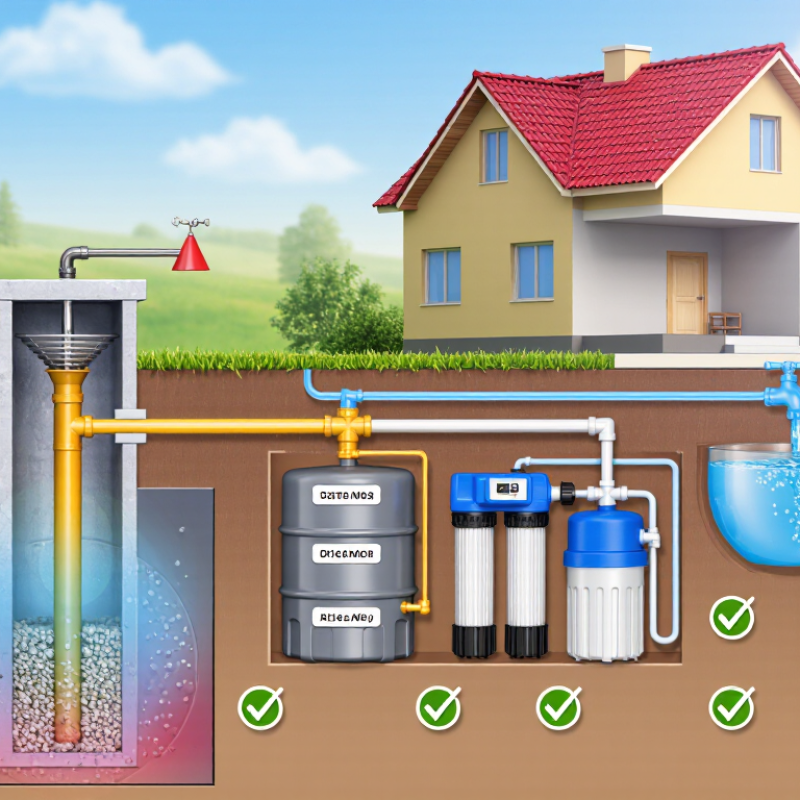
Well water quality often reflects the soil and rock beneath a home. A clear glass may look reassuring, but it reveals little about dissolved contaminants. Bacteria can enter through damaged well caps or surface runoff. Nitrate may come from nearby septic systems or fertilizer. Arsenic occurs naturally in some groundwater, while iron and manganese can stain sinks and leave a metallic taste. The signs are clues, not a diagnosis.
Tip: Test before choosing equipment. Ask a qualified laboratory to check for bacteria, nitrate, arsenic, and other locally relevant contaminants. Include pH and hardness if you are comparing treatment options. Results provide a baseline; a filter designed for one contaminant may not reduce another. I used to assume a bad taste meant a safety problem. That is not always true.
Tips: Keep the lab report and match each treatment claim to a measured contaminant. Retest after repairs, flooding, or a noticeable change in taste, color, or odor. Well water can shift with seasons, so one test is only a snapshot. If results are unclear, ask the laboratory or a water-treatment professional what each number means before buying a system.
Well Water Quality: EPA Maximum Contaminant Levels
Private wells are not regulated under the federal Safe Drinking Water Act, so owners are responsible for testing. These EPA limits are useful reference points when choosing what to test and how to treat it. Values are shown in micrograms per liter (µg/L) on a logarithmic scale; nitrate is expressed as nitrogen. Individual results should be interpreted with a certified laboratory and local health guidance.
Source: U.S. EPA National Primary Drinking Water Regulations. The listed values are maximum contaminant levels (MCLs).
Testing Your Well Water Before Choosing a Filtration System
A well-water filtration system should be chosen from test results, not guesswork.
The CDC recommends testing private wells at least once a year for total coliform bacteria, nitrates, total dissolved solids, and pH. The USGS national assessment found that about one in five sampled private wells contained at least one contaminant at a level that could affect health.
A test is a snapshot, not a guarantee. Heavy rain, flooding, nearby septic systems, or new agricultural activity can change conditions.
Use a state-certified laboratory, and follow its collection instructions carefully; a contaminated sample bottle can distort results. Ask about arsenic, lead, iron, manganese, or pesticides when local geology and land use make them relevant. Keep the report, including units and detection limits.
Small details matter. Match each confirmed contaminant to a treatment method rated for it: a standard carbon filter, for example, does not reliably remove nitrate.
The U.S. Environmental Protection Agency notes that private wells are not regulated under the Safe Drinking Water Act, so owners must arrange testing and treatment. Retest after installing equipment to check that it works, and periodically afterward.
Taste and clarity can be misleading. A clear glass may still contain contaminants you cannot see or smell.
Matching Filter Technologies to the Contaminants Found
Well Water Filtration System Tips for Buyers
Clear water is not proof of safe water. Start with a laboratory test, then choose treatment based on the results. Ask for measurements of bacteria, nitrate, arsenic, iron, hardness, and any locally relevant chemicals.
Test, then choose. Retest after flooding, well repairs, or a noticeable change in taste or odor.
Match sediment filters to visible sand or rust particles; they protect finer equipment but do not remove dissolved contaminants. A softener can reduce hardness, while iron or sulfur may need specialized oxidation or filtration.
For bacteria and viruses, consider a properly sized ultraviolet system or another treatment recommended for your test results. UV disinfection works only when water is clear enough for the light to reach microorganisms.
Keep the water clear. For nitrate or arsenic, select a system specifically rated for that contaminant.
Activated carbon can improve some odors and reduce certain organic chemicals, but its performance depends on the media and water conditions. Reverse osmosis may address several dissolved contaminants, yet it needs maintenance and produces reject water.
One caveat: a filter’s broad claims may not match your well. Check independent certification for the exact contaminant, follow replacement schedules, and retest treated water to confirm the system is working.
A neglected cartridge can become the weak link.
Sizing and Installing a System for Your Household
Sizing a well water filtration system starts with a current laboratory water test. Test for bacteria, nitrate, iron, hardness, and other locally relevant concerns. A filter cannot solve a problem it was not designed to treat. Ask the lab or a qualified water professional to explain results you do not understand. Do not guess from color alone.
Estimate daily use and peak flow, especially when showers, laundry, and a dishwasher run together. Compare those needs with the system’s rated flow, not just its advertised capacity. Flow matters. An undersized unit may reduce pressure during busy hours. A unit that is much larger than needed can cost more and may require extra maintenance. Check the well pump’s output and household pressure before choosing equipment; these details are easy to overlook.
Plan installation near the main water line, with room to change cartridges or media without moving stored items. Confirm whether the system needs a drain, electricity, or a bypass valve, and follow the equipment’s installation instructions. Leave access. Have a qualified installer check connections, pressure, and possible leaks after setup. Keep test results and service dates together, then retest the water as conditions or household concerns change. I would not assume one test tells the whole story forever.
7 Well Water Filtration System Tips for Buyers - Sizing and Installing a System for Your Household
| Tip | What to Check | Sizing and Installation Guidance | Practical Example |
|---|---|---|---|
| 1 | Test the water before choosing equipment | Use a certified laboratory for a broad well-water analysis. Test for bacteria, nitrate, pH, hardness, iron, manganese, and any contaminants relevant to local geology or land use. Select treatment for confirmed results rather than appearance or taste alone. | For context, the U.S. EPA drinking-water limit for arsenic is 0.010 mg/L, and the nitrate limit is 10 mg/L measured as nitrogen. These are public-water standards; ask local health officials about private-well guidance. |
| 2 | Match treatment to the contaminant | Different problems require different processes. Sediment filters address suspended particles; softeners reduce hardness; and specialized media or reverse osmosis may be needed for particular dissolved contaminants. Confirm the system’s certified reduction claims and operating limits for the contaminant measured. | A sediment filter alone does not remove dissolved nitrate, while a standard softener is not a general-purpose treatment for bacteria or all metals. |
| 3 | Size for peak flow, not just daily water use | Check the system’s service-flow rating and pressure drop at that flow. Estimate simultaneous household demand and compare it with the well pump’s measured output. An undersized unit can reduce pressure when several fixtures run at once. | A shower commonly uses about 1.8–2.5 gallons per minute, depending on the fixture. Two showers plus another running fixture can therefore require substantially more than a single-fixture flow rate. |
| 4 | Calculate softener demand from hardness and use | For a first estimate, multiply hardness in grains per gallon (gpg) by estimated daily water use in gallons. Then account for the chosen regeneration interval, reserve capacity, and the unit’s usable capacity at its selected salt setting. | At 15 gpg and an estimated 70 gallons per person per day, a three-person household uses about 210 gallons daily, or 3,150 grains of hardness load per day. Actual use and settings vary. |
| 5 | Plan the treatment order and plumbing location | A common layout places treatment after the pressure tank and before the household distribution lines. Sediment prefiltration may protect downstream equipment; follow each system’s instructions for sequencing, pressure limits, bypass valves, and any required pretreatment. | Leave enough clearance to replace cartridges, add salt, access valves, and service the equipment without moving other plumbing or appliances. |
| 6 | Check drainage, power, and freeze protection | Confirm access to a suitable drain for regeneration or reject water, an electrical outlet if required, and a location protected from freezing. Follow local plumbing rules for drain connections, backflow protection, and air gaps. | A softener’s drain line must be installed as specified by its instructions and local code; it should not be improvised as a sealed connection to a household drain. |
| 7 | Budget for maintenance and verify performance | Compare replacement-filter intervals, salt or media needs, water and energy use, and service access. After installation, flush the system as directed and retest the water for the original concern; continue routine well testing. | Filter life depends on water quality and volume treated, so use pressure-drop or service guidance from the equipment instructions rather than assuming every cartridge lasts the same number of months. |
Note: Flow rates, water use, and treatment requirements vary by household and well. Confirm test results, equipment specifications, and local code requirements before purchase or installation.
Comparing Costs, Maintenance Needs, and Replacement Schedules
Compare the full ownership cost, not only the purchase price. A sediment filter may be inexpensive, while a system with several treatment stages needs more cartridges and service. Ask for the cost of each replacement part and how often it is normally changed. Small details add up.
Start with a certified water test to identify what your well actually contains. Testing costs vary, but it can prevent spending on treatment you do not need. A system for sediment may not address dissolved minerals or bacteria. Match equipment to test results, and ask a qualified water professional to explain any unclear findings.
Maintenance schedules depend on water quality, household use, and the equipment instructions. Some cartridges need replacement every few months; others last longer. UV lamps commonly have a set service interval, even when they still appear lit. Keep a simple log near the system, with dates and part numbers. Check pressure changes, unusual tastes, and filter condition between scheduled visits. Don’t wait for trouble. Replacement schedules are useful guides, not guarantees; a muddy well after heavy rain can shorten a filter’s life. I would rather budget for an occasional early change than assume every part lasts its maximum advertised interval.
Related Posts
-
2026 How to Choose the Best Well Filter System?
-
2026 Best Water Filtration Systems for Well Water?
-
What Is the Best Drinking Water Filtration System in 2026?
-
What Is the Best China Drinking Water Filtration System?
-
Why Do You Need a Well Filtration System?
-
How to Choose the Top Water Filtration Systems?
