Why Do You Need a Well Filtration System?
A private well can look clear and still carry iron, sediment, bacteria, or dissolved minerals. The signs may be subtle: orange stains around a sink, grit caught in an aerator, or a metallic taste in a glass. A well filtration system helps address specific water-quality problems, but no single filter removes every contaminant. The right choice depends on a laboratory test, the well’s construction, and how much water the household uses.
Water-safety researcher Dr. Andrew Whelton’s work supports a practical takeaway: “Test first; treat what the results show.” This is a summary of that evidence-based principle, not a verified direct quotation. Testing gives homeowners a clearer basis for comparing sediment filters, activated carbon, softeners, or other treatment options. It also helps prevent spending money on equipment that does not solve the actual problem. Small details matter. A cartridge’s micron rating, the system’s flow rate, and the pressure drop across a filter can affect daily use.
Maintenance matters just as much as installation. A clogged cartridge may reduce flow; an overdue replacement may perform poorly. Keep test results and service dates together, perhaps beside the pressure gauge or equipment label. Even then, filtration is not a substitute for retesting. Wells change, and filters have limits. That part is easy to overlook. This guide explains why a well filtration system may be important, what it can address, and how to choose and maintain one with realistic expectations.
How Well Water Can Become Contaminated
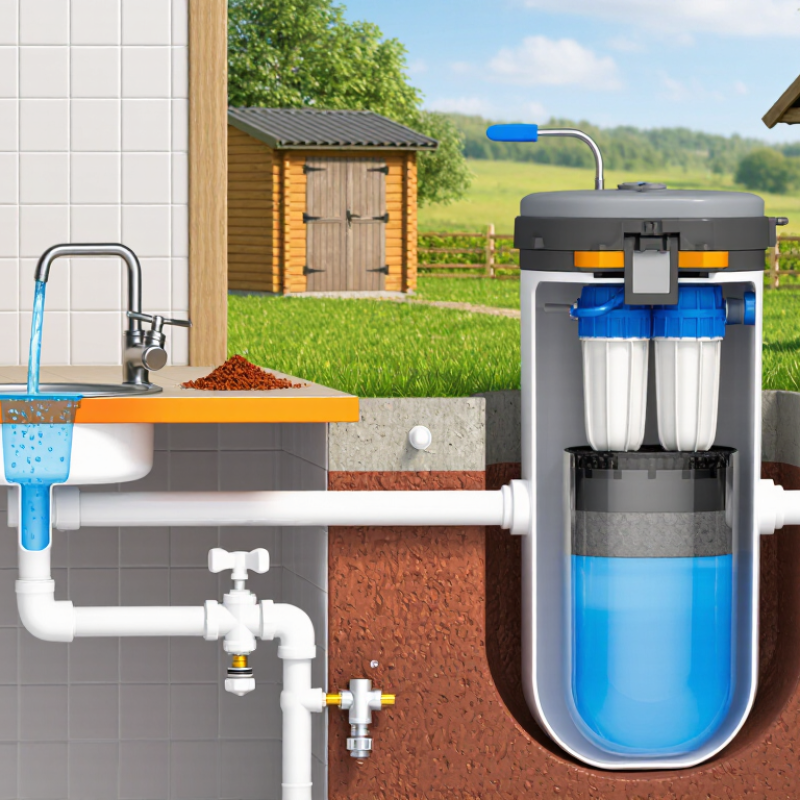
A private well can look clean while carrying contaminants you cannot see. Yet appearance tells little. After heavy rain, runoff may move soil, animal waste, or lawn chemicals toward a poorly sealed well. A cracked cap, damaged casing, or flooded wellhead can provide another route. Nearby septic systems and livestock areas may also affect groundwater, particularly where wells are shallow or soil offers little protection. Some contaminants occur naturally; arsenic, iron, manganese, and nitrate can enter water from local geology or land use. The water may have no unusual smell. It is tempting to trust a clear glass, but that confidence can be misplaced.
Changes in taste or staining can be clues, not reliable tests. A certified laboratory can check for concerns common in your area, and local health officials can advise what to test and when. Testing is especially important after flooding, well repairs, or changes near the well. Filtration should match the results: a sediment filter will not solve every chemical or microbial problem. Some systems also need regular maintenance, or their performance can decline quietly. A filter is not a substitute for testing. Keeping test records and following the system’s maintenance schedule makes it easier to spot problems before they become harder to address.
Why Do You Need a Well Filtration System? - How Well Water Can Become Contaminated
| Potential contaminant | How it can enter a well | Possible clues | How to check | Possible treatment approach |
|---|---|---|---|---|
| Bacteria and other microbes | Septic system leakage, animal waste, flooding, or a damaged well cap or casing can introduce microbes. | Often no reliable change in taste, smell, or appearance. | Test for coliform bacteria, including E. coli, through a qualified water-testing laboratory. | Correct the contamination source and disinfect the well when appropriate. UV or other disinfection systems may help when properly selected and maintained. |
| Nitrate | Fertilizer, manure, or septic-system waste can seep into groundwater, particularly in some agricultural or densely developed areas. | Usually cannot be detected by taste, smell, or sight. | Request a laboratory nitrate test; follow local health guidance on testing frequency and results. | Reverse osmosis or anion exchange may reduce nitrate when appropriately designed and maintained. Ordinary sediment and carbon filters do not reliably remove it. |
| Arsenic | It can occur naturally in certain rock and soil formations and may dissolve into groundwater. | No dependable taste, smell, or color warning. | Use a laboratory test that measures arsenic in the water. | Treatment may include reverse osmosis or specially designed adsorptive media. Effectiveness depends on water chemistry and the system’s specifications. |
| Lead from plumbing | Lead can enter water from plumbing materials or fixtures through corrosion; it is generally a plumbing concern rather than a natural groundwater contaminant. | Usually cannot be seen, tasted, or smelled. | Test water collected at the tap using a qualified laboratory, following its sampling instructions. | Address the plumbing source and consider a point-of-use filter certified for lead reduction. Certification and filter maintenance matter. |
| Pesticides and other agricultural chemicals | Certain chemicals can reach groundwater through runoff, spills, or leaching from soil. | Many have no obvious sensory warning; clues depend on the specific substance. | Ask a laboratory about testing based on local land use and suspected chemicals. | Activated carbon or reverse osmosis may reduce some chemicals, but no single treatment removes every pesticide. Match treatment to test results. |
| Iron and manganese | These minerals can occur naturally in groundwater and may dissolve from surrounding rock and soil. | May cause metallic taste, reddish-brown or black staining, or discoloration; these signs do not confirm a safe water supply. | Test for iron and manganese, especially if staining or discoloration occurs. | Depending on concentrations and water chemistry, treatment may use oxidation and filtration, or other equipment selected for the test results. |
Important: Clear water is not necessarily safe. A well filtration system should be chosen based on laboratory test results and maintained according to its instructions. Filtration or disinfection does not address every contaminant, and boiling water does not remove chemical contaminants.
Related Posts
-
7 Tips for Choosing the Best Well Filtration System
-
2026 Best Well Filtration System for Clean Safe Water
-
How to Choose Water Systems for Well Water in 2026?
-
What Are the Top Water Systems for Well Water in 2026?
-
What Are the Top Water Filters for Well Water?
-

2026 How to Choose the Best Well Filter System?